


The issue of representation within Parliament and the Senate has renewed relevance, with growing separatist tensions in the West and Quebec. This report presents the results of a national survey of 2,710 Canadians, conducted by Léger in early 2026 on behalf of the Aristotle Foundation. It gauges public opinion on issues such as separatist sentiment, representation in Parliament, democratic reform, and equalization payments.
Awareness of Representation
Separatism in the West and in Quebec
Reforming Parliament
Reforming Federal Transfers
The issue of representation within the federal government has become increasingly relevant, particularly amid growing separatist tensions in the West and Quebec. This report presents the results and key insights of a national public opinion poll conducted by Léger on behalf of the Aristotle Foundation for Public Policy. The nationally representative sample of 2,710 respondents was conducted from January 27 to February 1, 2026, to survey Canadians on issues such as representation in Parliament, separatist sentiment, parliamentary reform, and federal transfer payments. The survey results are arranged by topic and poll-question below.
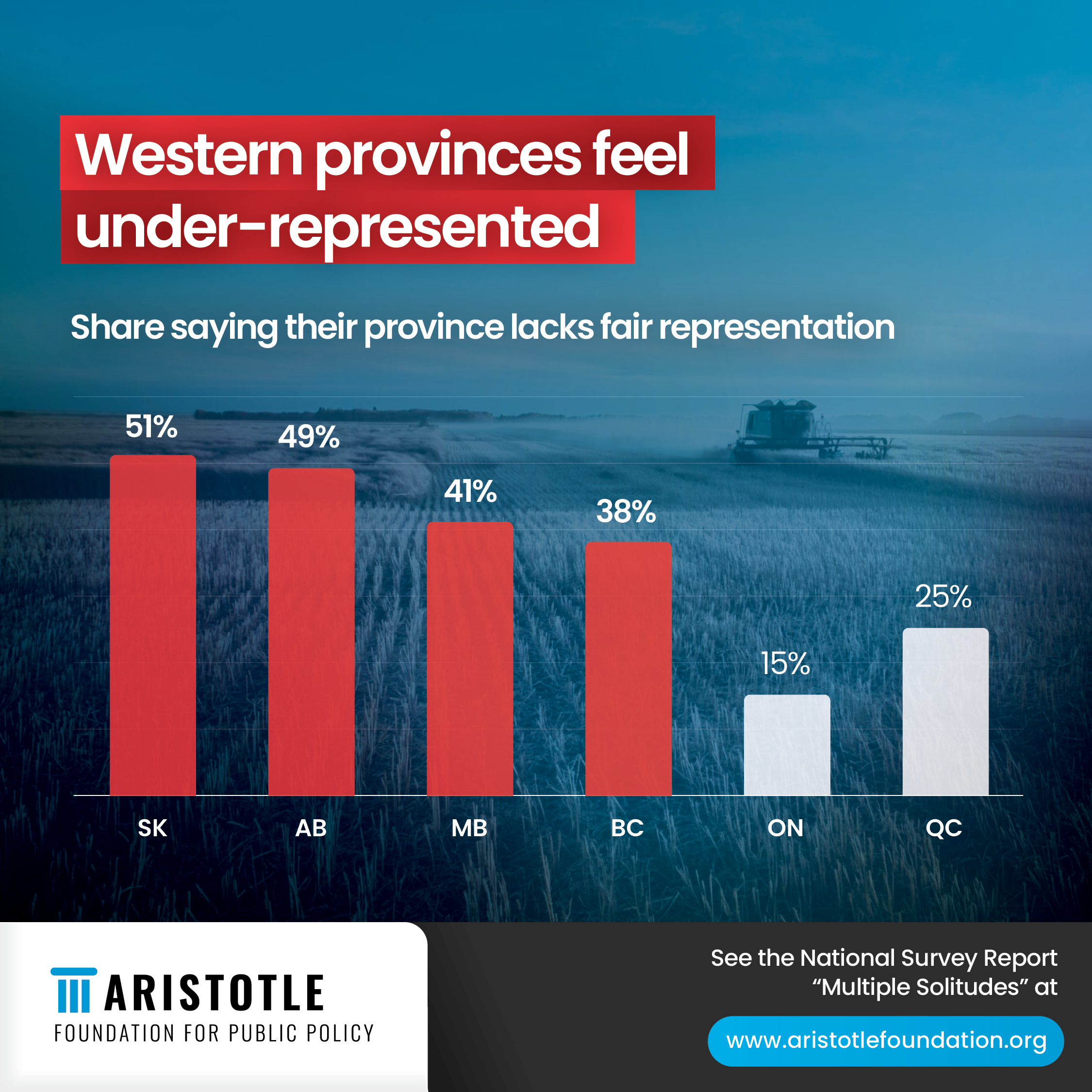
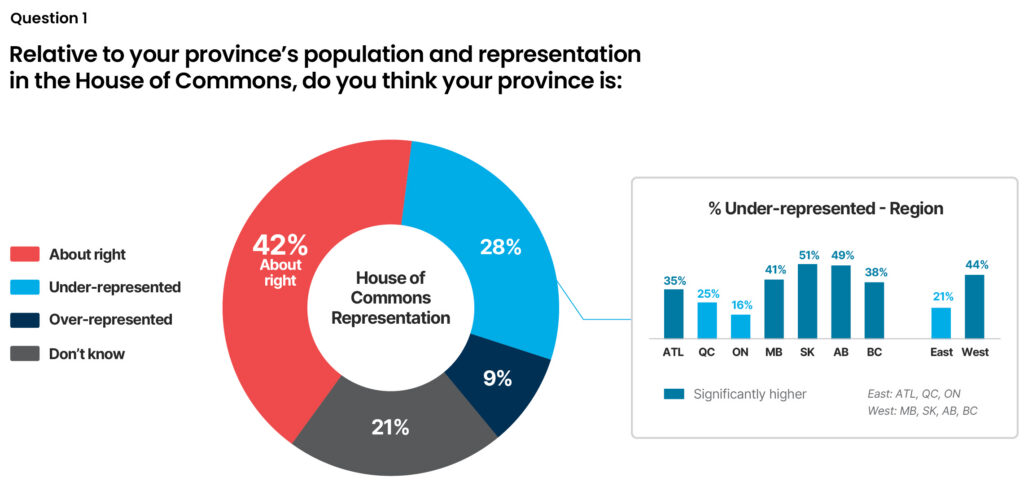
Only four in ten Canadians think their province’s representation in the House of Commons versus population is correct (Question 1). Almost three in ten express their province is underrepresented. One in eleven feel their province is overrepresented, while one in five Canadians are unsure. Breaking down responses by province, residents outside of Ontario and Quebec more often feel they are underrepresented. Moreover, Canadians in Western Canada tend to feel their population is underrepresented (compared to Eastern Canadians) in the House, while Eastern Canadians more often feel they are well represented (46% vs. 34% in the West).
Base: All (2710)
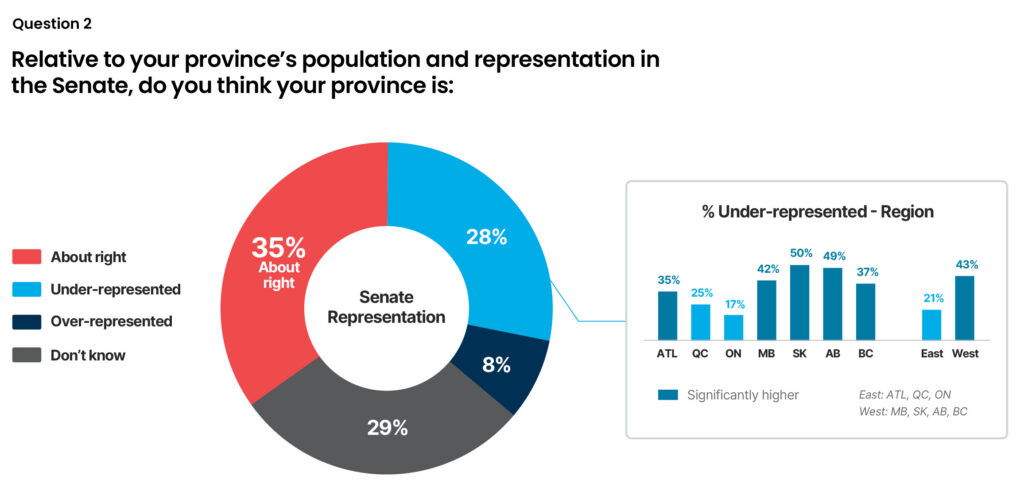
Over a third of Canadians think their province’s Senate representation is about right when compared to population (Question 2). There is a higher “Don’t Know” response to the Senate versus House of Commons. Similar to the House of Commons, less than three in ten Canadians think their province is under- or overrepresented in the Senate; however, a greater number are unsure (eight points higher than the House). Like the House, residents outside of Ontario and Quebec are more likely to feel underrepresented. Regionally, Western Canadians (compared to Eastern Canadians) tend to feel they are underrepresented in the Senate.
Base: All (2710)
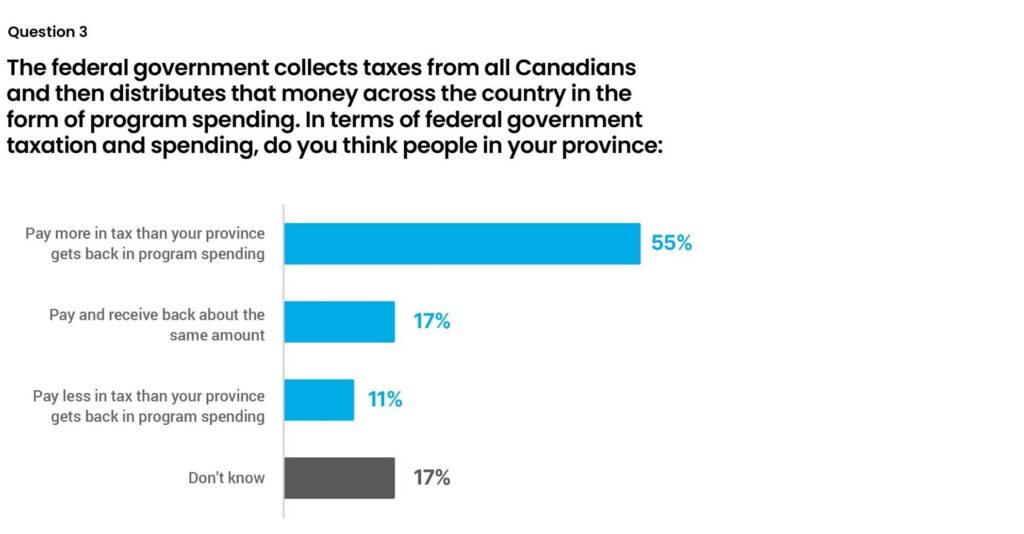
More than half of Canadians say they pay more in tax than their province gets back in program spending (Question 3). About one in six Canadians feel they receive the same amount as they pay; the same share do not know how their spending is allocated. One in nine feel they receive more back from the government than they pay in taxes. Looking at the provinces, those in Saskatchewan and Alberta are more likely than all other provinces besides Ontario to feel they pay more than their province receives.
Base: All (n=2710)
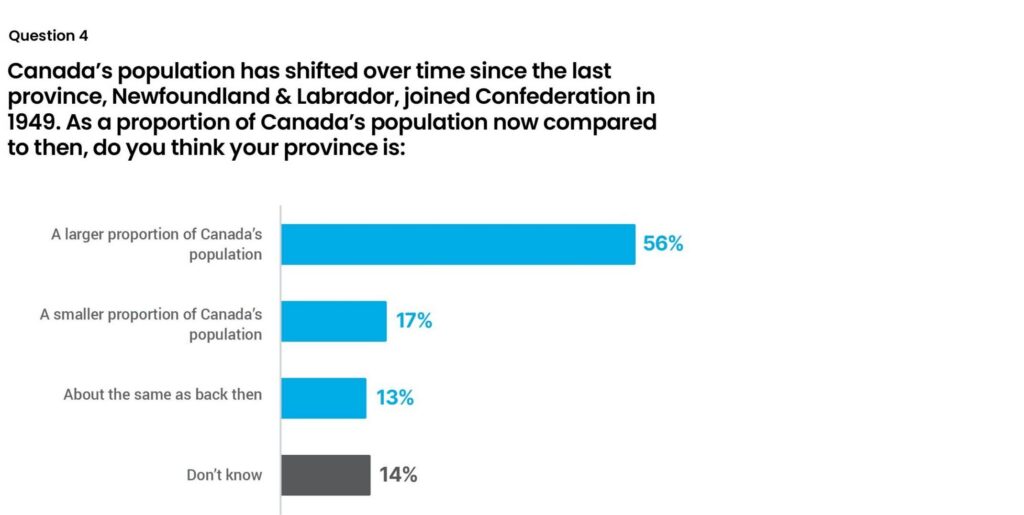
Over half of Canadians say their province’s share of the country’s population has grown since 1949 (Question 4). About one in six Canadians say their province is a smaller portion of the population or about the same as in 1949, while one in seven are unsure. Canadians from Ontario, Alberta, and BC more often think their share of the country’s population has increased since 1949.
Base: All (n=2710)
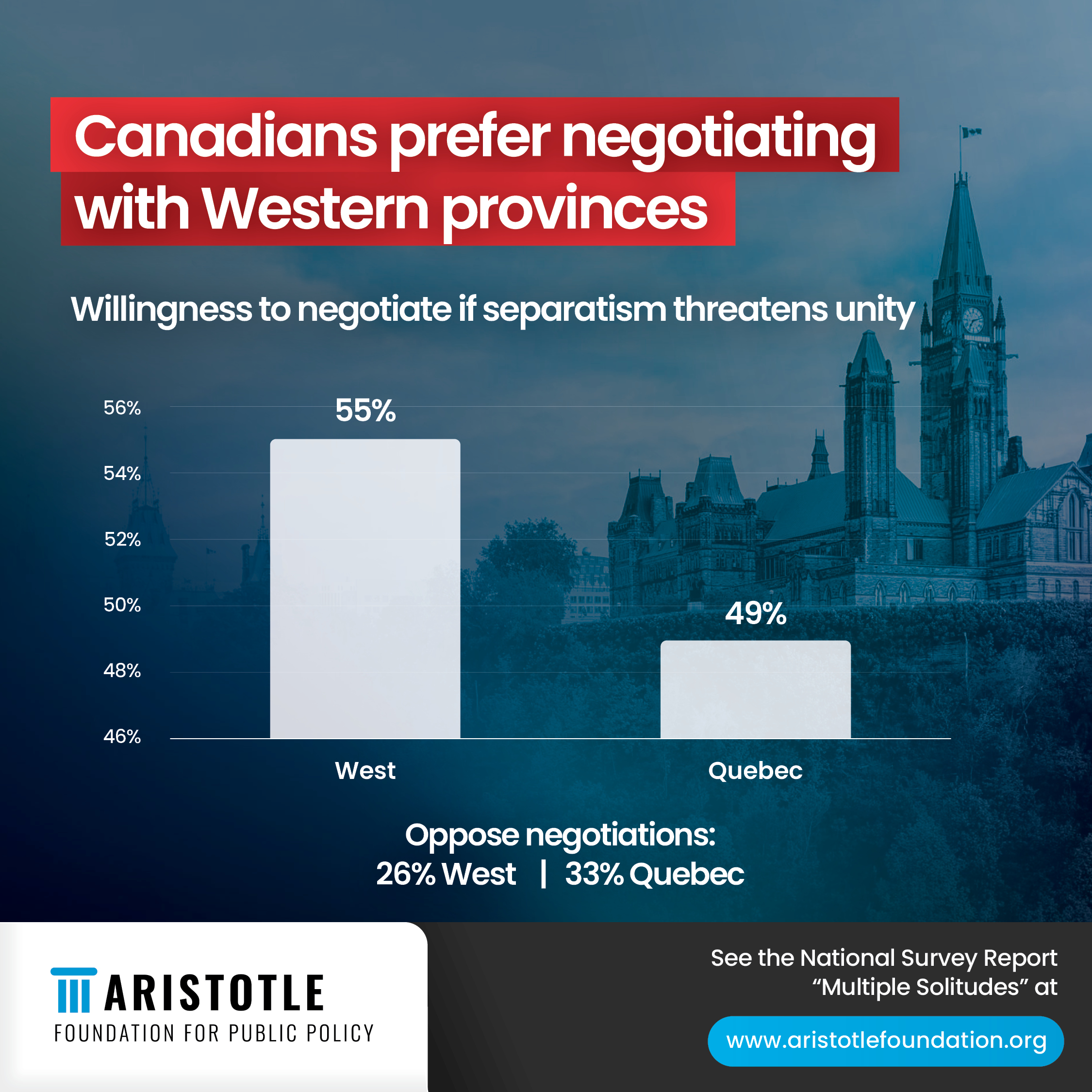
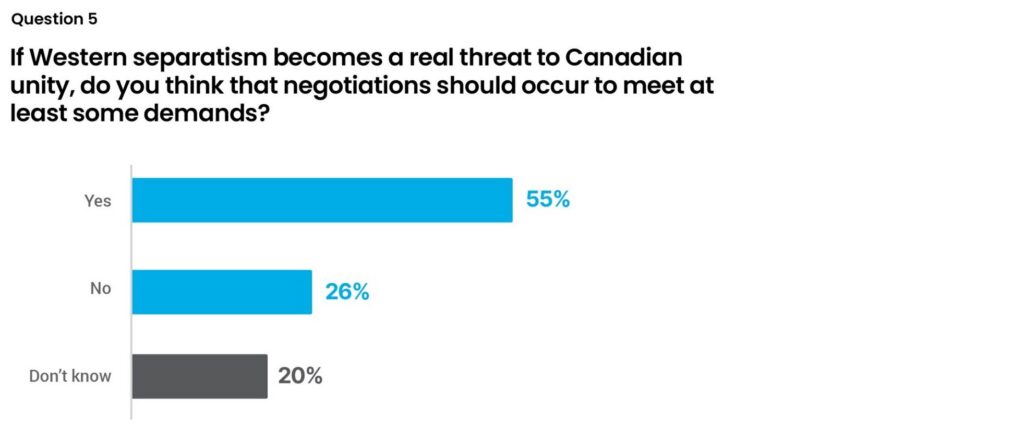
Most Canadians think negotiations should occur, if Western separatism becomes a real threat to Canadian unity (Question 5). In contrast, a quarter say there should be no negotiations. One in five do not know if negotiations are necessary. Quebecers (compared to other provinces except Saskatchewan) are the most likely to say negotiations should occur.
Base: All (n=2710)
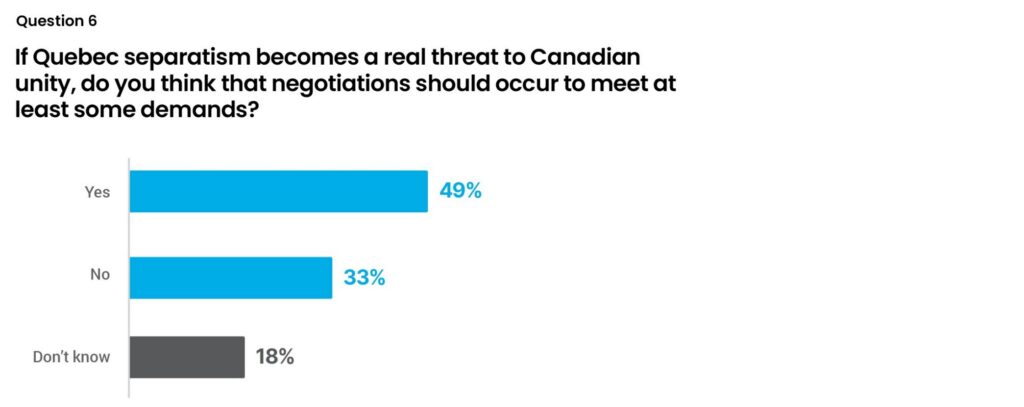
Conversely, if Quebec separatism becomes a real threat to Canadian unity, a slightly smaller portion of Canadians—less than half—think negotiations should occur (Question 6). More Canadians are against negotiations for Quebec (one in three, compared to one in four for Western separatism). For both Quebec and the West, a similar amount—one in five—are unsure about negotiations.
Base: All (n=2710)
Most Canadians are in favour of institutional reform, under certain conditions, to help ease the threat of Western separatism (Question 7). Two in five are in favour of reforming both the House of Commons and the Senate, three in ten under certain conditions, and one in ten oppose. Canadians are equally unsure about reforming both chambers of government. Regionally, Western Canadians are more likely to favour reforming both institutions.
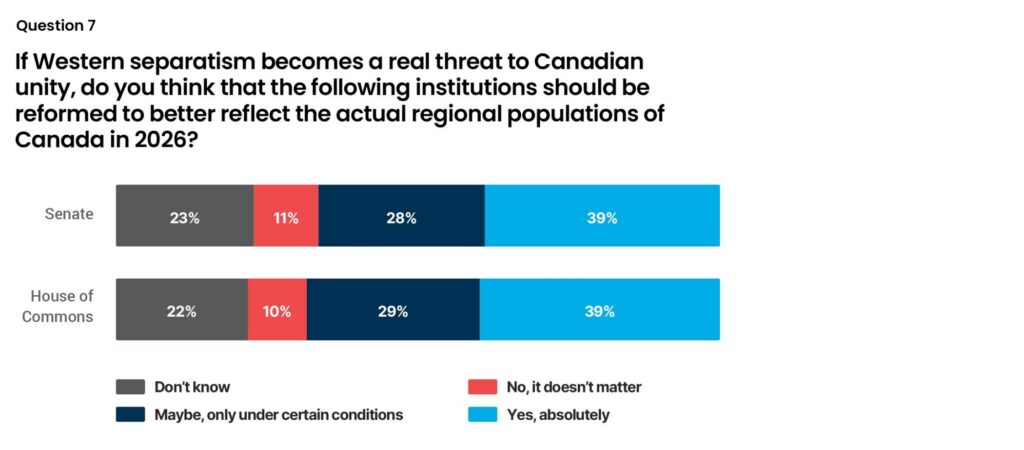
Base: All (n=2710)
A slightly smaller portion of Canadians are in favour of institutional reform to ease the threat of Quebec separatism (Question 8). More than one in three are in favour of reforming both the House of Commons and the Senate, three in ten under certain conditions, and about one in eight oppose. Canadians are equally unsure about reforming both chambers of government.
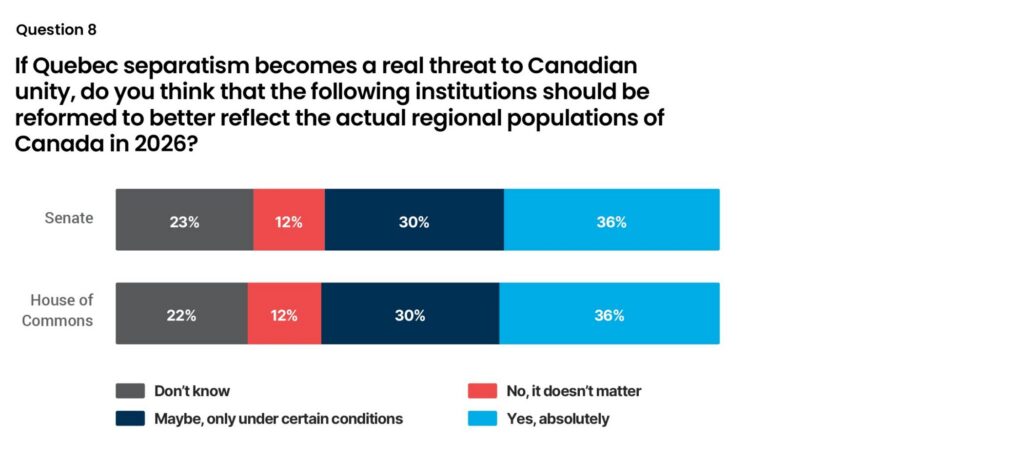
Base: All (n=2710)
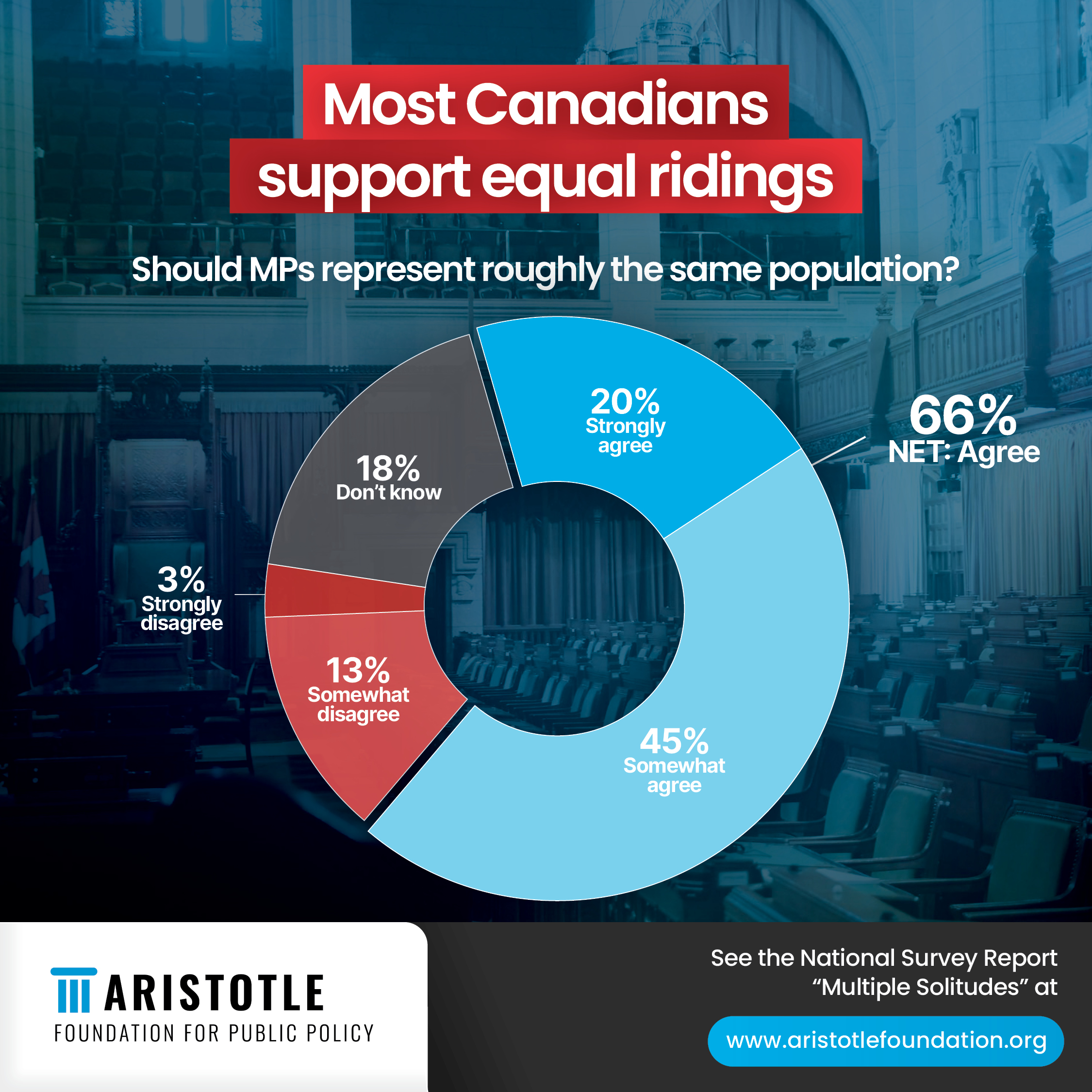
Two-thirds of Canadians agree ridings should consist of a similar number of eligible voters (Question 9). In contrast, less than one in six Canadians disagree or are unsure. Regionally, Western Canadians are more likely to agree overall and strongly agree with ridings having equal representation, while Eastern Canadians tend to disagree more.
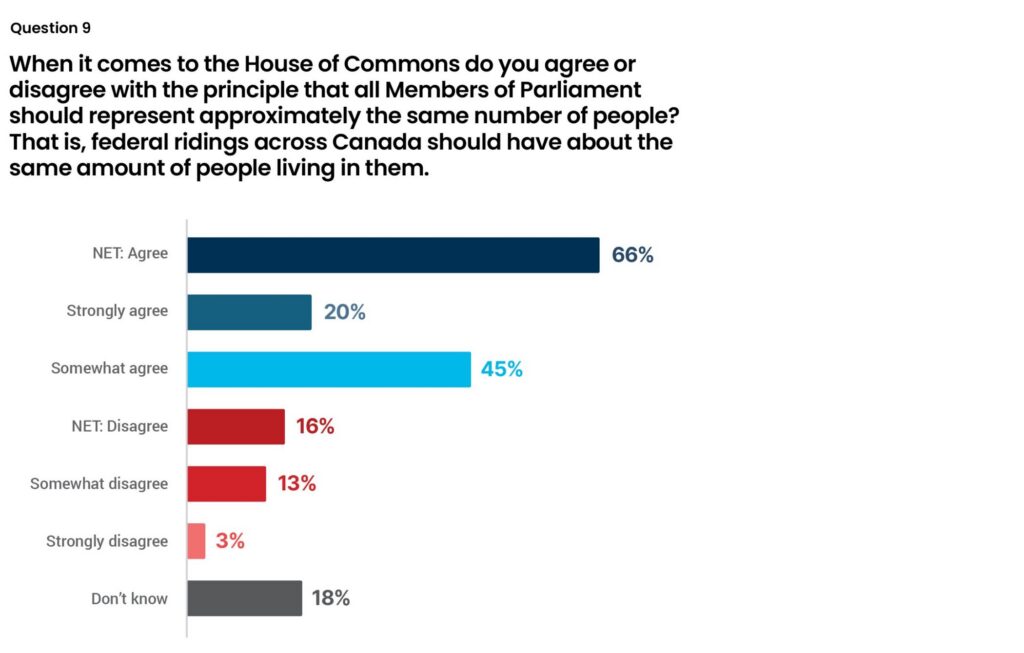
Base: All (n=2710)
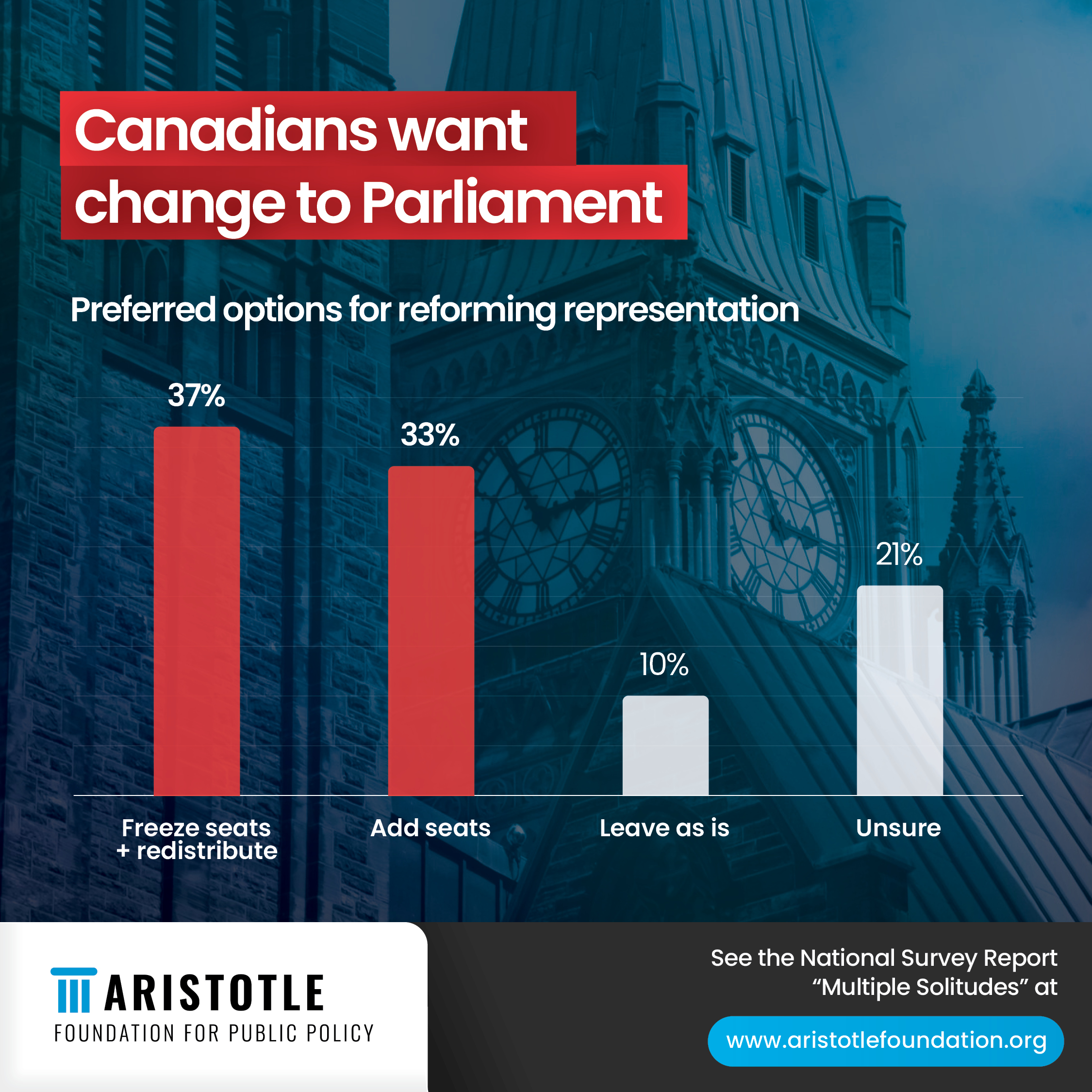
Canadians are divided on how to reform the House of Commons, although few Canadians suggest leaving things as they are (Question 10). Almost two in five prefer freezing the number of seats and removing seats from overrepresented provinces, while a third prefer adding more seats, to ensure better representation. One in ten prefer neither option. And one in five are not sure which is best. Western Canadians, especially in Saskatchewan, prefer freezing and removing seats from overrepresented provinces.
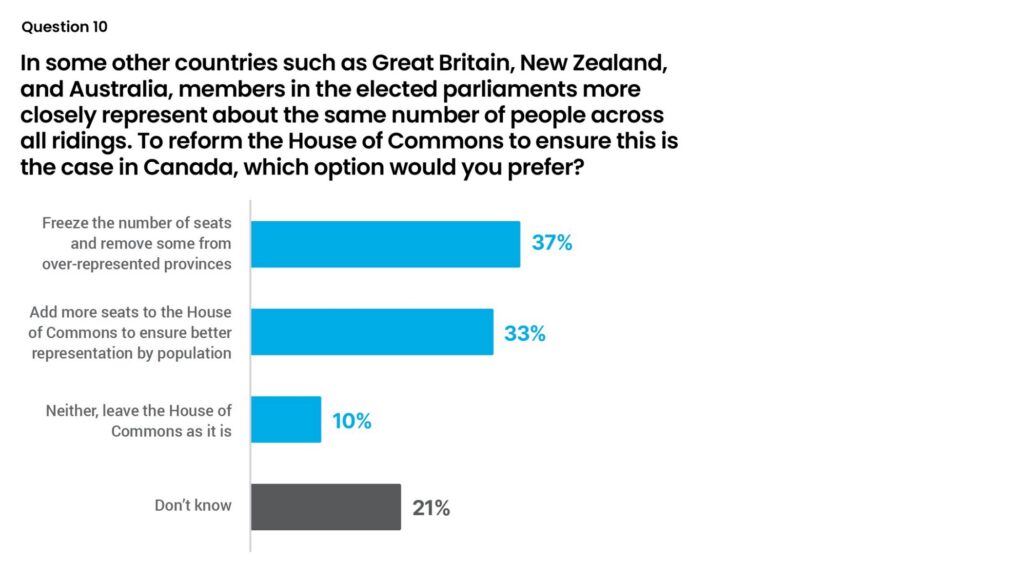
Base: All (n=2710)
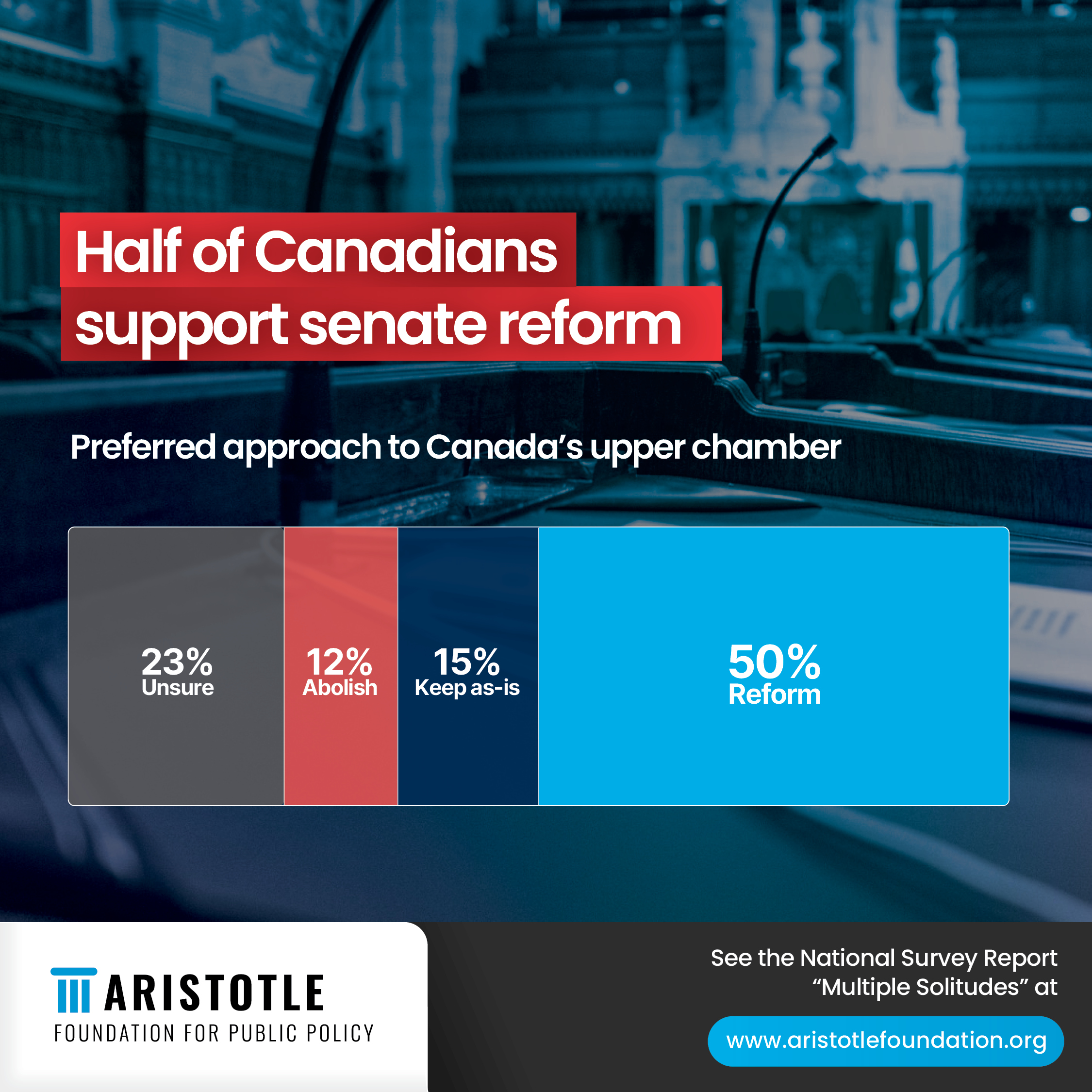
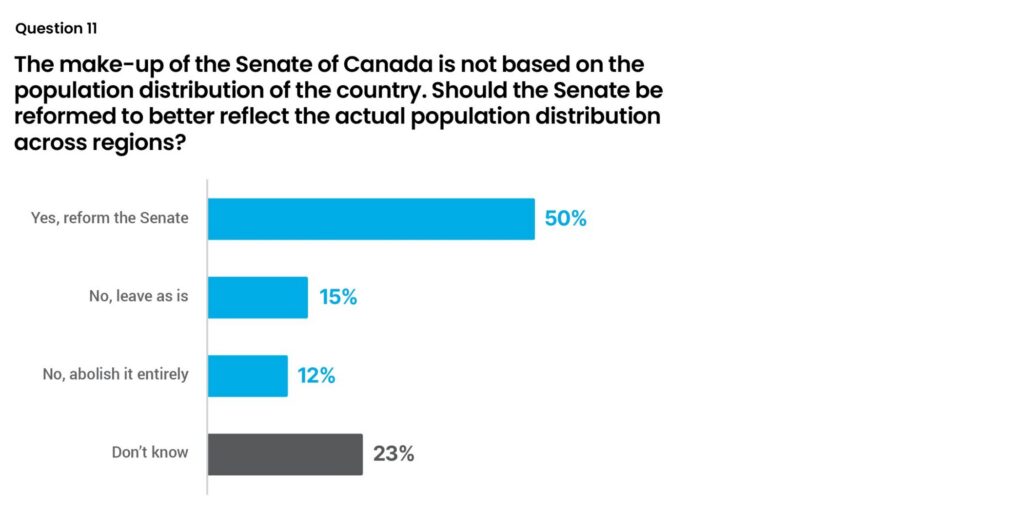
There is a greater consensus among Canadians about reforming the Senate (Question 11). Less than one in six think the Senate should remain as is. But that does not mean Canadians want to abolish it; less than one in eight hold the abolitionist view. About one in five are unsure. Regionally, Western Canadians are more in favour of reforming the Senate.
Base: All (n=2710)
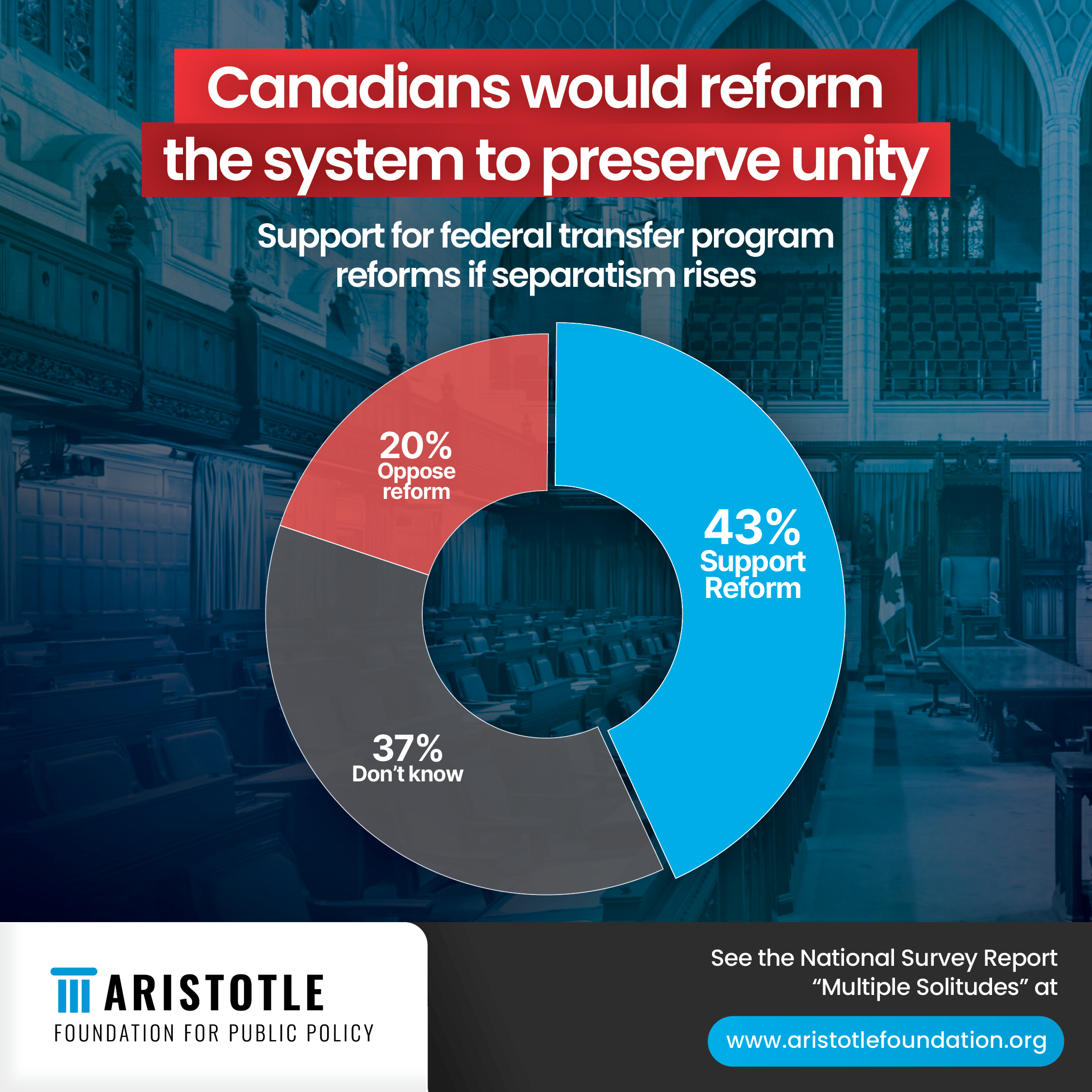
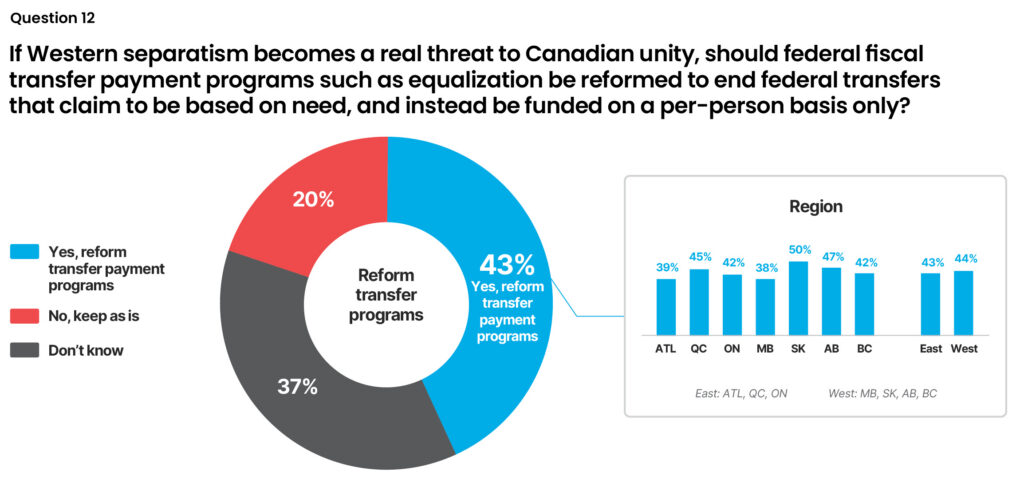
Slightly more than two in five Canadians support reforming transfer programs—i.e., equalization payments—in the face of Western separatism, while slightly less than two in five oppose such reforms (Question 12). One-fifth are unsure. Across demographics, including provinces that have contributed to equalization (AB, SK, BC) versus those who have not (ON, QC, MB, ATL), sentiment follows the overall totals.
Base: All (2710)
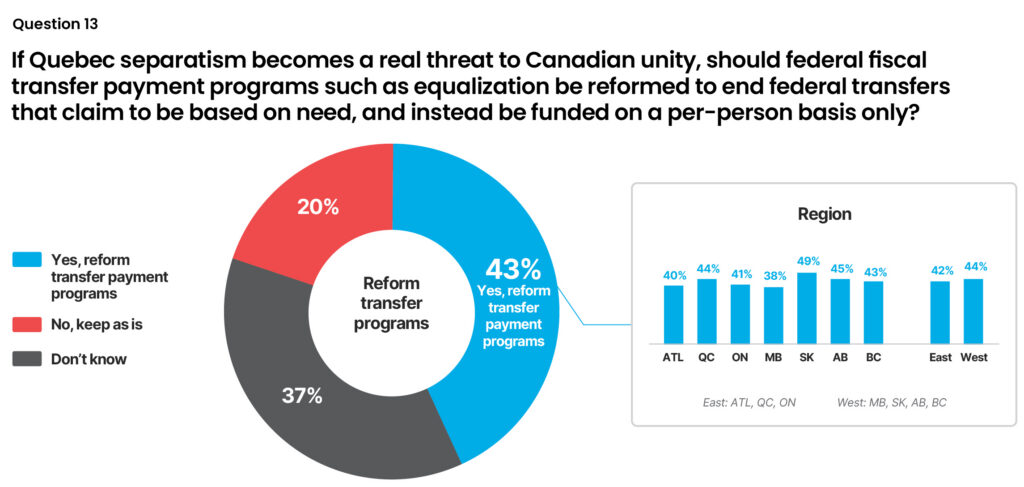
In the aggregate, Canadians are consistent in their support, opposition, or uncertainty for reforming federal transfers (Question 13). The distribution of responses is identical, whether the threat of separatism comes from the West or Quebec. There are minor regional differences, but across demographics, including provinces that have contributed to equalization (versus those who have not), sentiment follows the overall totals.
Base: All (2710)
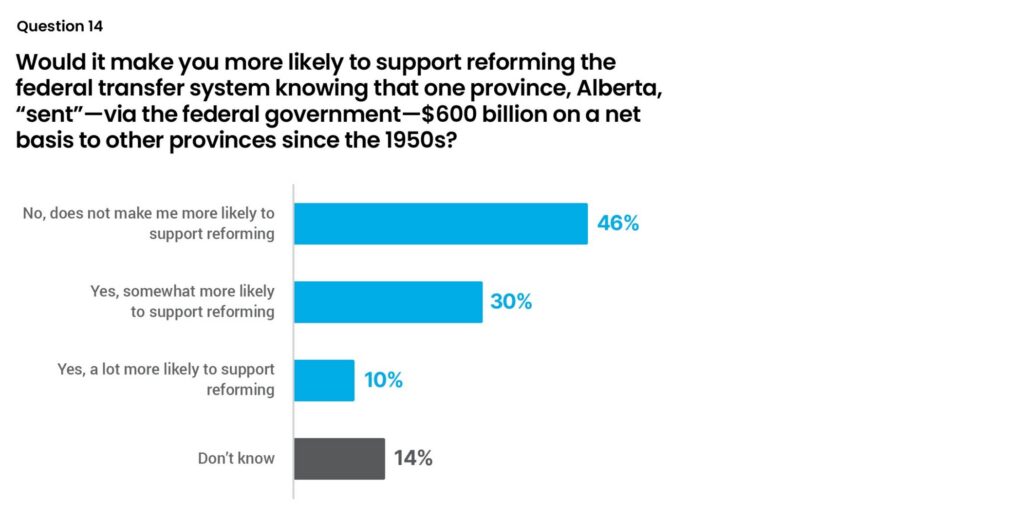
Exactly two in five Canadians are more likely to support reforming federal transfers after learning about Alberta’s net contribution (Question 14). Note that the 46 percent who responded “No” may include respondents who already support reform, and the “more likely” might have previously opposed reform.
Base: All (n=2710)
Provincial disparities in parliamentary representation and what provinces give versus receive from Confederation remain contentious issues and pressing concerns. Our national survey collected polling data on Canadians’ views on these issues, as well as their appetite for navigating reforms and negotiating separatist demands. In summary:
The polling data reveal important regional differences that warrant sober consideration and further unpacking—beyond the scope of this report.
Please see PDF for appendices.
Please see PDF for references.
About the Aristotle Foundation for Public Policy
Who we are
The Aristotle Foundation for Public Policy is a new education and public policy think tank that aims to renew a civil, common-sense approach to public discourse and public policy in Canada.
Our vision
A Canada where the sacrifices and successes of past generations are cherished and built upon; where citizens value each other for their character and merit; and where open inquiry and free expression are prized as the best path to a flourishing future for all.
Our mission
We champion reason, democracy, and civilization so that all can participate in a free, flourishing Canada.
Our theory of change: Canada’s idea culture is critical
Ideas—what people believe—come first in any change for ill or good. We will challenge ideas and policies where they are in error, and buttress ideas anchored in reality and excellence.
Donations
The Aristotle Foundation for Public Policy is a registered Canadian charity and all donations will receive a tax receipt. To maintain our independence, we do not seek nor will we accept government funding. Donations can be made at www.aristotlefoundation.org.
The Aristotle Foundation for Public Policy has internal policies to ensure research is empirical, scholarly, ethical, rigorous, honest, and contributes to the advancement of knowledge and the creation, application, and refinement of knowledge about public policy. Our staff, research fellows, and scholars develop their research in collaboration with the Aristotle Foundation’s staff and research director. Fact sheets, studies, and indices are all peer-reviewed. Subject to critical peer review, authors are responsible for their work and conclusions. The conclusions and views of scholars do not necessarily reflect those of the Board of Directors, donors, or staff.