



By giving lenient sentences to Indigenous offenders, their victims are continually denied justice
A recent Investigative Journalism Bureau article, which appeared in the National Post, reiterated what we have long known: in Canada, Indigenous women are killed at a much higher rate — tragically, six-times higher — than non-Indigenous women.
The article quoted experts who blame the Canadian justice system for failing Indigenous women. They note that those found guilty of their abuse or murder generally face less serious sentences than perpetrators of crimes committed against non-Indigenous women.
Of 1,329 suspicious deaths of women between 2019 and 2025, more than 25 per cent (340) were Indigenous, according to the article. Of the 76 cases that went to trial, 46 per cent were convicted of manslaughter rather than first- or second-degree murder.
In 97 per cent of cases, the victim and accused were known to each other. This raises an inconvenient truth about crime and punishment in Canada and the effect of the “Gladue principle” — which the article does not mention.
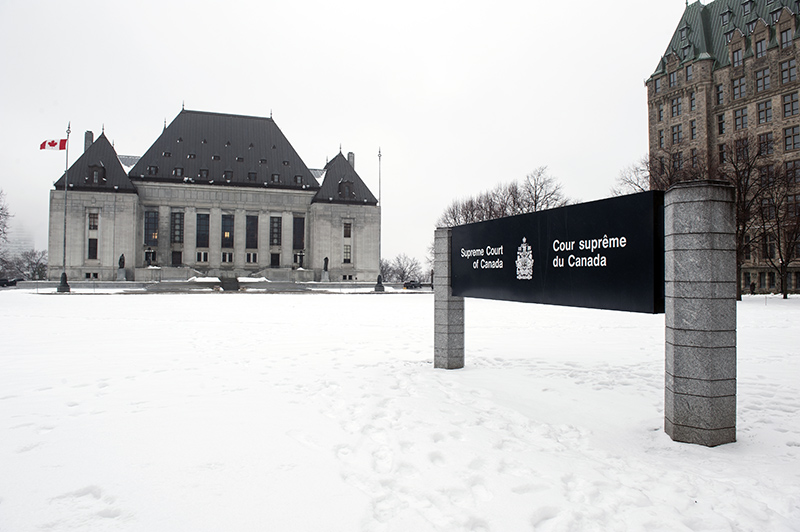
R v Gladue is the 1999 Supreme Court ruling that addressed Indigenous over-representation in Canadian jails. It mandated that courts take into account systemic factors, including the legacy of colonialism, residential schools and inter-generational trauma in sentencing.
Unfortunately, Gladue has led to a painful legacy all its own. Simply put, it is a major reason why Indigenous offenders, including those accused of domestic and sexual violence against their Indigenous partners, receive lesser sentences.
This was recently, bravely highlighted by now-retired judge Paul Bychok who, last June, presided over R v T.T. in the Nunavut Court of Justice. T.T. — an Indigenous heavy equipment operator with a self-acknowledged “good life” — was charged with assault, sexual assault and voyeurism against his own daughters. He had nine prior convictions for violent crimes, including two for sexual assault, six for assault and one for sexual interference of a minor.
Sentencing T.T. to eight years, Judge Bychok resisted the “totality” sentence (five to six years) proposed by the prosecutor and the “merciful” sentence (two to five years) submitted by T.T.’s defence lawyer, who argued against a transfer to a federal penitentiary in another province.
Citing a Nunavut Court of Appeal case, Bychok noted the “reluctance on the part of trial judges to sentence accused persons to penitentiary time, because it means they have to leave the North.” He continued: “Denunciation and deterrence are not adequately served by a presumption that those who commit sexual offences against children and adolescents (in Nunavut) are immune from penitentiary sentences.”
On Gladue, Bychok said, “It is simply wrong to say … that Mr. so-and-so ‘is an Inuk, therefore he’s entitled to a conditional sentence.’ That bald assertion reduces (Gladue) to the very ethnic discount warned against by several courts of appeal. (Gladue) was never intended — and should not be applied as — engaging an automatic ‘heritage-based discount.’”
Judge Bychok noted that “Nunavut’s hundreds of victims of domestic and sexual violence are living a nightmare,” and that it takes “tremendous courage” for victims in remote communities to come forward to testify, often in the presence of the family of the accused.
Bychok was talking about the North, but it could be Saskatchewan. Or Manitoba. Or Ontario. In short, he said, “Far too many reported cases across the country appear to give mere lip service to … the hurt done to victims of domestic and sexual violence,” adding, “Colonialism’s legacy has affected Inuit women and girls every bit as much as Inuit men.”
In other words — despite the recommendations by the federal missing and murdered women inquiry that deterrence be the priority, above all — the Gladue principle has helped to entrench, not prevent, two-tier justice against Indigenous women in Canada. A terrible irony.
And speaking of ironies: in December, the federal government introduced Bill C-16, the protecting victims act, whose goal is to reduce violence against women and children. C-16 categorizes murder motivated by hate, including femicide, as first-degree murder, even if no planning or deliberation was involved.
Aside from rewriting what, for centuries, has constituted the evidentiary threshold to prove murder, the bill does not address whether Gladue — and lower sentences for Indigenous offenders — will trump those key elements of the proposed law.
In R v T.T., Judge Bychok cited a female Inuk elder from Pond Inlet who, discussing Gladue, once told him that women are “supposed to be protected by the Charter too.” He then quoted a “front-line medical professional” who said, “We need our women here to be taken seriously and for offenders to stop being complacent that they will get away with their offences.”
Unfortunately, neither looks likely.
Bronwyn Eyre is a senior fellow at the Aristotle Foundation for Public Policy, and Saskatchewan’s former minister of justice and attorney general.
Like our work? Think more Canadians should see the facts? Please consider making a donation to the Aristotle Foundation.
SUBSCRIBE TO OUR NEWSLETTER