
A shocking number of Canadian students cannot read at a basic level. Primarily focusing on Grade 3 and Grade 4 students, this report examines the state of early-grade literacy in Canada across provinces for which data is available. These grades are the focus for three reasons: These are the years for which assessment data is publicly available; Grade 3 marks a critical turning point in literacy education—the shift from learning to read to reading to learn; and if students do not learn how to read before they start Grade 4, the evidence suggests they will not learn to read until they are adults (if ever).
Literacy consists of four essential skills: listening, speaking, reading, and writing.1 It is more than merely identifying and decoding words. Strong reading comprehension is the ability to understand the words and sentences one is reading.2 According to the United Nations Educational, Scientific and Cultural Organization, in industrialized countries, individuals with less than a Grade 5 education are classified as illiterate, while those who have not met Grade 9 proficiency are considered functionally illiterate.3
And yet, a large minority of Canadians cannot read without assistance by the end of Grade 3. In October 2022, the Ontario Human Rights Commission (OHRC) published a report, titled Right to Read, addressing “whether students with reading disabilities have meaningful access to education as required under the Ontario Human Rights Code.”4 The inquiry focused on the Ontario public education system’s neglect of evidence-based approaches to teaching reading, and found that it is not only students with reading disabilities who do not have access to meaningful education. The inquiry found that in 2018, only 62 percent of Ontario’s Grade 3 students were meeting the provincial Education Quality and Accountability Office standard unassisted.5
In other words, more than one in three students (38%) cannot read by the end of Grade 3.
Grade 3 illiteracy would be less concerning if those students achieved literacy in later grades; however, this is often not the case. The Chief Commissioner of the OHRC, Patricia DeGuire, noted that students who are not reading by third grade may never learn to read well, placing them at a long-term academic disadvantage.6
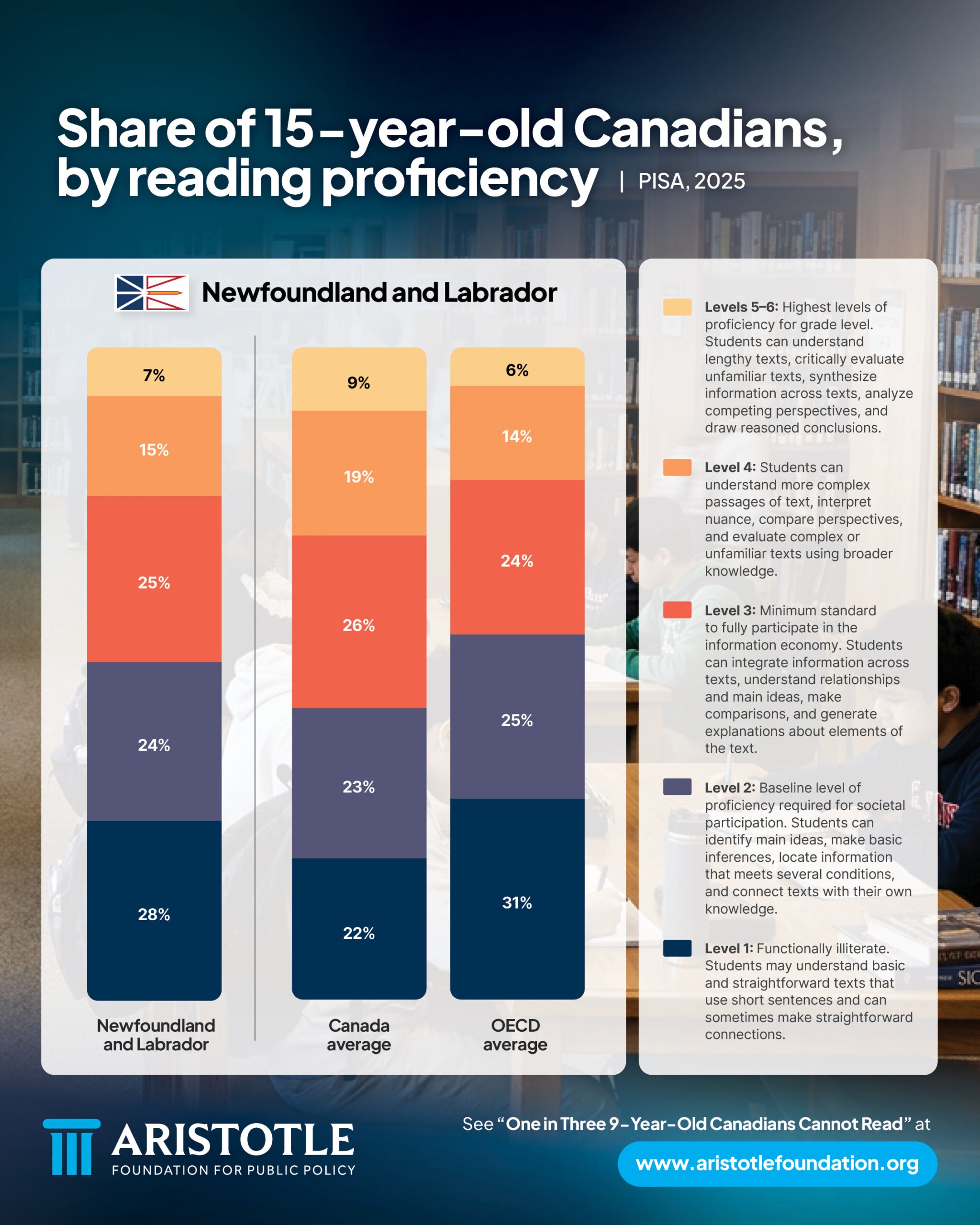
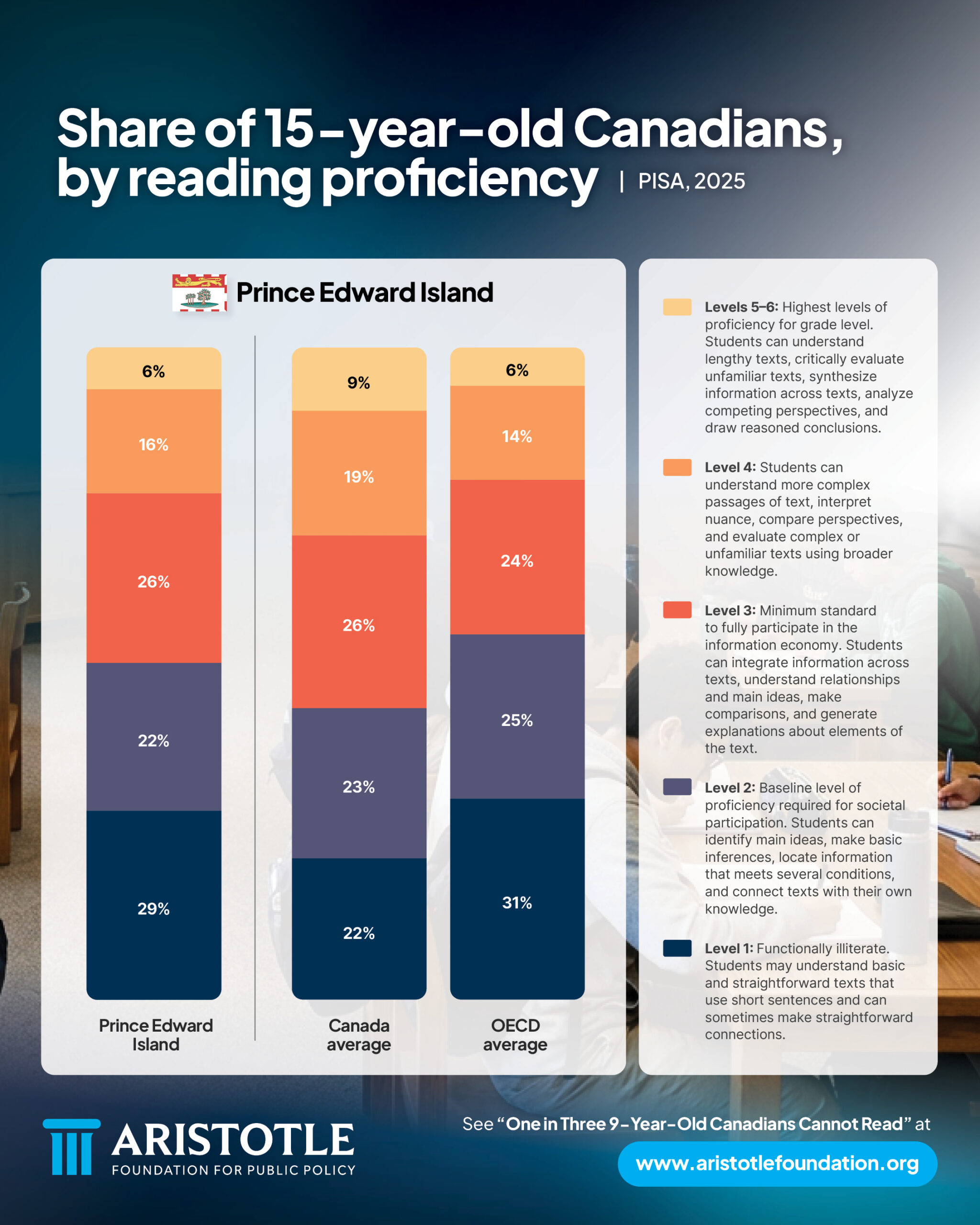
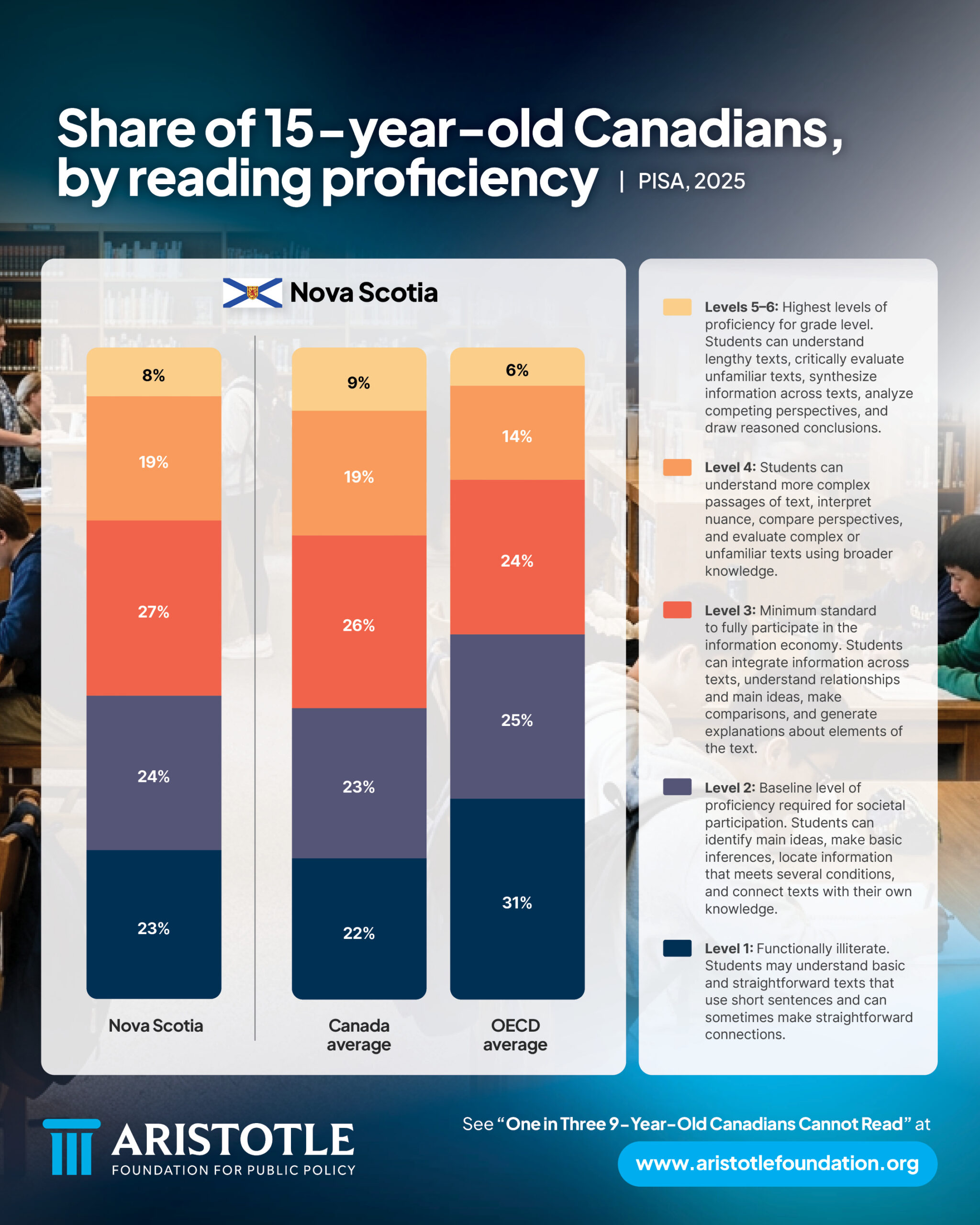
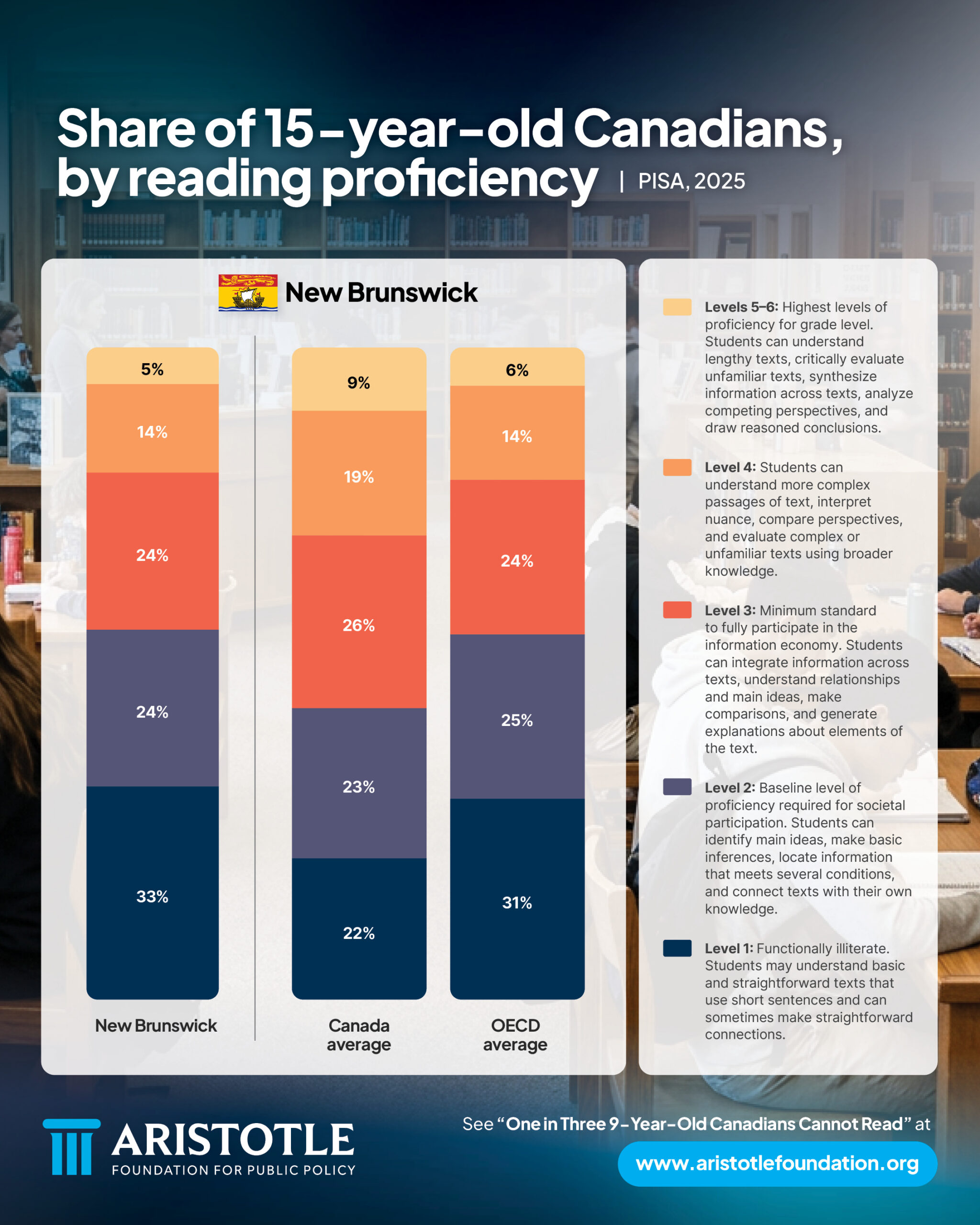
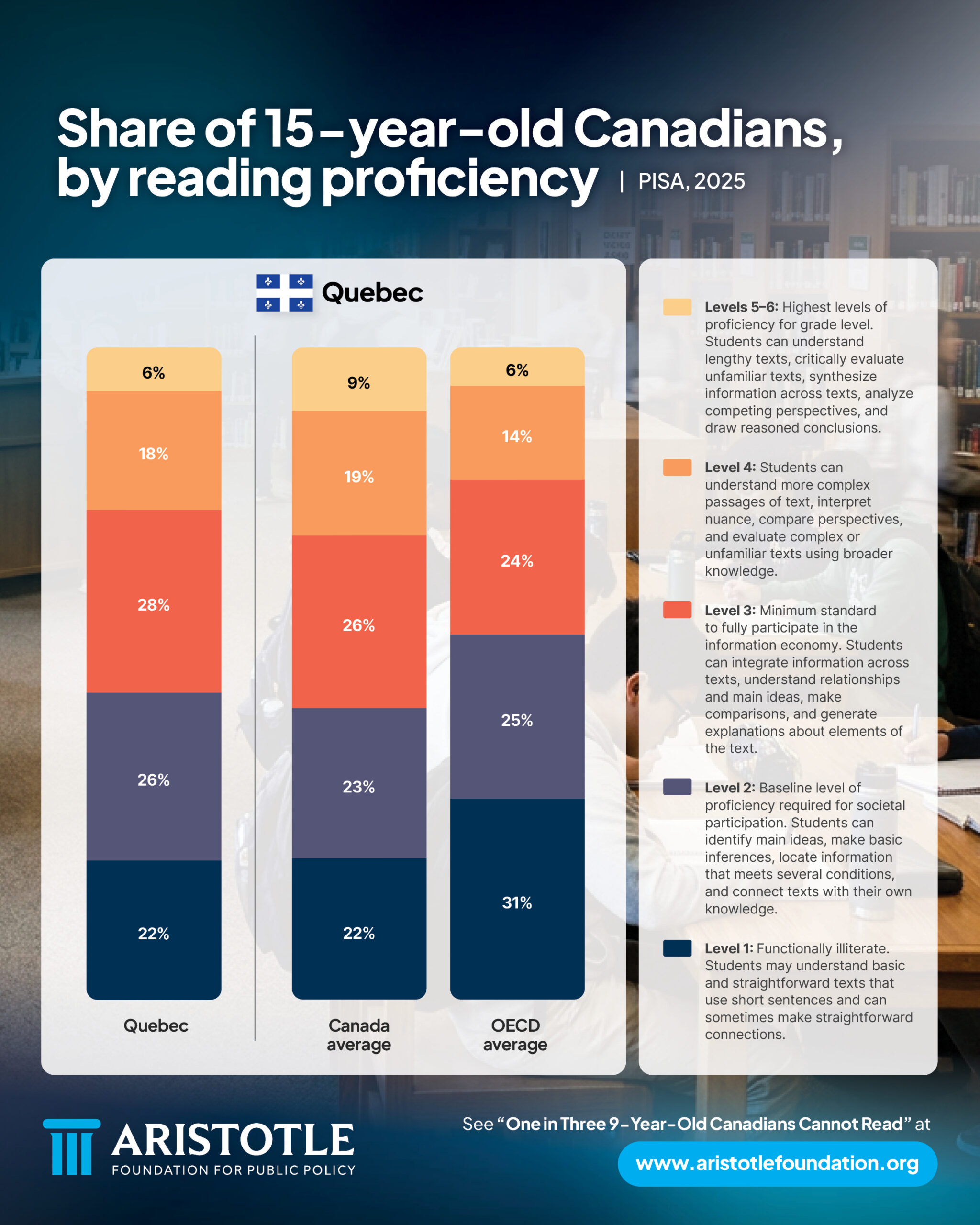
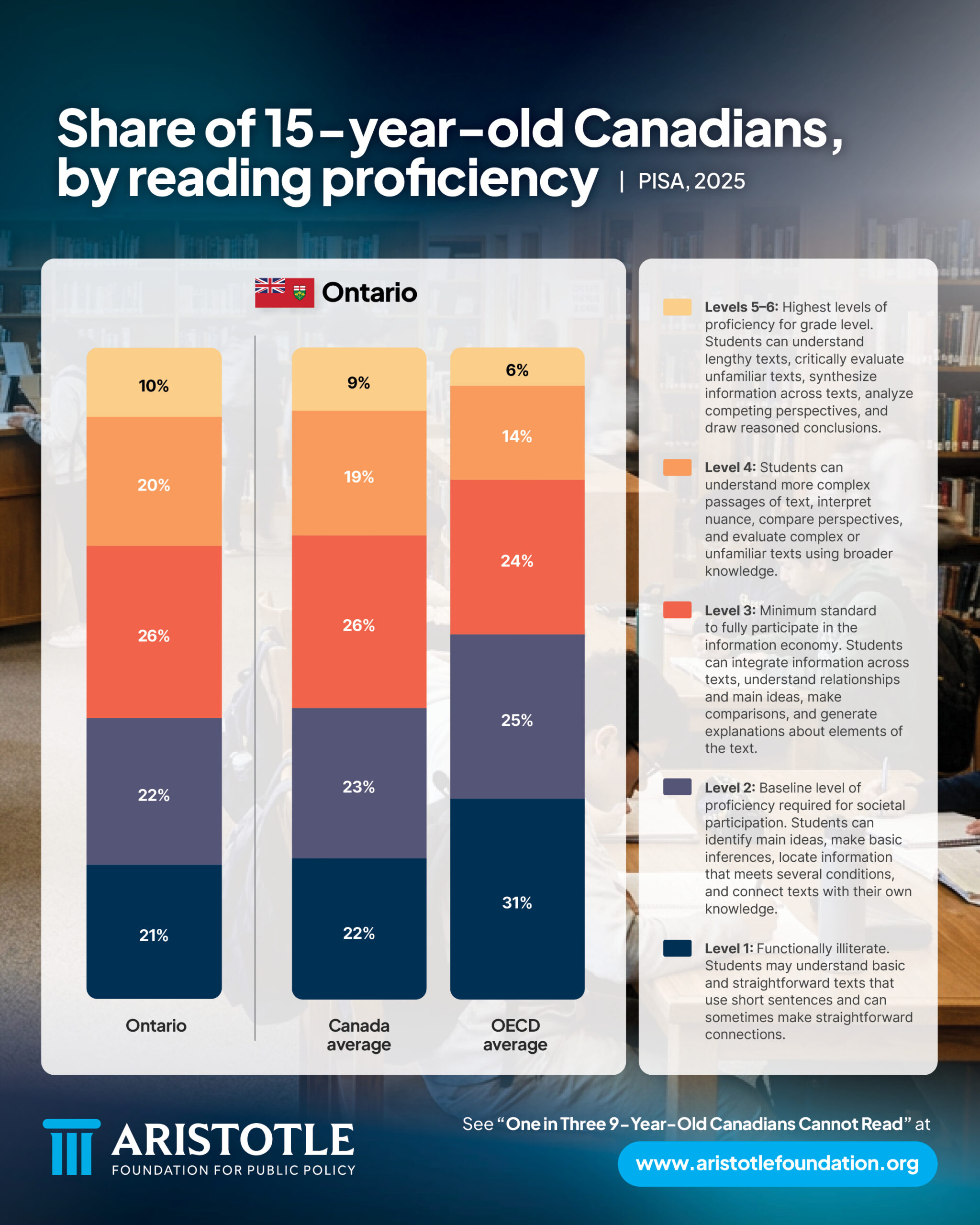
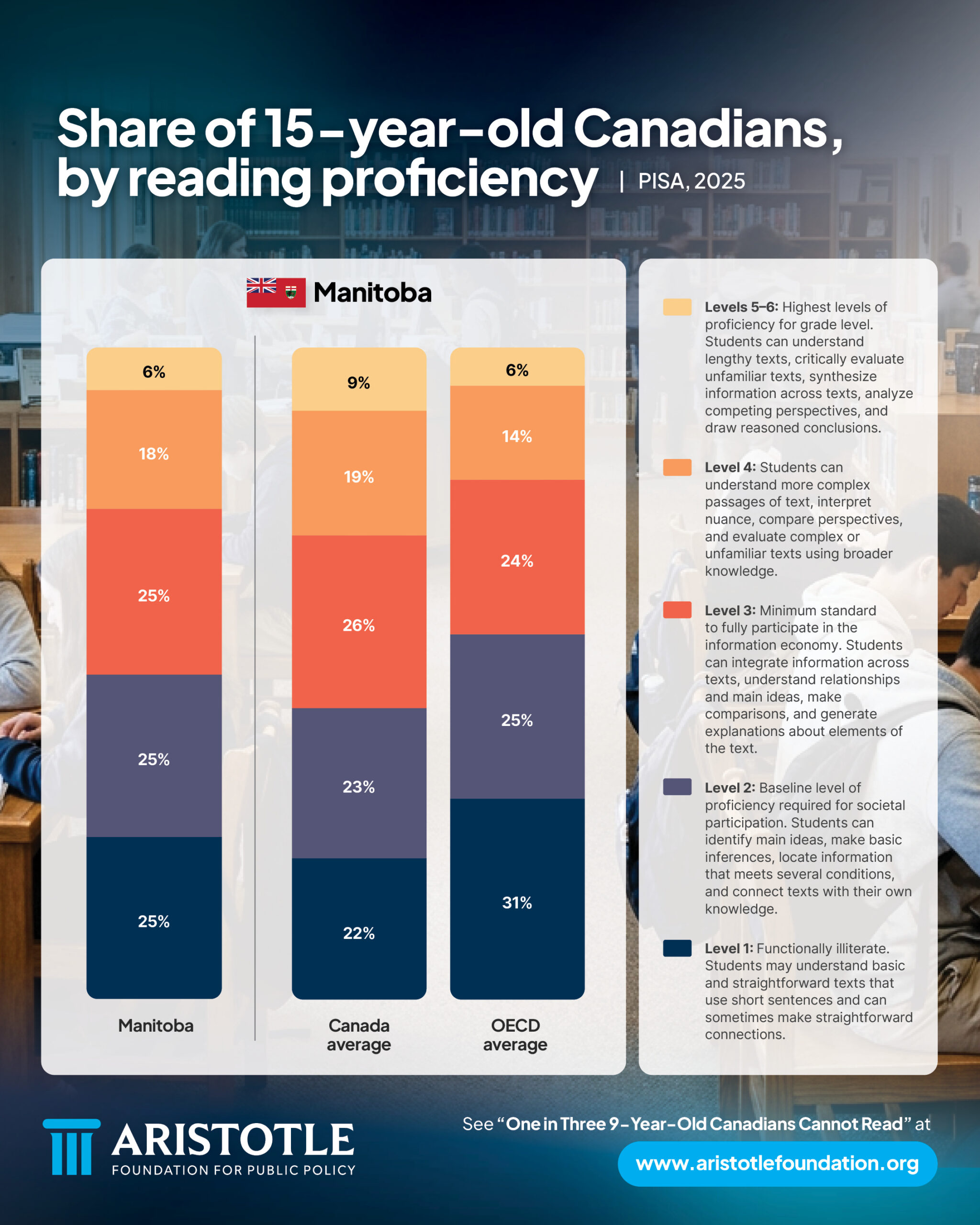
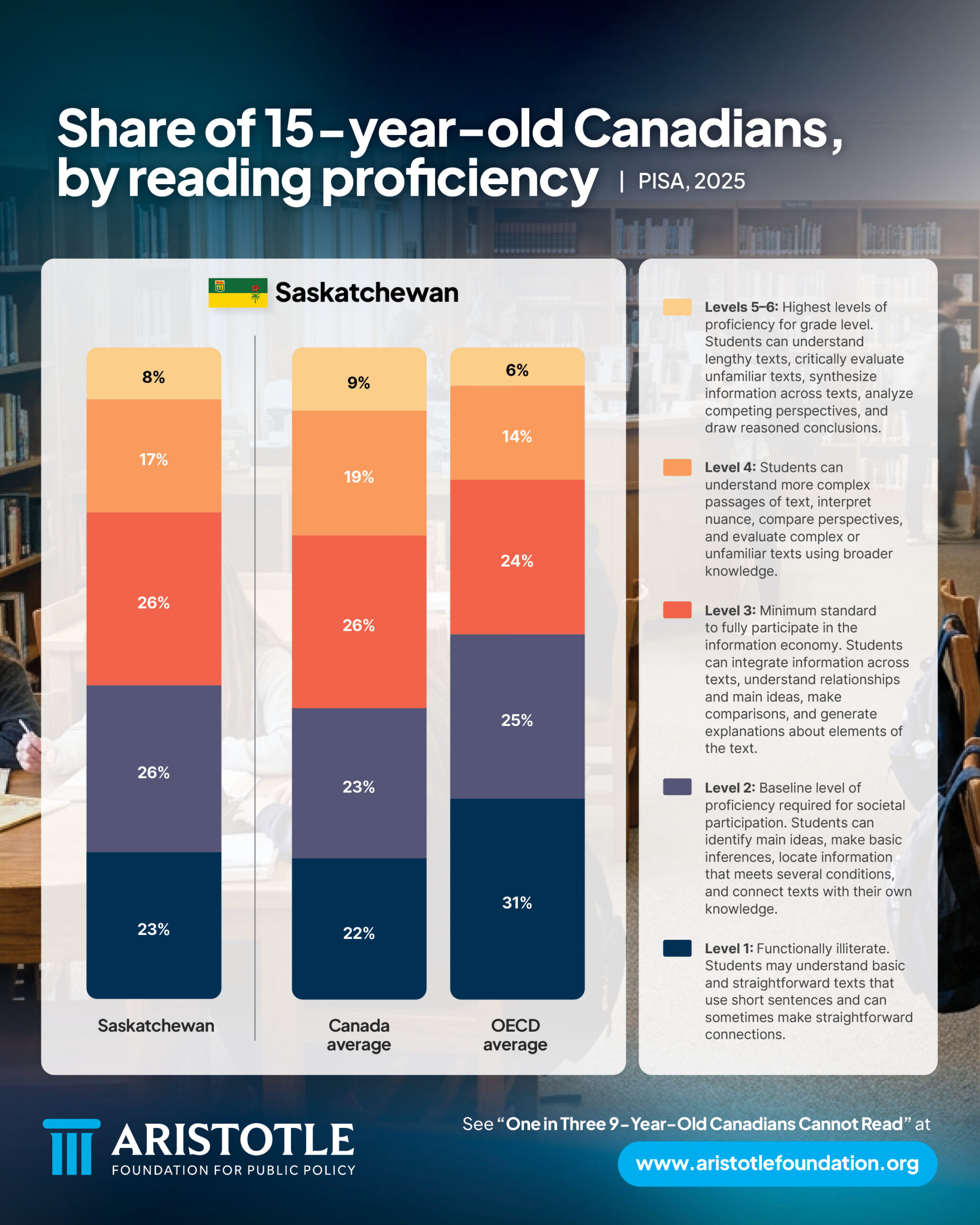
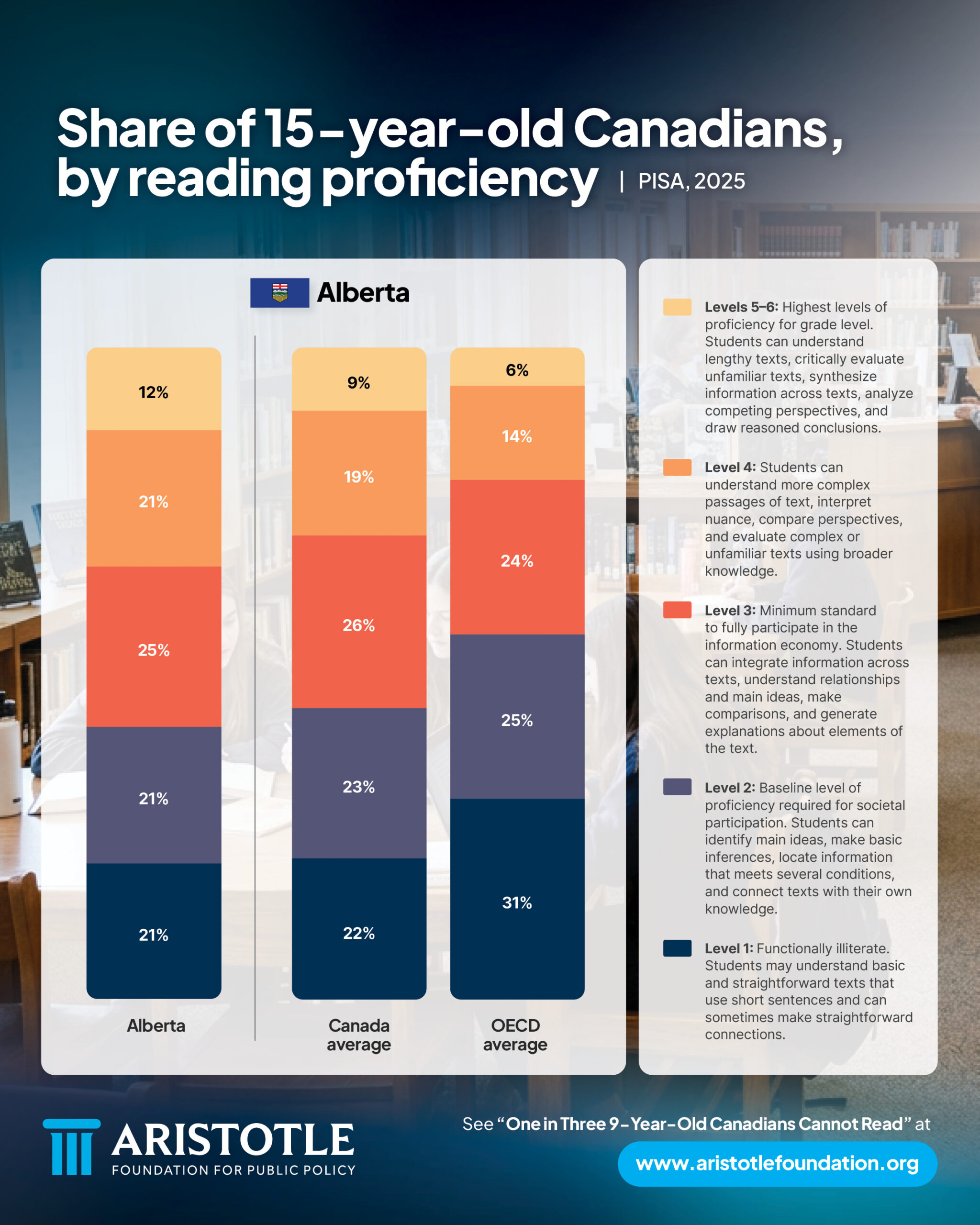
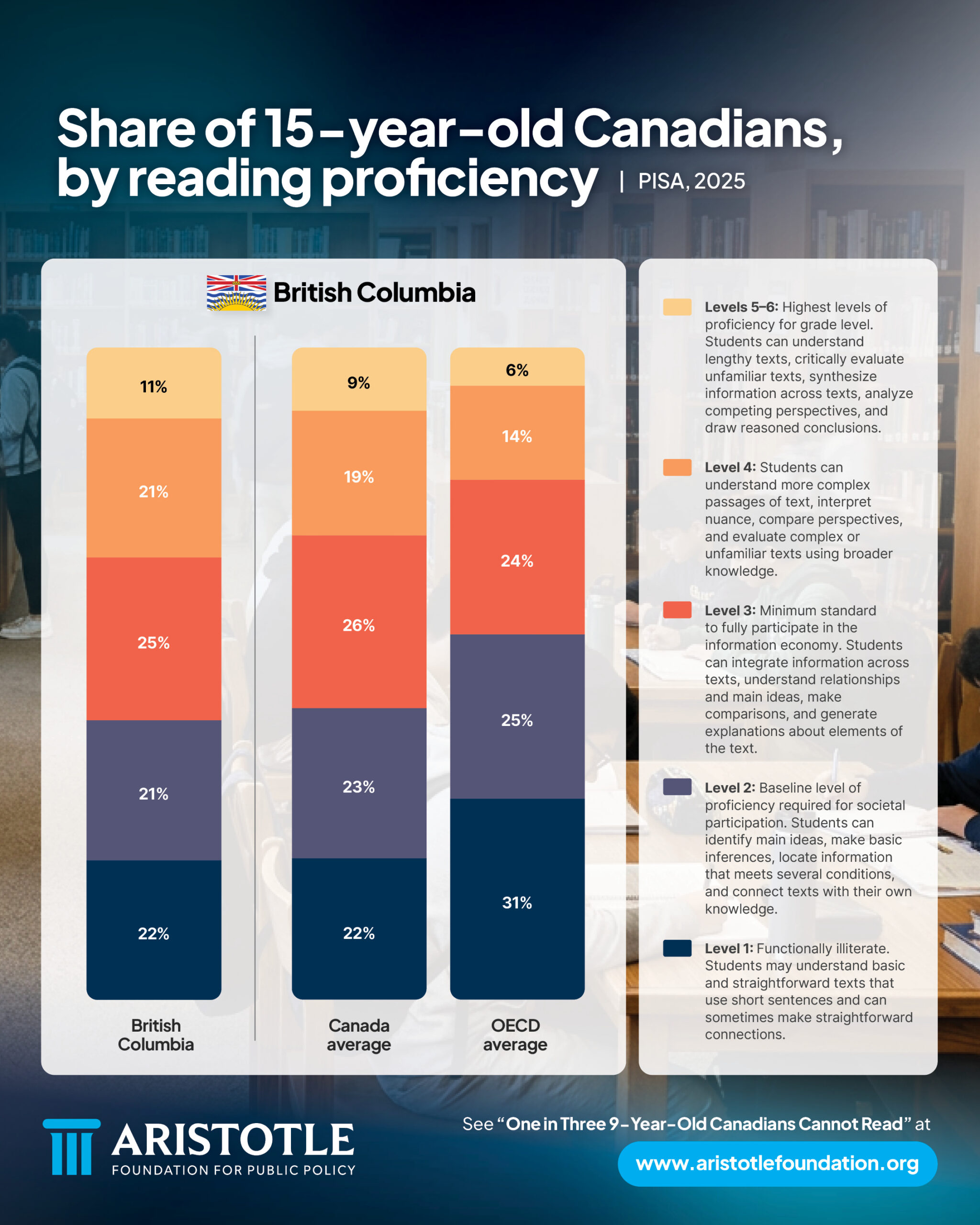
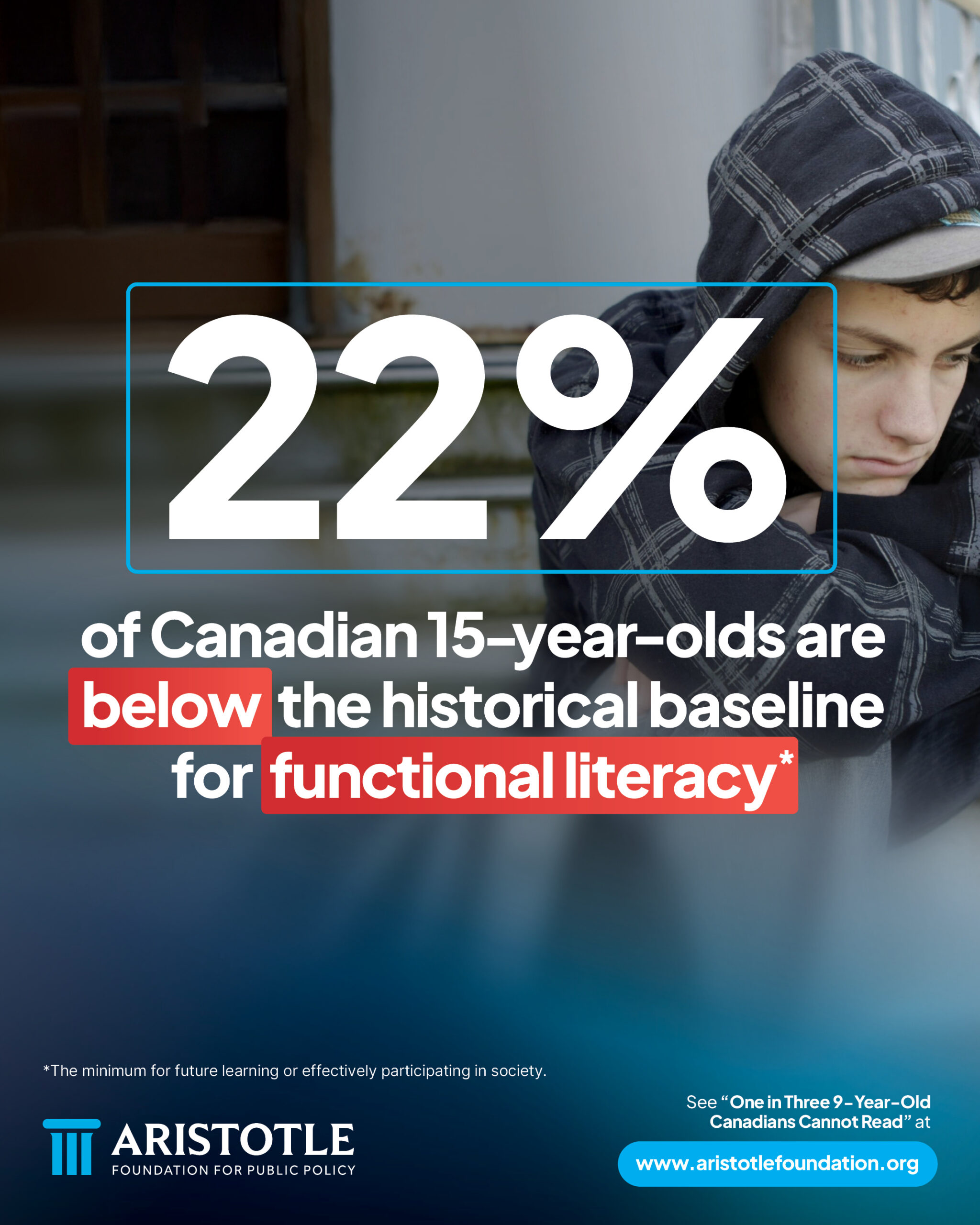
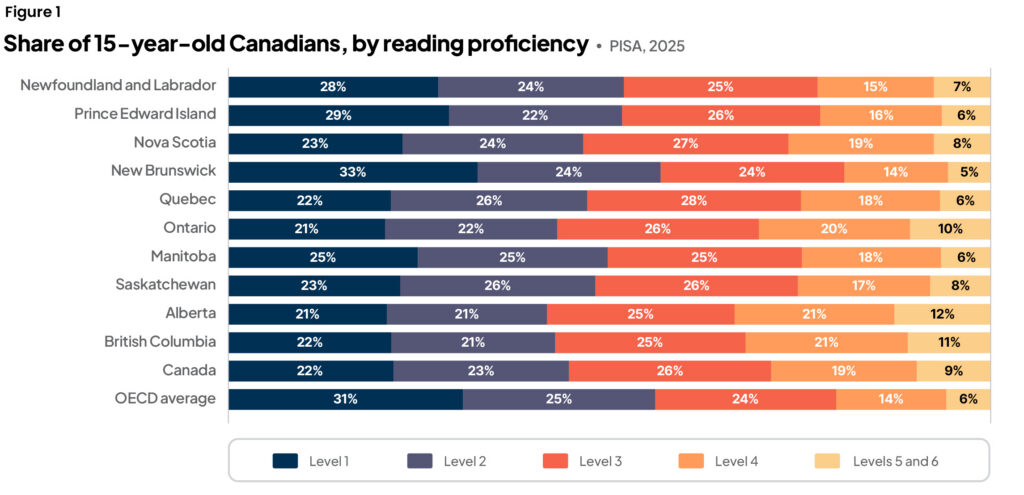
Fixing reading after Grade 3 is possible, but impracticably expensive in terms of both time and money. The OECD’s Programme for International Student Assessment (PISA) delineates the unfortunate reality that competency does not improve much in later grades, with 22 percent of Canadian 15-year-olds below the historical baseline for functional literacy (i.e., the minimum for future learning or effectively participating in society) and 23 percent at the baseline. In Figure 1, these are displayed as Level 1 and Level 2, respectively.7 Of note, the number of Canadian students below basic proficiency (Level 2) increased 22 percent (i.e., 4 percentage points) from 2022 to 2025.
Notes:
- Level 1: Functionally illiterate. Students may understand basic and straightforward texts that use short sentences and can sometimes make straightforward connections.
- Level 2: Baseline level of proficiency required for societal participation. Students can identify main ideas, make basic inferences, locate information that meets several conditions, and connect texts with their own knowledge.
- Level 3: Minimum standard to fully participate in the information economy. Students can integrate information across texts, understand relationships and main ideas, make comparisons, and generate explanations about elements of the text.
- Level 4: Students can understand more complex passages of text, interpret nuance, compare perspectives, and evaluate complex or unfamiliar texts using broader knowledge.
- Levels 5-6: Highest levels of proficiency for grade level. Students can understand lengthy texts, critically evaluate unfamiliar texts, synthesize information across texts, analyze competing perspectives, and draw reasoned conclusions.
Source: Vanja Elez et al., “Measuring Up: Canadian Results of the OECD PISA 2025 Study,” The Council of Ministers of Education, Canada, 2026, 69, https://cmec.ca/Publications/Lists/Publications/Attachments/448/PISA_2025_Public_Report_EN.pdf.
However, the complexities of the digital world and information economy mean that the historical baseline is no longer adequate. Today, Level 3 is now considered the minimum literacy needed to cope with the increasing information demands of our society.8 Moreover, the Programme for International Assessment for Adult Competencies Statistics (PIAAC) finds that 30 percent of Canadian adults are at Level 2 literacy as of 2023.
Taken together, these findings suggest that early literacy gaps are not resolved over time but instead persist into adolescence and adulthood.
The Right to Read inquiry produced 157 recommendations addressed to the Ministry of Education to improve Ontario’s Grade 3 literacy rates. The inquiry evaluated five key components of strong and successful reading instruction: curriculum and teaching strategies, early screening for reading disabilities, reading interventions, accommodations for students with reading disabilities, and professional and timely reading assessments. The report provided a call for much needed reform that has reverberated across the country.
The OHRC sounded the alarm regarding Ontario. But other provincial assessments do not look any better. Alberta, which began implementing evidence-based reforms about one year before the OHRC report was published, may be the exception.
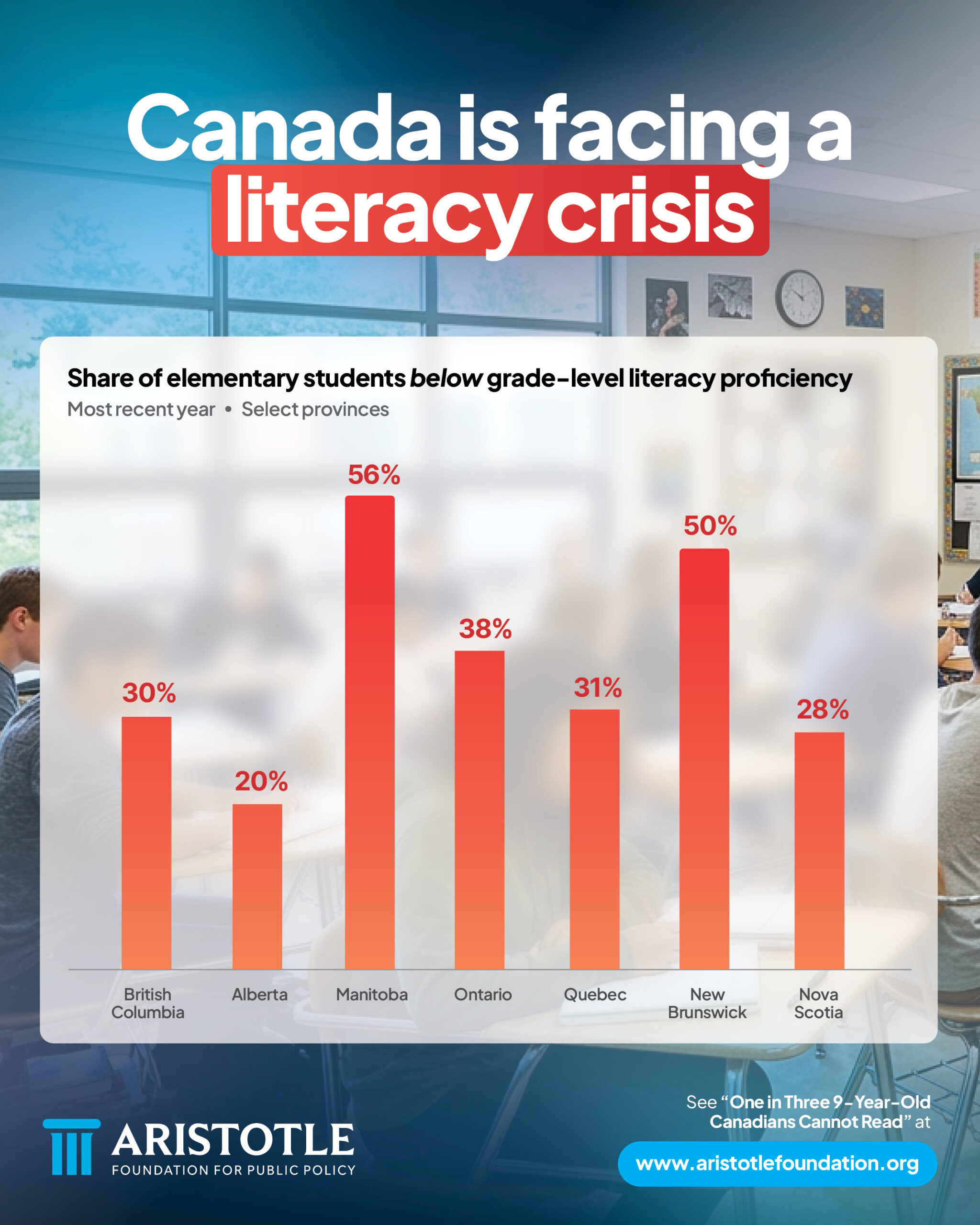
Canadian provinces conduct provincial literacy assessments in either Grade 3 or Grade 4. Both grades have been included in the Canadian overview with the understanding that they are not perfectly comparable, since they measure literacy at slightly different stages of development. In British Columbia, the Foundation Skills Assessment (FSA) Grade 4 results show that 30 percent of students are not meeting the proficiency benchmark.9 Most concerning are Manitoba’s Grade 3 reading results, which show only 44.9 percent of students met provincial reading standards in 2024.10 Nova Scotia’s Grade 3 students and New Brunswick‘s Grade 4 students show 72 percent and 60.5 percent achieving basic competency, respectively, in 2024.11 In Quebec, researchers found 77.7 percent of Grade 4 students met or exceeded the provincial reading standard in 2019. In 2021, this number declined to 69.3 percent, likely due to pandemic disruptions.12 Regardless, north of 30 percent of Quebec’s Grade 4 students do not meet the provincial literacy standards (Figure 2).
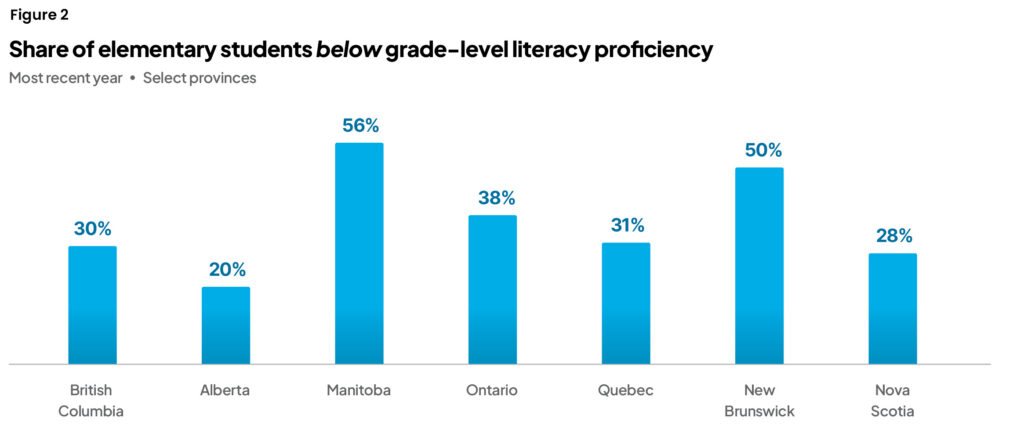
Note: Assessments are for Grade 3 students in Manitoba, Ontario, and Nova Scotia, and for Grade 4 students in British Columbia, Alberta, New Brunswick, and Quebec.
Sources: British Columbia, “B.C. Public School Results: Foundation Skills Assessment” (Government of British Columbia), https://studentsuccess.gov.bc.ca/school-district/099/report/fsa; Progress in International Reading Literacy Study “International Benchmarks–PIRLS 2021,” International Association for the Evaluation of Education, 2021, https://pirls2021.org/wp-content/uploads/2022/files/4-1_international-benchmarks-1.pdf; Manitoba, “Manitoba K–12 Education Dashboard: Grade 3 and 4 Assessment” (Government of Manitoba, 2024), https://www.edu.gov.mb.ca/k12/grad_rates/grade3.html; Ontario Human Rights Commission, “EQAO 2018-19 Provincial Elementary School Report,” in Right to Read (Government of Ontario, 2022); Nova Scotia, “Provincial Assessments and Examinations” (Government of Nova Scotia, 2024), https://plans.ednet.ns.ca/; Auditor General of New Brunswick, “Student Achievement in Literacy” (Government of New Brunswick, 2026), 36, https://www.agnb-vgnb.ca/uploads/volume_section_translations/695/file/agnb-VI-C3-2026-En.pdf ; Sylvana Côté et al., “La performance en lecture des élèves québécois de 4e année du primaire: comparaison des notes avant et après les fermetures scolaires associées à la pandémie de COVID-19,” Canadian Journal of Education / Revue canadienne de l’éducation 47, no. 3 (2024): 839.
The exception is Alberta. Alberta’s provincial assessments are not available to the public, but their Grade 4 Progress in International Reading Study (PIRLS) testing shows 80 percent literacy in 2021.13 That said, with the rollout of a phonics-based early literacy curriculum beginning in 2021 combined with mandated literacy screenings and interventions, Alberta may be the province of literacy leadership. Time will tell. In Alberta’s far north, Fort Vermillion superintendent Mike McMann adopted this program several years in advance of the province-wide rollout,14 and has seen Grade 9 reading proficiency increase from 43 percent to 86 percent.15
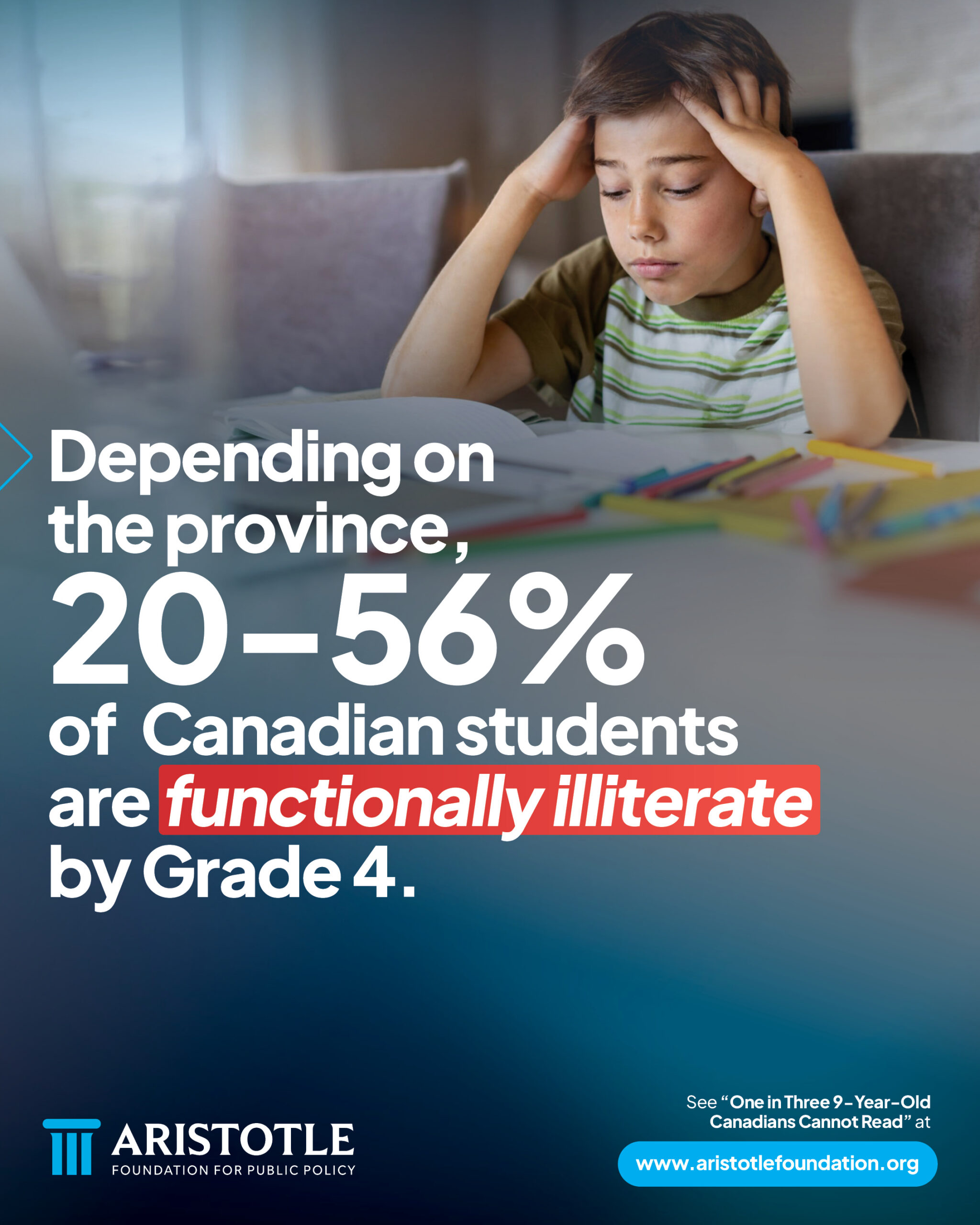
Across the provinces, therefore, literacy proficiency rates at Grades 3 or 4 range from 44 percent to 80 percent, with no jurisdiction showing consistent yearly improvement, with the possible exception of Alberta (recent data unavailable). Overall, between 20 percent and 56 percent of students in Canada are illiterate, according to the UNESCO definition, by Grade 4. The OHRC Right to Read report asserts that these high percentages are unnecessary.16 The report notes that “[w]ith science-based approaches to reading instruction, early screening and intervention, we would expect to see only about 5 percent of students still below grade-level expectations on word-reading accuracy and fluency.”17
Four years have passed since the Right to Read public warning, and yet a 2024 review of the report by the OHRC noted limited receptivity to its recommendations.18 The review expresses concern that awareness of the report among educators remains limited. Calls for change are effectively moot if they are not widely communicated or understood. The OHRC asserts that some school boards are interested in training teachers on the structured literacy approach and science of learning. But they acknowledge disappointment that many boards have not created a strategic plan and continue to provide professional development instruction in the less effective balanced literacy pedagogy. The OHRC expressed concern about teachers, reporting “that they must continue to undergo additional professional development on practices that the Inquiry found should be replaced. These teachers are eager to engage in new learning. Further, given the difficulty of providing release time to teachers, it is not a beneficial use of time to offer ineffective professional development.”19
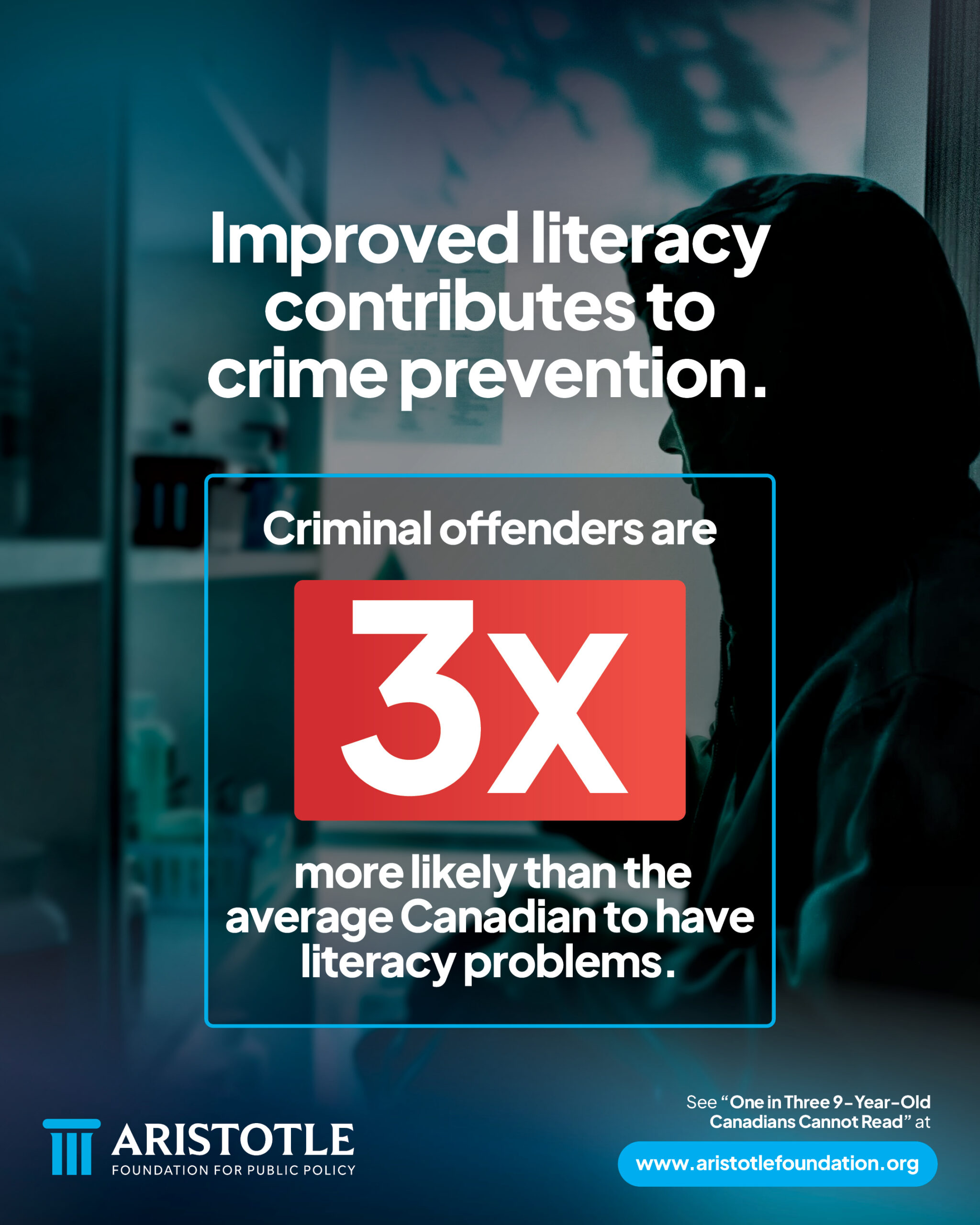
Literacy matters—both to the individual person and society. Physicians of Ontario Neurodevelopmental Advocacy (PONDA) highlights the connection between literacy and health outcomes, calling for reading instruction that includes systematic phonics, early screening, and evidence-based interventions.20 Low literacy correlates with poorer health, lower socioeconomic status, and reduced medical treatment adherence.21 Increases in literacy and numeracy also contribute directly to improved economic outcomes. An increase of 1 percent in literacy is associated with a 3 percent increase in GDP,22 due to improved labour productivity and higher economic growth rates.23 Similarly, the Canadian Association of Chiefs of Police has emphasized the role of improved literacy in crime prevention.24 Criminal offenders are three times more likely than the average Canadian to have literacy problems.25 And Canada’s democracy can function properly only when its citizens are informed and capable of engaging in debates about society and its goals. Citizens who struggle to read will find it more difficult to fulfill their civic role and contribute to the common good. But most importantly, tolerating lower than necessary literacy rates robs students of future life choices.
Tragically, many provincial school districts across Canada have been reluctant to abandon an approach to reading instruction that has failed to increase literacy rates.
But there is hope. Research shows that teaching phonics, with science of learning principles and content rich in knowledge, alongside early interventions for struggling students, can ensure that all achieve foundational literacy by Grade 3.26
Between 20 percent and 56 percent of Canadians cannot read by Grade 4, depending on the province—from over half of Manitoban students to one in four Albertan students. Evidence from national and international assessments shows that these gaps rarely close over time. Even when many students have not acquired basic literacy skills by Grade 3, schools often shift focus in higher grades away from foundational reading instruction, leaving struggling readers behind.
The costs to society are high. Children who do not master the ability to read early in life are more likely to have less healthy and productive lives and higher rates of mental health issues and incarceration. While the cost to Canada may be lower economic productivity and higher crime rates, the personal costs to children and their families let down by an education system that refuses to follow the evidence is incalculable.
David Livingstone, PhD, is a senior fellow with the Aristotle Foundation for Public Policy, a retired professor of liberal studies and political studies, and an honorary research associate at Vancouver Island University (VIU). Prof. Livingstone has edited two books: Liberal Education and Civic Well-Being in Canada – A Reappraisal of Bankrupt Education (Palgrave Macmillan) and Liberal Education, Civic Education, and the Canadian Regime: Past Principles and Present Challenges (McGill-Queen’s Press).
David Hunt, MPP, BBA, is the research director at the Aristotle Foundation for Public Policy. Hunt has authored and/or directed dozens of peer-reviewed research papers. His work has been presented at numerous conferences and to various levels of government, cited in major media, and used as evidence in court.
Pio Tran is a research intern at the Aristotle Foundation for Public Policy and an honours undergraduate student in the philosophy program at the University of British Columbia.
The authors would like to publicly acknowledge the research assistance of Ava Peacock; we are grateful for your contributions.
Who we are
The Aristotle Foundation for Public Policy is a new education and public policy think tank that aims to renew a civil, common-sense approach to public discourse and public policy in Canada.
Our vision
A Canada where the sacrifices and successes of past generations are cherished and built upon; where citizens value each other for their character and merit; and where open inquiry and free expression are prized as the best path to a flourishing future for all.
Our mission
We champion reason, democracy, and civilization so that all can participate in a free, flourishing Canada.
Our theory of change: Canada’s idea culture is critical
Ideas—what people believe—come first in any change for ill or good. We will challenge ideas and policies where in error and buttress ideas anchored in reality and excellence.
Donations
The Aristotle Foundation for Public Policy is a registered Canadian charity and all donations will receive a tax receipt. To maintain our independence, we do not seek nor will we accept government funding. Donations can be made at www.aristotlefoundation.org.
The Aristotle Foundation for Public Policy has internal policies to ensure research is empirical, scholarly, ethical, rigorous, honest, and contributes to the advancement of knowledge and the creation, application, and refinement of knowledge about public policy. Our staff, research fellows, and scholars develop their research in collaboration with the Aristotle Foundation’s staff and research director. Fact sheets, studies, and indices are all peer-reviewed. Subject to critical peer review, authors are responsible for their work and conclusions. The conclusions and views of scholars do not necessarily reflect those of the Board of Directors, donors, or staff.