New research reveals deep demographic, social, and economic shifts across Canada through a series of concise, accessible fact sheets that inform public dialogue.
FOR IMMEDIATE RELEASE
CALGARY – Canada is undergoing demographic transitions that are fundamentally altering communities, social safety nets, and public resources, according to a new research collection released today by the Aristotle Foundation for Public Policy.
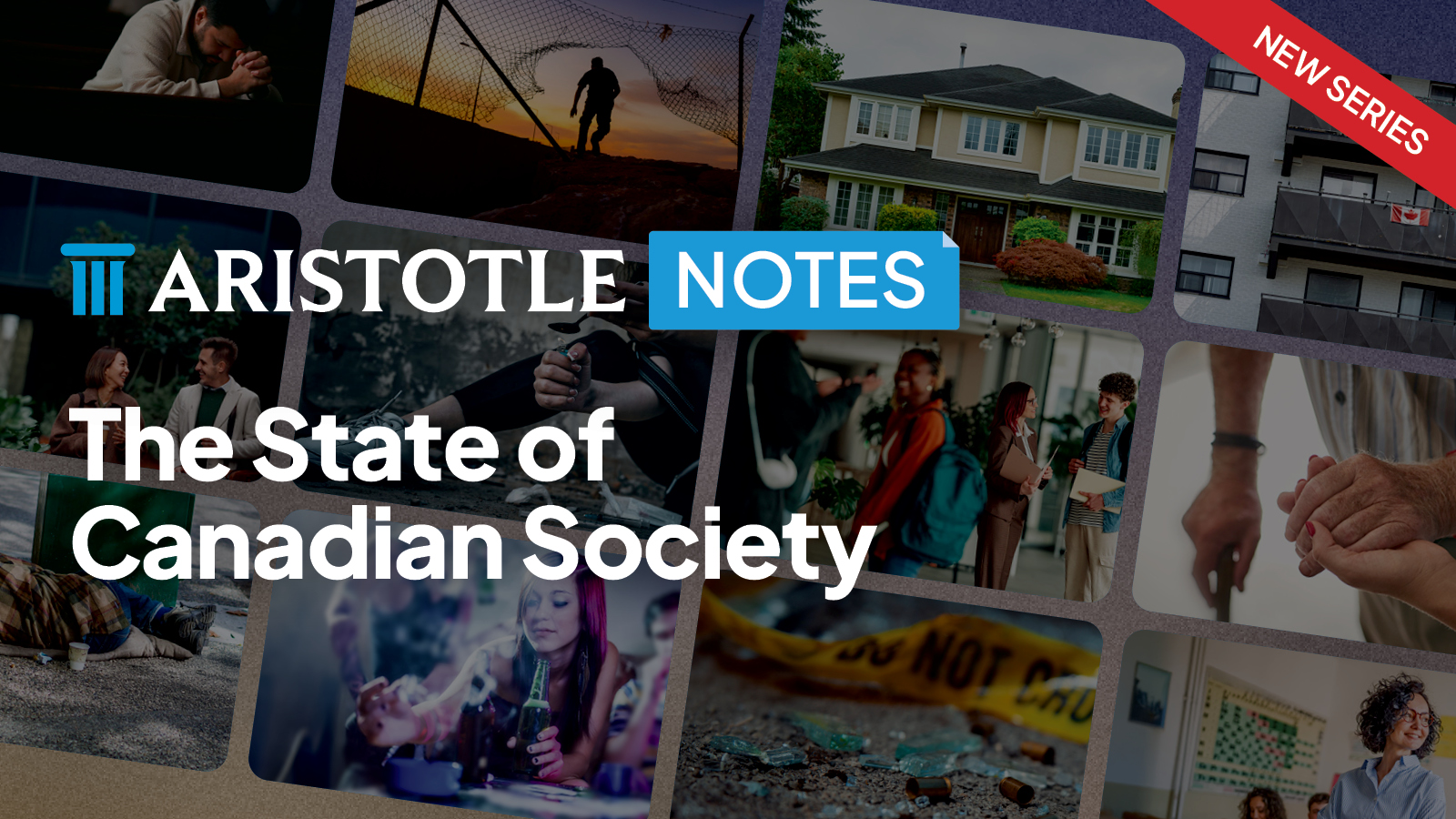
The new series, The State of Canadian Society, compiles official government data across 12 standalone fact sheets in an accessible fashion. The collection explores evolving realities across religious affiliation, language, household structures, immigration and asylum claims, housing subsidies, employment, senior benefits, education and wages, crime rates, and the drug crisis.
Key Findings
- Asylum system backlogs: Asylum claims reached a record 171,845 in 2024 before easing to 113,105 in 2025, leaving pending cases at the Refugee Protection Division at 299,614—a backlog roughly 60 times greater than in 2013.
- Aging population and rising entitlement costs: As Canadians aged 65 and older reached 20 percent of the population in July 2026, Old Age Security (OAS) and Guaranteed Income Supplement (GIS) spending is projected to reach up to 18 percent of federal expenditure by 2030.
- Housing and homelessness pressures: National median homelessness rose to 29.1 per 10,000 people by April 2026, while 842,000 Canadians aged 15 and over lived in subsidized housing.
- The ongoing drug crisis: Every day, 16 Canadians die of drug overdoses. Canada recorded 56,631 drug overdose deaths between 2016 and 2025, with Ontario, British Columbia, and Alberta accounting for over 80 percent of fatalities. Among students in Grades 7 to 12, 27.5 percent reported non-medical opioid use and 36.8 percent reported drinking alcohol.
- Shifting demographics and linguistic makeup: The share of people whose mother tongue is a non-official language rose from 8 percent in 1901 to over 23 percent in 2021, while individuals identifying as Christian declined from 77 percent in 2001 to 53 percent in 2021, alongside a rise in Canadians with secular views or no religion to 35 percent.
“Understanding these structural shifts across health, demographics, and public spending is essential for informed policy,” notes Aristotle Foundation senior economist, Ven Venkatachalam. “Clear, empirical data is vital to equipping citizens and policymakers to navigate these growing pressures.”
This series is the first in a new genre of short fact sheets called Aristotle Notes.
The State of Canadian Society fact sheets are available at aristotlefoundation.org.
-30-
Media Contact
Cathy Simpson
Outreach and Engagement Officer
cathys@aristotlefoundation.org
905-329-3548