


Aristotle Notes
📊 Why knowing about homelessness in Canada matters
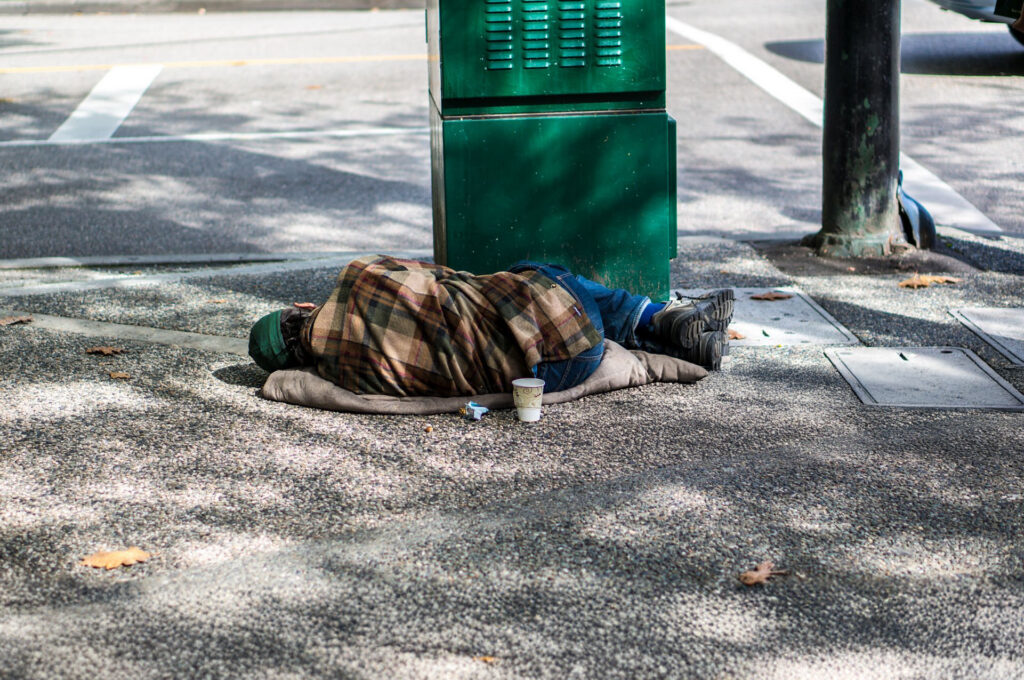
Homelessness is both a social and economic issue that affects individuals, families, and communities. In Canada, homelessness places significant pressure on shelters, policing, and healthcare. Understanding homelessness matters because it is a key indicator of a society’s social and economic well-being.
About 65,000 people experience homelessness on a single night across 75 Canadian communities, according to Housing Infrastructure and Communities Canada. (HICC).1 Out of the 65,000 people experiencing homelessness, 7 percent enumerated were staying in encampments, 20 percent were staying in outdoor locations, 56 percent in shelters, and 17 percent in transitional housing.
The national median rate of overall homelessness increased from 24 per 10,000 people in January 2024 to 29.1 per 10,000 people by April 2026, indicating a growing homelessness challenge across Canada. Rates rose in all community size categories, with the highest rates consistently observed in Tier 4 communities (populations of 1 million or more), increasing from 39.4 to 42.8 per 10,000 people. Smaller and mid-sized communities also experienced notable increases, suggesting that homelessness is becoming more widespread regardless of community size (see Table 1).
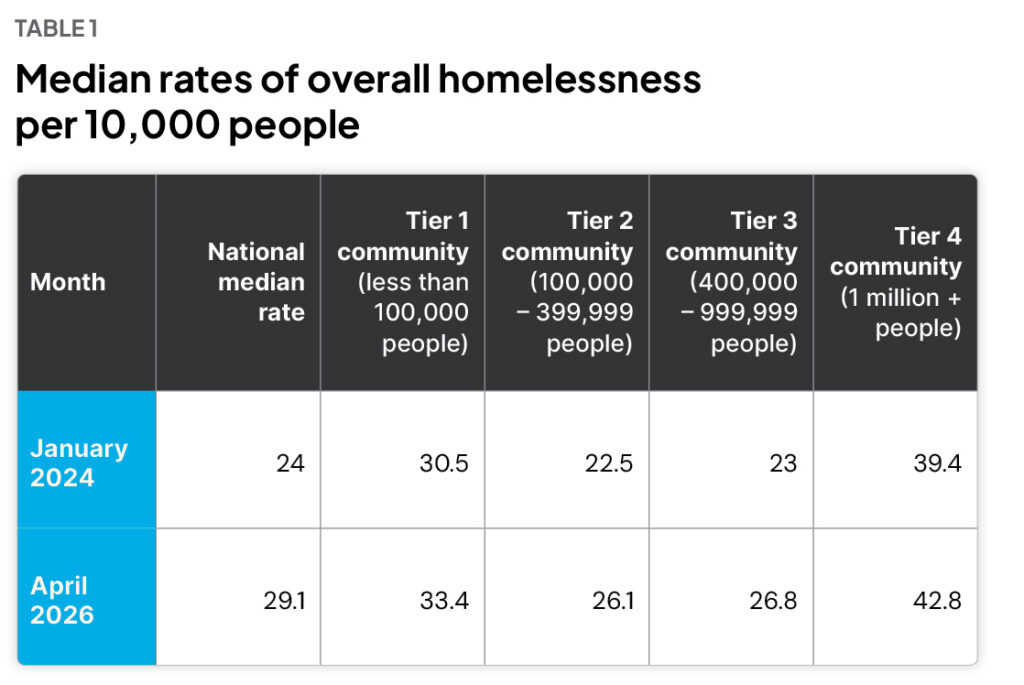
Source: Housing, Infrastructure and Communities Canada, 2026.
The data show notable regional differences in homelessness and shelter capacity across Canada. The Western and Northern Region has the highest homelessness rate at 28 people per 10,000 population and has a shelter bed availability of 7 beds per 10,000 people. In contrast, the Central Region has the lowest homelessness rate at 19 per 10,000 people, with 6 shelter beds per 10,000 people. The Atlantic Region has a homelessness rate of 24 per 10,000 people and 5 shelter beds per 10,000 people (see Table 2).
1 HICC uses Point-in-Time enumeration to count the number of people experiencing homelessness on a specific day and in defined communities.
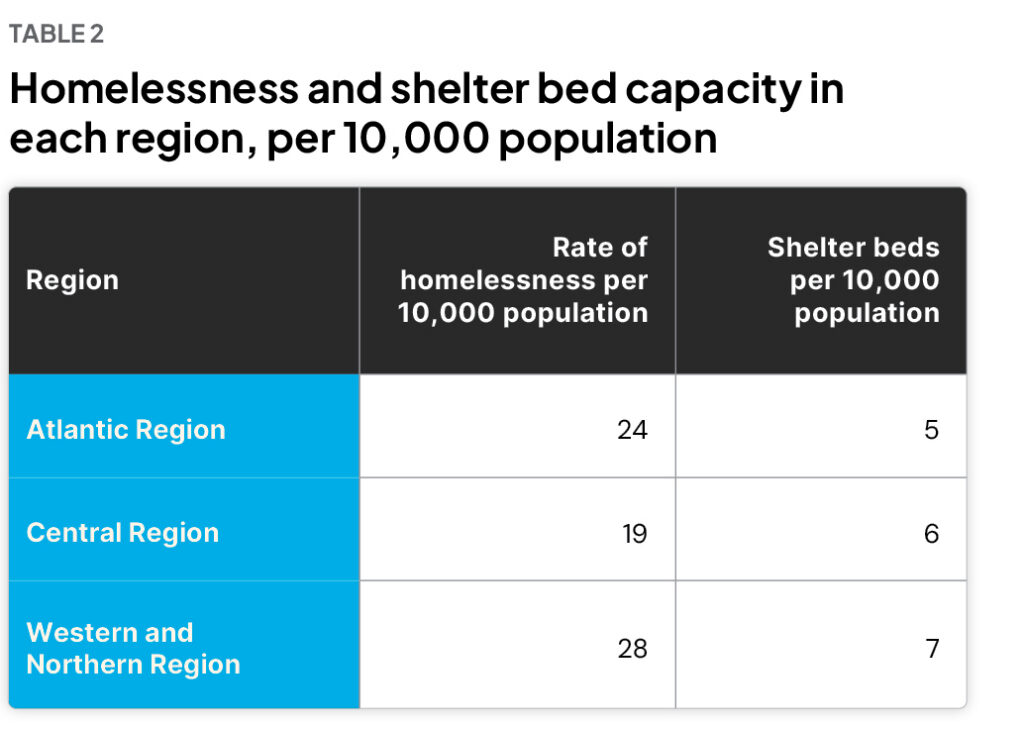
Source: Government of Canada, 2026 and Statistics Canada, 2026.
Everyone Counts 2025: Results from the Annual Enumeration of Homelessness (Ottawa: Housing, Infrastructure and Communities Canada, 2026), accessed September 7, 2026, https://housing-infrastructure.canada.ca/homelessness-sans-abri/reports-rapports/everyone-counts-2025-tout-monde-compte-eng.html.
National Homelessness Indicators (Ottawa: Government of Canada, 2026), accessed August 22, 2026, https://housing-infrastructure.canada.ca/homelessness-sans-abri/reports-rapports/nat-homelessness-indic-pancan-litinerance-eng.
“Homeless Shelter Capacity in Canada from 2016 to 2024, Housing, Infrastructure and Communities Canada (HICC)—Table 14-10-0353-01,”
Statistics Canada, September 11, 2026, https://www150.statcan.gc.ca/t1/tbl1/en/tv.action?pid=1410035301.
“Population estimates on July 1, by age and gender—Table 17-10-0005-01,” Statistics Canada, September 23, 2026, https://www150.statcan.gc.ca/n1/en/catalogue/17100005.
Aristotle Notes is a series of concise, accessible fact sheets designed to inform public dialogue and elevate everyday discussions. By delivering clear, reliable data and essential context, these notes equip media professionals, students, and citizens alike with the facts needed to navigate complex topics in our society.