


Aristotle Notes
📊 Why knowing about teenage drug use in Canada matters
Many students in Canadian high schools use drugs, and early addiction to substance abuse can lead to lifelong addiction. Substance abuse among teenagers is linked with failure to complete secondary education, violence, and criminal activity. Substance abuse among teens not only affects the teen, but also affects families and communities. From a community perspective, understanding the teen substance abuse problem can help society inform policies that reduce healthcare and social service costs.
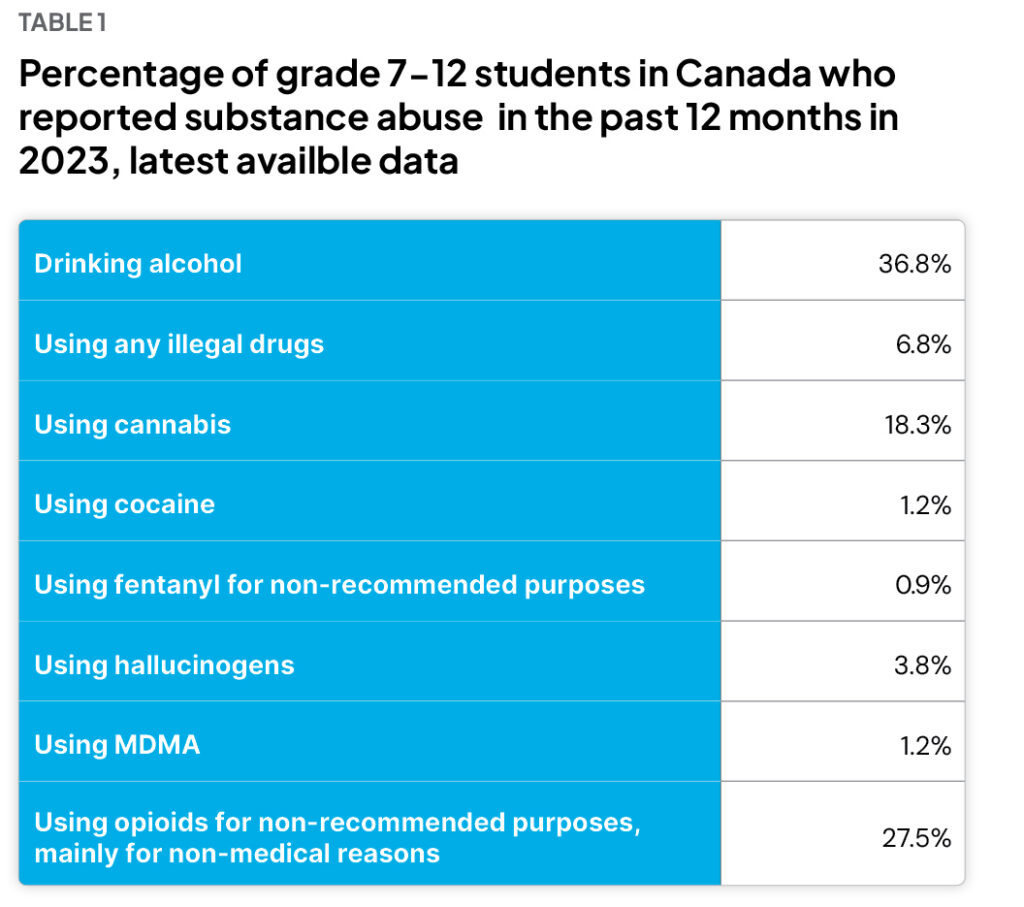
According to Health Canada’s recent survey,1 students in grades 7 to 12 continue to report substance abuse. Table 1 shows that substance use remains a significant issue among Canadian students in Grades 7 to 12. Alcohol was the most commonly used substance, with 36.8 percent of students reporting drinking alcohol in the past 12 months. Non-medical use of opioids was also notably high at 27.5 percent, while cannabis use was reported by 18.3 percent of students. Smaller proportions reported using illegal drugs such as hallucinogens (3.8%), cocaine (1.2%), MDMA (1.2%), and fentanyl for non-recommended purposes (0.9%).
Source: Government of Canada, 2026.
1 The Canadian Student Alcohol and Drugs Survey (CSADS) collects information on substance use every two years from students in grades 7 to 12 attending private and public schools across Canada. A total of 51,844 students in grades 7 to 12 completed the survey, weighted to represent over 1.79 million students. Most students were aged 12 to 18 at the time of the survey.
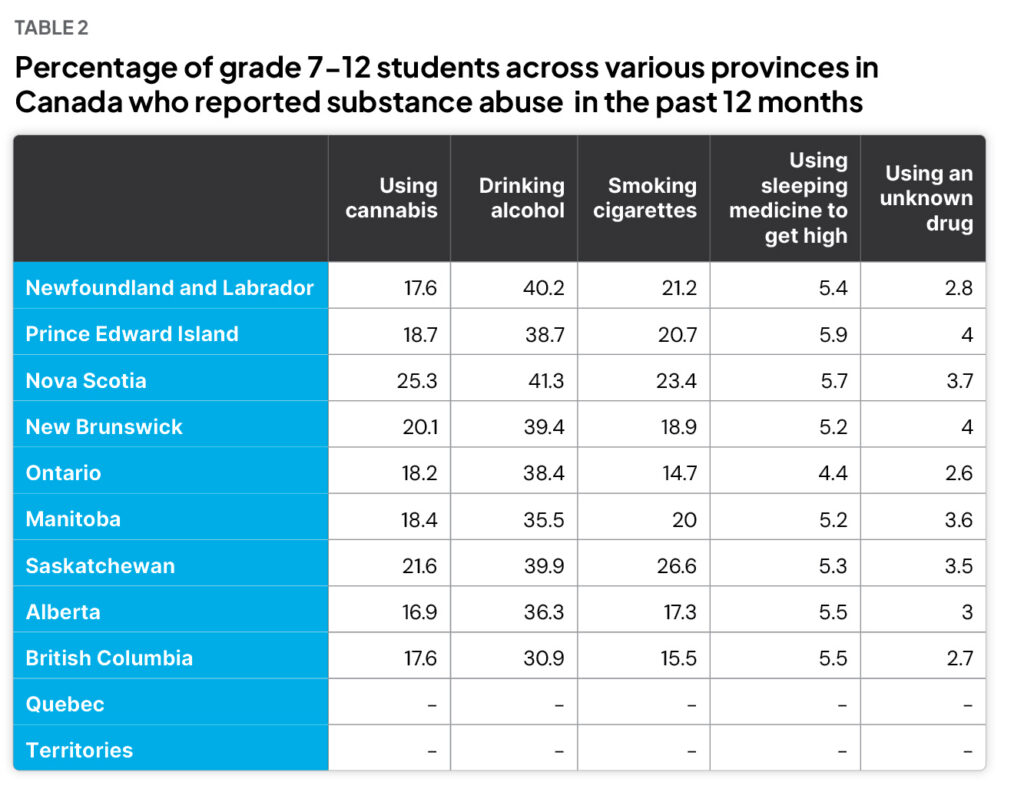
The data show notable differences in substance use among Grade 7 to 12 students across Canadian provinces (see Table 2). Alcohol was the most commonly reported substance, with rates ranging from 30.9 percent in British Columbia to 41.3 percent in Nova Scotia. Cannabis use was also relatively common, particularly in Nova Scotia (25.3%) and Saskatchewan (21.6%), while Alberta (16.9%) and Newfoundland and Labrador (17.6%) reported lower rates. Cigarette smoking varied considerably, with Saskatchewan recording the highest percentage (26.6%), followed by Nova Scotia (23.4%), whereas Ontario had the lowest rate (14.7%). The misuse of sleeping medicine to get high was reported by about 4 to 6 percent of students across provinces, showing less regional variation. Use of unknown drugs was less common, affecting fewer than 4 percent of students overall, although Prince Edward Island (4.0%) and New Brunswick (4.0%) reported slightly higher rates. Overall, the findings suggest that alcohol remains the most prevalent substance among youth, while there are significant provincial differences in cannabis and tobacco use.
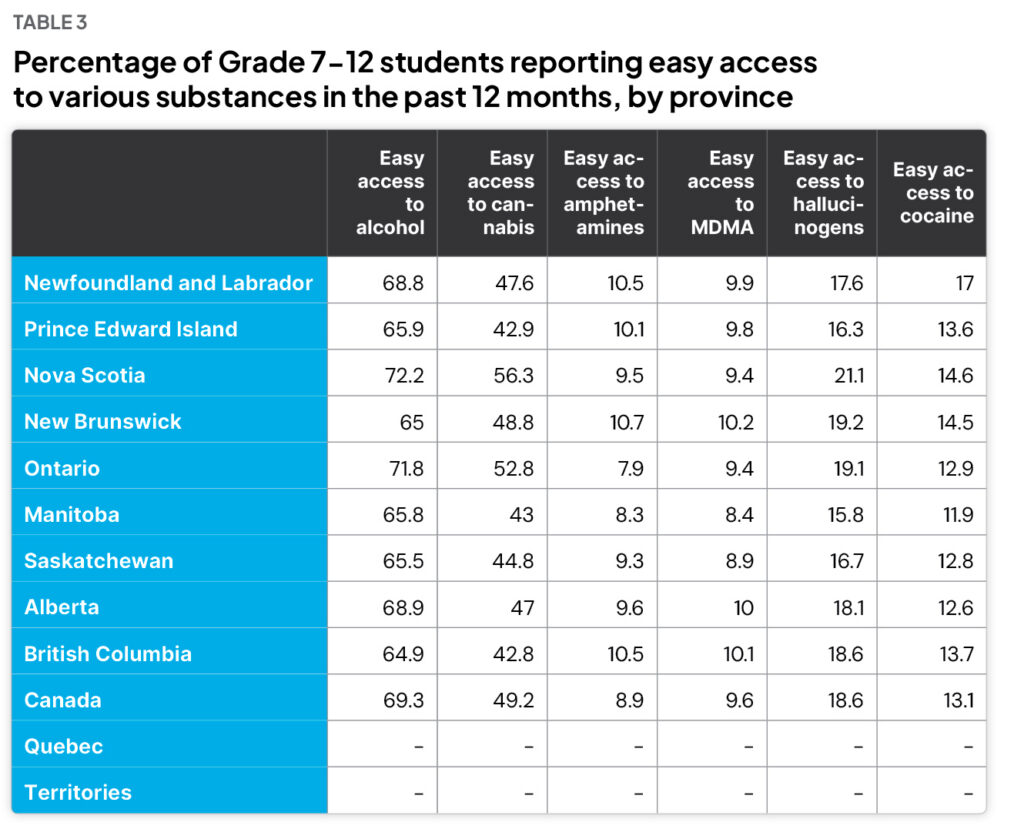
Table 3 shows that a large proportion of Grade 7 to 12 students across Canada believe that alcohol and cannabis are easy to access. Nationally, 69.3 percent of students reported easy access to alcohol and 49.2 percent reported easy access to cannabis, making these the most accessible substances. Nova Scotia reported the highest perceived access to both alcohol (72.2%) and cannabis (56.3%), while British Columbia and Prince Edward Island reported some of the lowest levels. Access to harder drugs such as amphetamines, MDMA, hallucinogens, and cocaine was substantially lower but still notable. Hallucinogens had the highest reported accessibility rate among these substances, with 18.6 percent of Canadian students indicating they were easy to obtain, followed by cocaine (13.1%). The findings suggest that many Canadian youth perceive alcohol and cannabis as readily available, while a smaller but concerning proportion also report easy access to illicit drugs, highlighting the importance of prevention, education, and substance-use risk reduction initiatives targeting adolescents.
Source: Government of Canada, 2026. Note: Data that is unavailable is indicated by a dash (-)
Source: Government of Canada, 2026. Note: Data that is unavailable is indicated by a dash (-).
“Canadian Student Alcohol and Drugs Survey (CSADS): Public Use Microdata File,” Government of Canada, accessed September 13, 2026, https://open.canada.ca/data/en/dataset/1f15ca45-8bfd-4f9.
Aristotle Notes is a series of concise, accessible fact sheets designed to inform public dialogue and elevate everyday discussions. By delivering clear, reliable data and essential context, these notes equip media professionals, students, and citizens alike with the facts needed to navigate complex topics in our society.