

The Iranian regime has already rotted from within
We’ve seen it before: mass demonstrations, demands for the fall of the Iranian regime, burning flags, falling statues. Protesters fill the streets, appearing to shake the foundation of the regime, but thugs loyal to the mullahs react with obscene violence, vague promises of reform are heard, and the incipient revolution fizzles out. But it is different this time.
The first reason is economic. The Iranian regime faces a disastrous combination of crises: hyperinflation, unchecked corruption, and a sanctions regimen that has cut off access to global markets, frozen assets abroad, and diminished oil revenues. The public and military administrations now struggle to pay their employees and henchmen. This problem was ironically exacerbated by pursuing the regime’s own interests: proxy wars and direct confrontations, especially the recent conflict with Israel, have wasted resources to no benefit; and support for groups like Hezbollah, the Houthis, and the now-defunct Assad regime in Syria, has weakened Iran’s regional influence at enormous cost. The regime’s mismanagement of water resources has furthermore brought domestic agriculture to the point of collapse. This means food insecurity, growing dependence on ever more expensive imports, and even higher inflation.
The second and third reasons take shape in the figures of U.S. President Donald Trump and Reza Pahlavi, son of the former shah of Iran.
Trump has announced his support for protesters, and threatened military action in the event of a crackdown. The Americans haven’t done anything yet, but this summer’s bombing campaign during the so-called Twelve Day War and the capture of Venezuelan dictator Nicolás Maduro, a former ally of the Iranian regime, suggests that Trump is serious. Moreover, the fall of Maduro denies Iran a vital partner in sanctions-evasion, a source of money-laundering, drone manufacture, and income from drug trafficking.
Reza Pahlavi, who has lived in exile his whole life, has finally emerged as a unifying force in opposition to the Islamic Republic. The problem heretofore was never a lack of opposition to the regime, but rather the absence of a single principle to unite myriad diffuse opposition movements.
It is ironic that Pahlavi has arisen as a sort of inverse Ayatollah Khomeini: a hostile critic in exile, spreading his message of resistance by Instagram and X, just as Khomeini did with cassette tapes recorded in his exile outside Paris. The protests reached a new height at Pahlavi’s instruction. It seems unlikely that Pahlavi would reinstate the Iranian monarchy. But his position as a unifier makes sense if the opposition to the Islamic Republic is understood as a referendum on the revolution of 1979 — as many Iranians do.
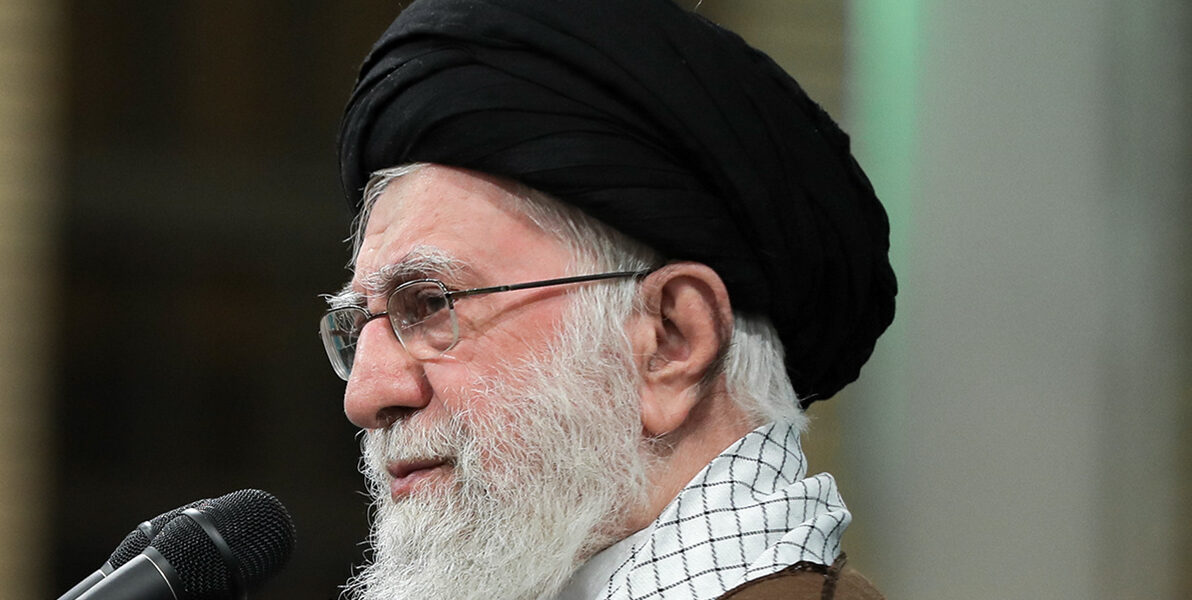
With this we have all the makings of a counter-revolution or a “revolution in reverse.” Despite an internet blackout in Iran, reports now circulate that senior clerics and other officials have been sighted abroad, and that the Supreme Leader Ayatollah Khamenei plans to flee to Moscow. Regime security forces appear to have stood down in Tehran and seem overwhelmed in Esfahan, as tear gas, water canon, and bullet rain down on protesters elsewhere. The Al-Rasool mosque—erected by the regime in Tehran in 1984 and a symbol of its power—has been attacked and set on fire, seemingly without resistance. Such signs point to a mounting failure of nerve, suggesting that the regime itself now foresees its end.
Khamenei’s rule cannot continue. Soon he may be brought down and killed in a palace coup, as was Sasanian king Khusro II after decades of military overreach and warfare with the Roman Empire. Or like Assad, Khamenei may flee abroad, where he may meet his end like Darius III after Alexander the Great’s invasion, or Yazdgard III amidst the Arab conquest of Iran. But, however the end comes, Khamenei’s days are surely numbered.
So are those of the Islamic Republic. Nothing has done more to discredit Islamic government than the rule of Shiite jurists. Attendance at Friday prayers is now so meagre that 50,000 Iranian mosques out of a total of 75,000 have been forced to close in recent years. Iranian Islam is now rapidly diminishing to the benefit of Christianity. The number of secret Iranian ‘house churches’ is difficult to determine, but estimates vary from around half a million to more than a million. The Iranian Ministry of Intelligence formed a sort of inquisition to combat it, but without success.
The worst-case scenario is not the endurance of the Khomeinist regime, but rather its mutation into a military despotism. A Caesar or Napoleon-like figure may emerge from within the Iranian Revolutionary Guard Corps or the Basij militia. Until those forces stand down, are disbanded, or join the protesters, a military tyranny remains a likely outcome of the present upheaval. The best policy for western powers may be to refuse to work with such a regime — to refuse in advance to lift sanctions and to promise help rebuilding the country until free and fair elections have been held. However that may be, the future of Iran is up to Iranians alone to decide, and they have clearly decided to bring down the Islamic Republic. Let us hope that they succeed.
Michael Bonner is a Senior Fellow of the Aristotle Foundation for Public Policy, a historian of ancient Iran, and the author of the forthcoming book The Crisis of Liberalism: The Origin and Destiny of Freedom. Photo: WikiCommons.
Like our work? Think more Canadians should see the facts? Please consider making a donation to the Aristotle Foundation.
SUBSCRIBE TO OUR NEWSLETTER