
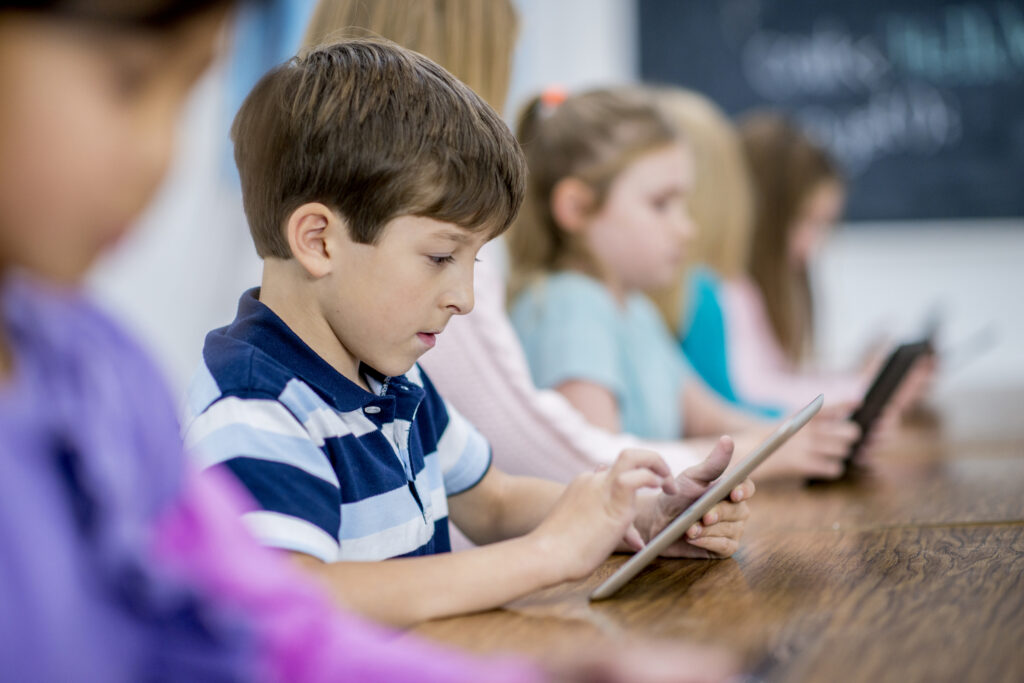
Schools across Canada have invested billions in educational technology over the past 15 years, transforming the K–12 classroom in ways few could have anticipated. Paper has largely disappeared, and traditional textbooks have been pushed to the margins or replaced entirely by digital platforms. In their place, screen-based modes such as laptops, tablets, and mobile devices now dominate daily teaching and learning.
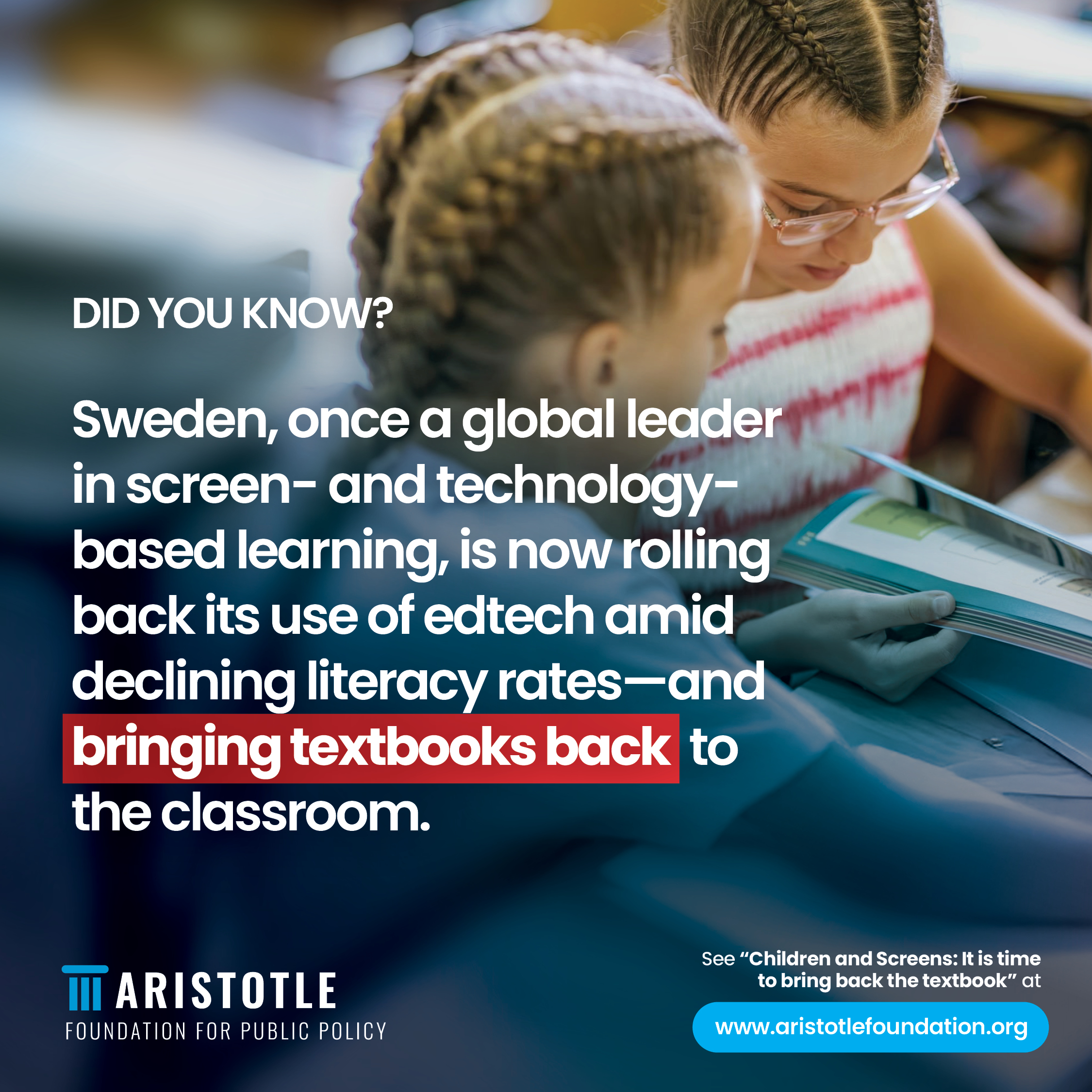
Yet, for the first time, a broad-based disenchantment with edtech is taking hold. Classroom teachers, researchers, and policymakers are beginning to question the wisdom of paperless schools and the heavy dependence on screens. In some jurisdictions, the shift is already underway. Sweden, once a global leader in digital-first education, has begun reversing course under Education Minister Lotta Edholm.1 After years of equipping every student with devices, Swedish authorities concluded that excessive screen use contributed to declining literacy. Since 2023, they have reintroduced printed books2—and, tellingly, students themselves have welcomed their return.
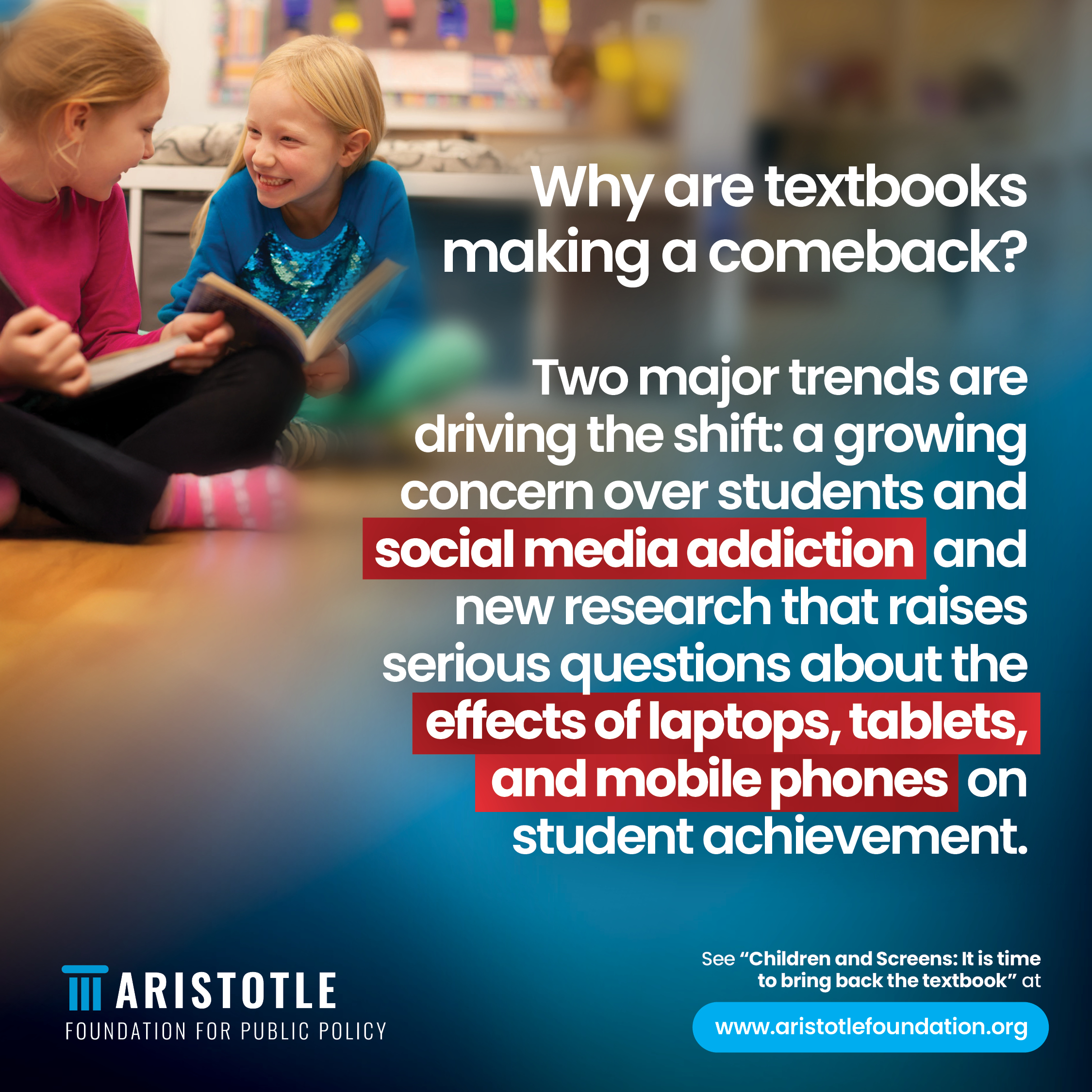
Why are books making a comeback? Two powerful forces are converging: a growing concern over social media addiction among students and the latest research raising serious questions about the impact of laptops, tablets, and mobile phones on student achievement.
The dominance of social media has sparked a widespread backlash, cutting across political and cultural lines. What began as a concern among parents and educators has evolved into a broader movement to shield children from digital harm. The catalyst was Jonathan Haidt’s 2024 manifesto for change, The Anxious Generation,3 which galvanized public debate and accelerated calls for action.
This “protective impulse” is now evident in policy shifts worldwide. Some jurisdictions have introduced “bell-to-bell” restrictions on mobile phones during the school day, while others have gone further. Australia, for example, has banned social media access entirely for children under 16.4
Canada is not immune to these pressures. Provincial governments and school districts are increasingly tightening rules on phone use, responding to concerns raised by educators on the front lines. Reports such as my 2024 study, Weapons of Mass Distraction, have warned about the addictive nature of social media and its corrosive effects on attention, behaviour, and learning.5 That message is finally resonating with those responsible for managing schools.
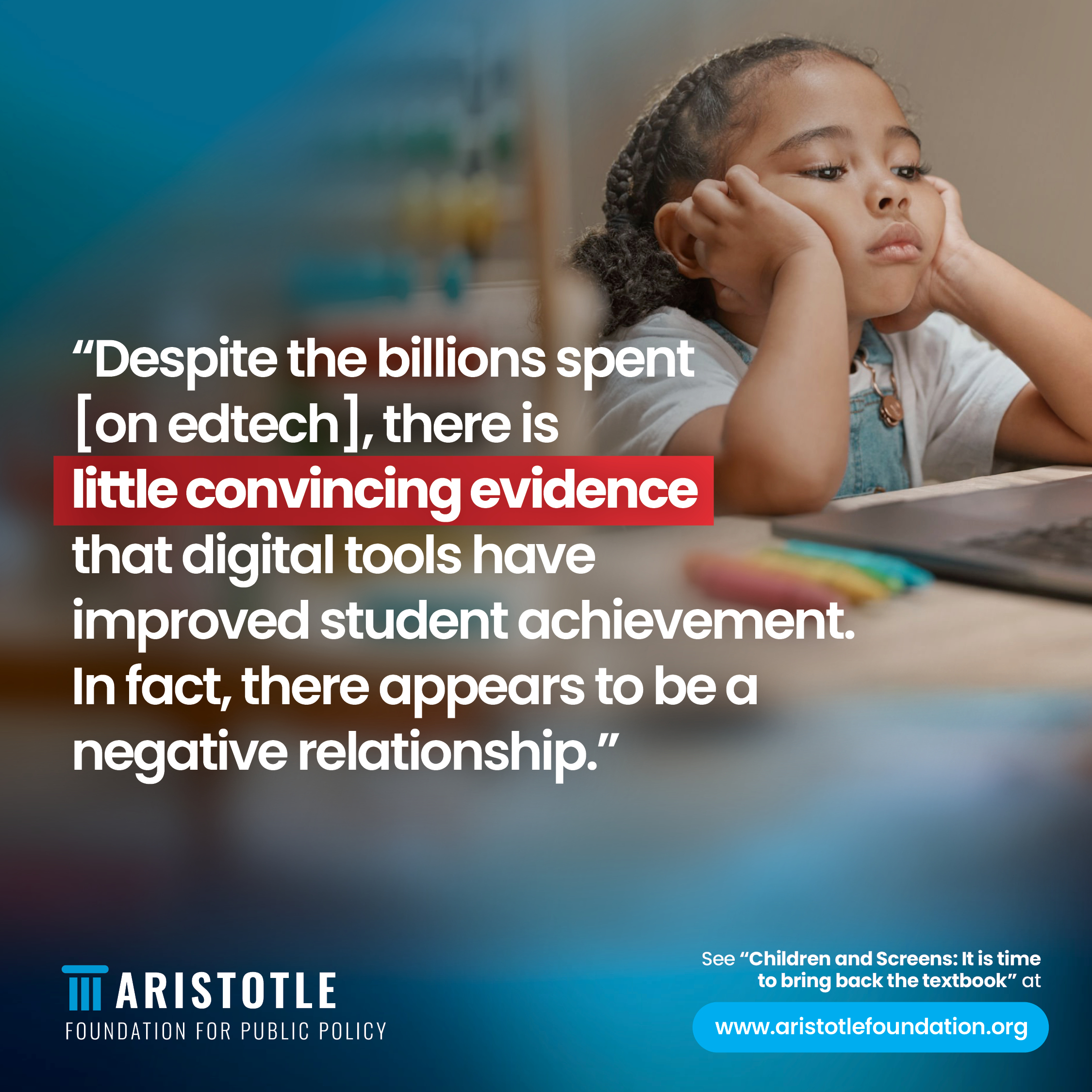
At the same time, a second and equally significant concern has emerged: the limited educational return on massive investments in edtech. Despite the billions spent, there is little convincing evidence that digital tools have improved student achievement. In fact, there appears to be a negative relationship.
One recent influential Education Next study, “Logged-in, Tuned-Out” by Meredith Coffey, delivers a sobering assessment. It finds minimal evidence that widespread classroom technology is helping students to learn more.6 Instead, it paints a picture of classrooms saturated with devices but lacking clear instructional purpose.
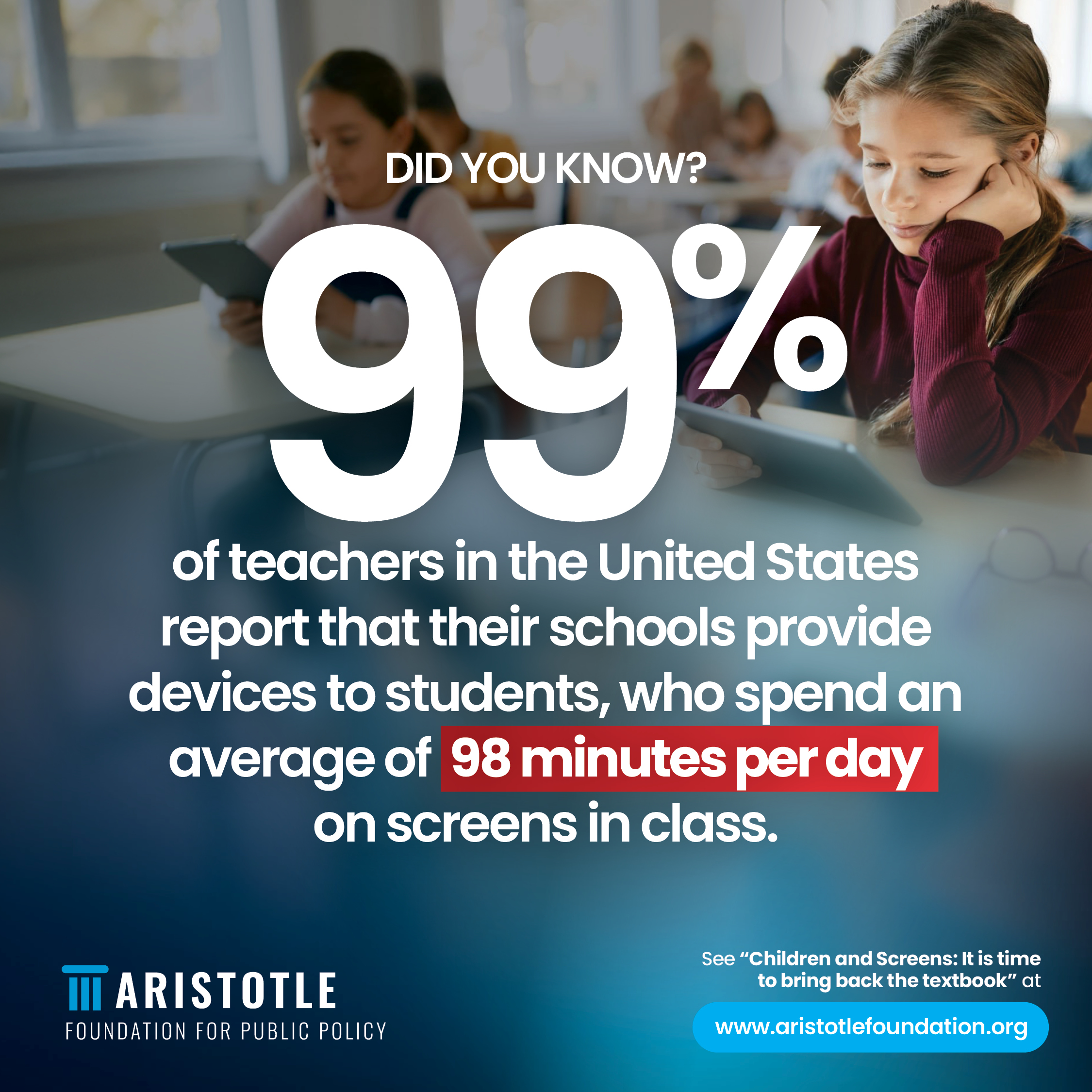
Screens now dominate the learning environment. In the United States, 99 percent of teachers report that their schools provide devices to students, who spend an average of 98 minutes per day on screens in class. Students are exposed to dozens of digital tools each year,7 yet academic performance declines, and students are “gaming and scrolling” their way through class.8
Cognitive science research, according to U.K. assessment expert Daisy Chistodoulou,9 has revealed differences between how we read on screen and on paper. There is evidence that suggests when we read on screen we tend to skim and scan more than we do when reading on paper,10 and that, for longer texts, we find it harder to orient ourselves and more difficult to integrate information from different parts of the text.11
The reasons for the decline are becoming clearer: schools often adopt technology without a coherent strategy, teachers receive limited training, and students are easily distracted by games, messaging, and endless online content. The result is a classroom where attention is fragmented, and sustained learning is next to impossible.
A growing number of critics are now calling for a fundamental rethink. British educators Sophie Winkleman and David James took to The Spectator in March 2026 to engage in the “war on screentime,” arguing that decisive action is needed to restore focus and a sense of purpose in the classroom.12 Their prescription is simple but compelling: bring back physical textbooks.
In the United Kingdom, as in Canada and the United States, schools have embraced digital tools with something approaching 21st century evangelical zeal. The promise of one-to-one devices has fallen far short of realization. Instead of fostering engagement, screens frequently divert attention. Students shift between multiple tabs—some educational, many not—while teachers struggle to maintain order and sustain purposeful activity in classrooms.
The consequences are stark. Studies suggest that students working online can spend as much as 39 minutes of every hour off task.13 In such an environment, meaningful learning becomes the exception rather than the rule.
One of the clearest casualties of this digital transformation has been the traditional textbook. Once the cornerstone of classroom instruction, it has been steadily displaced by online resources. Major publishers such as Pearson Learning have moved aggressively toward digital platforms, abandoning textbooks and printed learning resources.14
Textbooks have been dismissed by tech enthusiasts as outdated relics—static, uninspiring, and ill-suited to the demands of the 21st century. In their place, educators have been offered multimedia resources featuring videos, interactive graphics, and other digital stimulants. Platforms like Google Classroom and Moodle are also convenient and remarkably efficient—saving teachers hours of work each week.
Yet this shift has come at a cost. In classrooms already filled with distractions, the absence of a stable, coherent learning resource has made it more difficult for students to focus and for teachers to guide instruction. The move to fully digital assessment systems has further entrenched this trend, driven in part by cost savings for large corporations. But the broader implications for student learning and well-being have received far less attention.
The shift to computer-screen-based student assessments has affected the results. Prominent UK researcher John Jerrim has compared the two modes of delivery and the impact on international PISA tests. The most striking finding in his “mode effects” research was based upon an experimental analysis of nearly 6,000 students in Germany, Ireland, and Sweden.15 Half took the 2015 PISA test—reading, science, and math assessments—on paper, half on computer. Students underperformed on the computer versions.
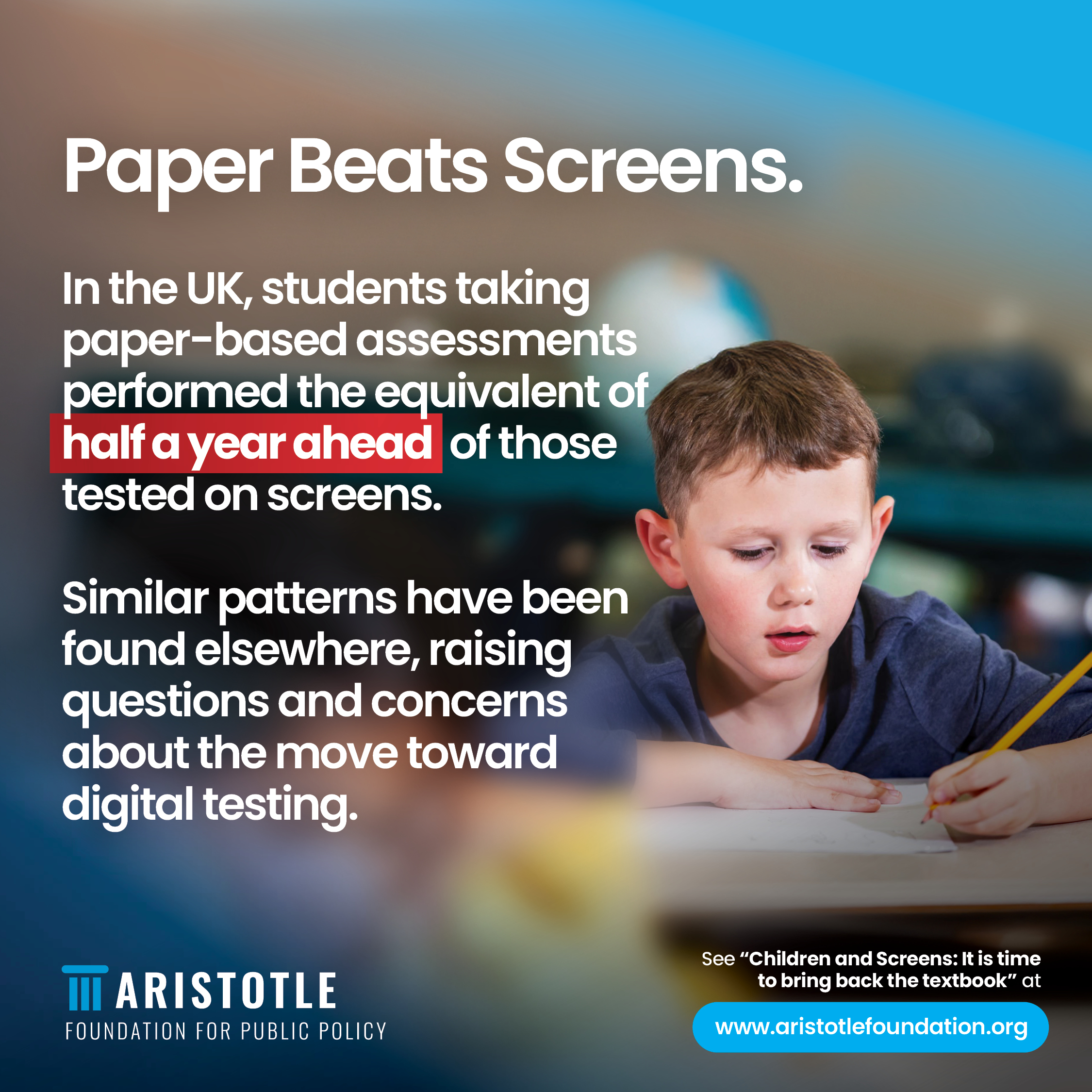
The differences were not trivial. In the United Kingdom, students taking paper-based assessments scored the equivalent of half a year’s additional learning compared to those tested on screens. Similar patterns have been observed elsewhere, raising serious questions about the widespread shift to digital testing.
Notably, the world’s highest-performing education systems have not abandoned textbooks. Countries such as Singapore, Japan, South Korea, and Taiwan continue to provide standardized textbooks to 10-year-old students.16 Their consistent success in international assessments such as PISA and TIMSS suggests that the traditional model still has considerable merit.
Canada’s school authorities, however, find themselves locked into digital systems. Years of investment have created a classic sunk-cost dilemma: having spent so much on technology, decision-makers are reluctant to reverse course. At the same time, the declining availability of affordable printed textbooks limits alternatives.
The result is a system that may no longer serve students’ best interests but is difficult to change. Recognizing the true cost—measured not in dollars but in diminished attention, comprehension, and academic performance—is the first step toward reform.
At their best, textbooks provide something that digital resources often lack: coherence. They organize knowledge into a structured whole, guiding students through complex material in a logical sequence. Unlike fragmented online content, they offer a time-tested framework for learning.
Textbooks also encourage deeper engagement. Free from the constant interruptions of notifications and hyperlinks, they allow students to concentrate for extended periods. They support note-taking, reflection, and the gradual accumulation of understanding.
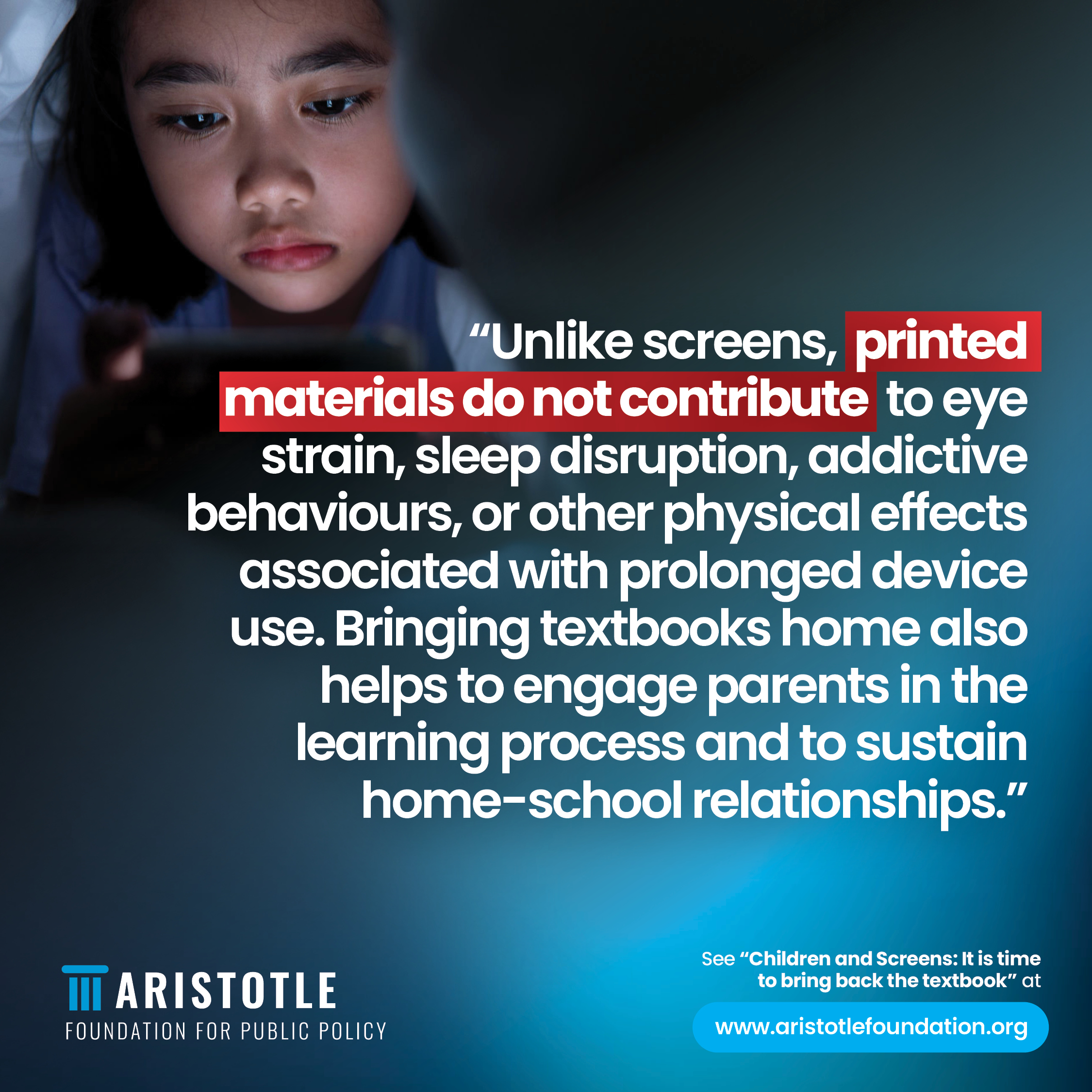
The advantages extend beyond cognition.17 Unlike screens, printed materials do not contribute to eye strain, sleep disruption, addictive behaviours, or other physical effects associated with prolonged device use. Bringing textbooks home also helps to engage parents in the learning process and to sustain home-school relationships.
Critics of textbooks often portray them as archaic, static, and boring. Such crude caricatures tend to obscure their enduring strengths. Printed texts are reliable, easy to navigate, and conducive to sustained attention. They do not crash, require frequent security updates, or depend on battery life.
More importantly, they facilitate the integration of knowledge. Digital resources, by contrast, often deliver information in disconnected fragments. Students may encounter a series of isolated facts or short explanations without seeing how they fit together.
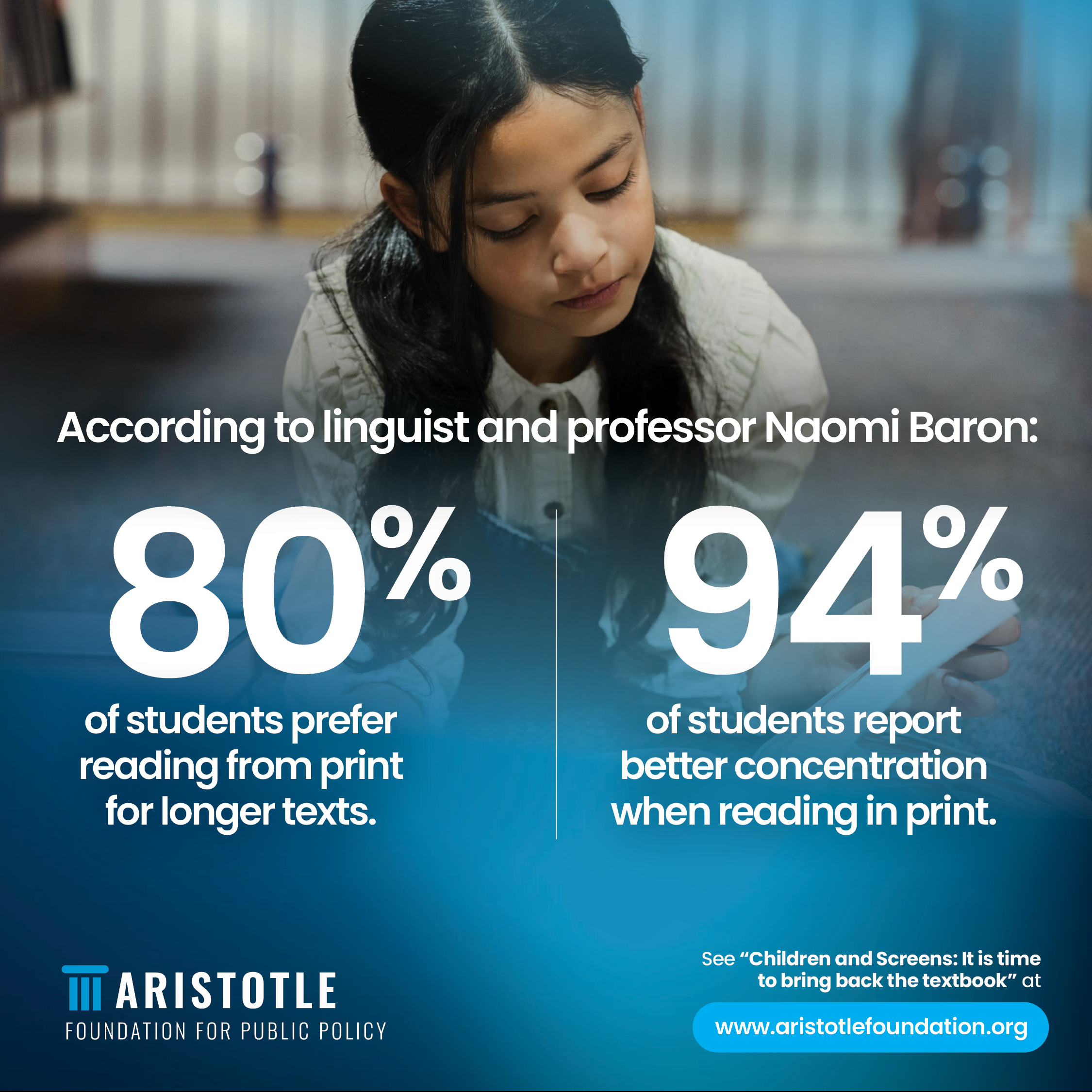
Students in high school tend to prefer textbooks. In her 2016 book, Words Onscreen: The Fate of Reading in a Digital World, Naomi Baron found that four out of five students prefer reading from print for lengthy texts, and 94 percent of students say they concentrate better when reading in print.18 Given the choice between a well-written, fully-illustrated, and engaging textbook and a pile of handouts, links, or websites, they opt for a single, integrative source.19
Screen-based modes of delivery capture attention and can heighten engagement, when utilized properly for short periods of time. Far too often in today’s classrooms they are sources of disruption or distraction, contributing to the proliferation of noisy, back-lit, and unsettled learning environments.20
Students tend to learn and absorb more from textbooks than a profusion of screen-delivered content. If our goal is to do our utmost to help students master the complexities of a subject, textbooks are best equipped to “know when to be silent.” Effectively organized textbooks do something the digital world cannot—provide a package of information, properly integrated and in a form that gives space to think.
Screens and overdependence on edtech are causing harm to the current generation of students. Leading educators in Sweden and the UK are right: It is time to bring back the textbook.
Dr. Paul W. Bennett, Ed.D., is a senior fellow with the Aristotle Foundation for Public Policy and director of the Schoolhouse Institute. He has authored ten books, including The State of the System: A Reality Check on Canada’s Schools (McGill-Queen’s University Press, 2020), and has produced over two dozen policy research papers for six Canadian think tanks. Earlier in his career, Dr. Bennett was twice recognized for history teaching excellence, produced three nationally acclaimed Canadian history textbooks, served as an elected public school trustee, and headed two of Canada’s top-performing schools. More recently, he founded researchED Canada (which he led from 2017-2025), taught as an adjunct professor, and served on the Canadian Association for Foundations in Education (CAFE) national board. He is also an education columnist for Brunswick News and a well-known commentator in the national media.
Who we are
The Aristotle Foundation for Public Policy is a new education and public policy think tank that aims to renew a civil, common-sense approach to public discourse and public policy in Canada.
Our vision
A Canada where the sacrifices and successes of past generations are cherished and built upon; where citizens value each other for their character and merit; and where open inquiry and free expression are prized as the best path to a flourishing future for all.
Our mission
We champion reason, democracy, and civilization so that all can participate in a free, flourishing Canada.
Our theory of change: Canada’s idea culture is critical
Ideas—what people believe—come first in any change for ill or good. We will challenge ideas and policies where in error and buttress ideas anchored in reality and excellence.
Donations
The Aristotle Foundation for Public Policy is a registered Canadian charity and all donations will receive a tax receipt. To maintain our independence, we do not seek nor will we accept government funding. Donations can be made at www.aristotlefoundation.org.
The Aristotle Foundation for Public Policy has internal policies to ensure research is empirical, scholarly, ethical, rigorous, honest, and contributes to the advancement of knowledge and the creation, application, and refinement of knowledge about public policy. Our staff, research fellows, and scholars develop their research in collaboration with the Aristotle Foundation’s staff and research director. Fact sheets, studies, and indices are all peer-reviewed. Subject to critical peer review, authors are responsible for their work and conclusions. The conclusions and views of scholars do not necessarily reflect those of the Board of Directors, donors, or staff.
SUBSCRIBE TO OUR NEWSLETTER