


Executive Summary
Computer science is foundationally about computation, mathematics, and logic. One would expect it to be among the least ideological fields. Yet across Canada’s top universities, job advertisements for computer scientists now often ask for an applicant’s identity or views on diversity, equity, and inclusion (DEI).
This study captures the evidence, from May 2019 to the end of 2025, and archives 245 academic job openings from 158 computer science job postings across 33 universities in Canada that used at least one of three academic culling practices. In plain terms, some jobs are closed to some applicants, some give other applicants a head start, and some ask for a DEI promise.
This research is the largest-scale examination in STEM fields of academic culling practices across Canada to date, is among the first of its kind in general, and provides a framework to identify these practices.
Academic culling can sideline or disadvantage qualified applicants and can even exclude them from academic institutions, despite applicants’ ability to advance innovation, research, and the core academic mission of those institutions in Canada. These practices can also cut against academic freedom, at its deepest root, because applicants may have to show they support DEI just to be considered. What makes this even worse is that early-career applicants are the most vulnerable, and most of the job postings were for early-career academics.
What the study does not claim: We looked at job postings, not at who was hired. Every number is a minimum. The job postings were collected by hand, and the largest data set is incident based, so the real numbers could be higher. The count of postings peaked in 2023, but the share on the national board kept climbing.
The bottom line: Academic culling practices are no longer rare. They are widespread at leading Canadian universities, even within STEM fields like computer science.
Academic culling, whether intentional or unintentional, is the active removal of plurality from universities. Academic institutions achieve such culling in a number of ways, including by requiring compelled speech, or placing barriers to academic appointments to serve ideological or political purposes.
Naturally, academic culling conflicts with academic freedom,1 and for at least two core reasons: it attempts to shape an institution’s culture through a filter of prescribed beliefs that are not advancing the primary function of the university; and it conflicts with the fiduciary academic role of individual scholars, by excluding them in some way or by violating their general expectation that they have academic freedom and intellectual autonomy.
The contemporary forms of academic culling this paper explores are caused by institutional practices deriving from Diversity, Equity, and Inclusion (DEI) measures and policies. Our paper does not debate DEI.2 Instead, it presents ideas from a general academic freedom and standards perspective, with real-world examples, about the mechanisms universities employ that exhibit academic culling. As defined, academic culling is explicit, mechanistic, and not a by-product of vague social forces.
This study seeks to determine how often and to what extent public academic institutions have employed academic culling practices in recent years, by looking at hiring in what presumably is the least ideological (or most ideologically-neutral) field: STEM (science, technology, engineering, and mathematics).
To achieve this, we investigate academic job postings and provide six novel contributions to the study of academic culling practices in Canadian STEM and academic institutions: three data sets with archived ads, and then three case studies based on each data set, respectively.
The first is the largest data set. This data set (“DATA A”) contains records of computer science ads that deployed academic culling practices from approximately the middle of 2019 until the end of 2025 across 33 universities in Canada, including many of Canada’s leading computer science departments
The paper also looks beyond computer science to other “hard” STEM fields and tries to provide a snapshot of academic hiring. The second data set (“DATA B”) examines Canada Research Chair (CRC) positions in the second half of 2023 for academic culling practices.
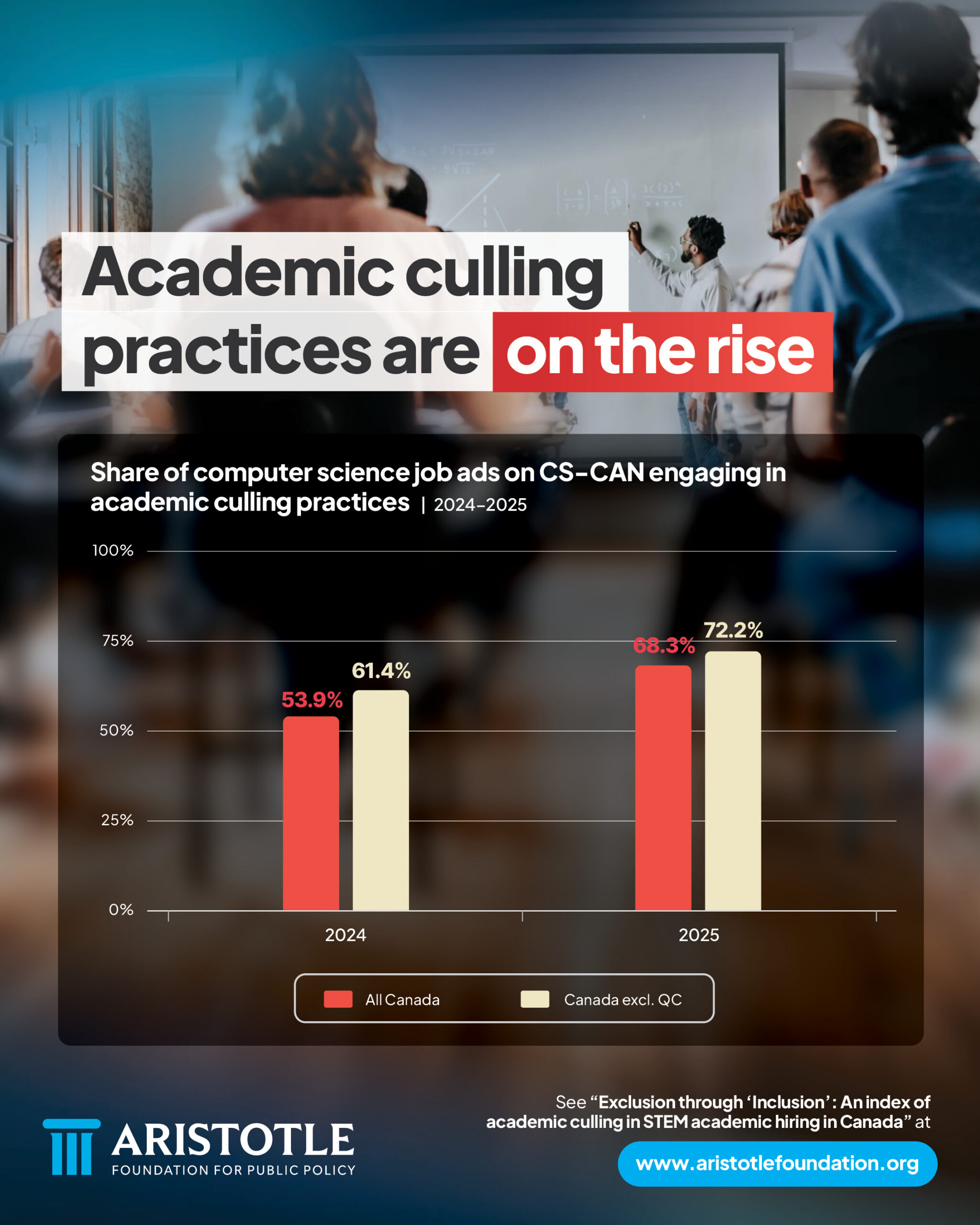
The third data set (“DATA C”) contains records of all ads posted on the main computer science academic jobs dashboard, CS-CAN. The data are in chronological order, over the years from 2024 to 2025.
For all three data sets, we examined three academic culling practices in the STEM ads:
The first section of this report establishes core terminology and essential context. The second presents the research approach and data collection. The third explores the research results and data analysis. The fourth discusses the findings, and the final section summarizes the key takeaways and insights.
While proponents of some aspects of DEI may intend to promote and improve diverse cultures within post-secondary institutions, it is becoming increasingly clear that those advancing DEI measures have also engaged in academic culling when they are hiring candidates for STEM positions. However, measures of the prevalence of this practice in Canada have been unavailable thus far. This paper addresses this gap.
At its foundation, computer science is a mathematical, formal science, not a field epistemologically built upon social activism or ideological causes. Academics in fields like computer science have made considerable scientific and technological advances for broader technologies like software and other interdisciplinary domains in Canada.3 Hence, computer science is a viable test-bed to illustrate the ideological forces that are being placed upon academic hiring in STEM fields at Canadian public universities (institutions). We will use academic culling as the tool for measuring the prevalence of these forces.
To be hired in a STEM discipline, applicants begin by responding to an academic job advertisement. Once their application is accepted, the applicant moves through a common series of phases that determine whether or not they are successful at securing the academic job in question. We illustrate such a process in Figure 1.
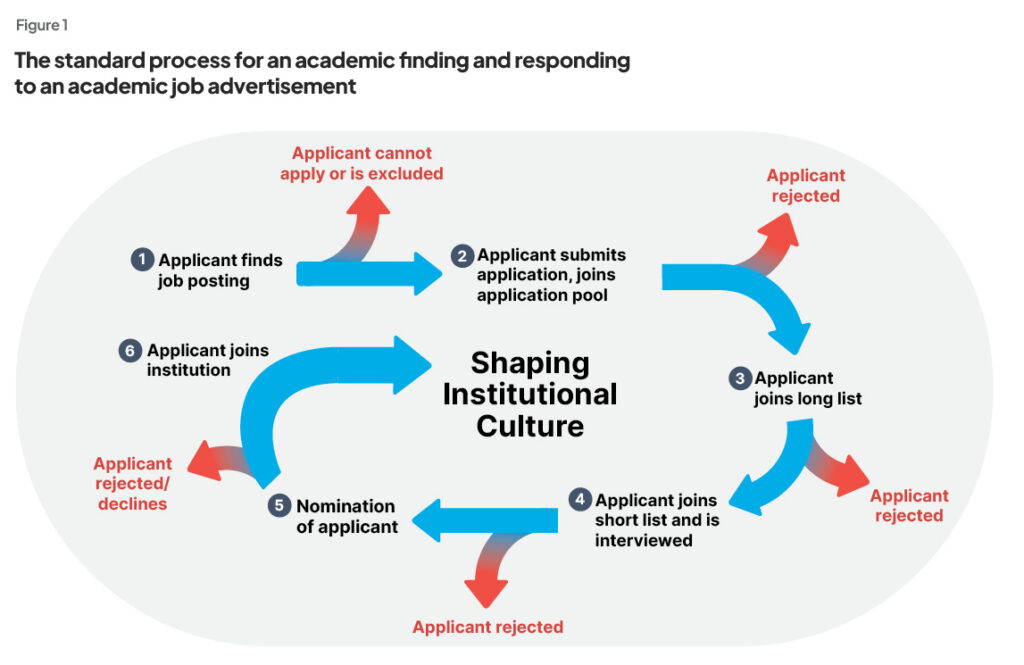
The process begins with the applicant following the instructions of the job advertisement and submitting materials to fulfil the requirements of the application. If the institution accepts the application as completed, the applicant then joins the applicant pool as a candidate.
A search committee from typically the same academic unit as the position proceeds to vet a “long list” of candidates, then forms a “short list” of candidates from that list. The search committee might then further interview members of the short list and invite them to visit the institution as part of the interview. Afterward the search committee recommends a candidate to an administrator, often a dean or provost, for final approval.
An institution, usually in the form of a search committee or departmental equivalent, or an individual representing the search, will post an academic job advertisement. Who prepares the advertisement and its approval may vary from institution to institution, but it is not unusual for the department to be very involved in creating the advertisement, the search process through a search committee, and ultimately external postings of the advertisement beyond the institution itself. Canadian computer science departments also commonly post academic job advertisements on the job dashboard of the organization CS-CAN-INFO-CAN (CS-CAN).a Of relevance in our paper, these job postings appear on the “View Jobs” page4 of the CS-CAN website.
This paper investigates academic job advertisements (ads) and the steps and instructions an applicant is to follow if they wish to apply for the job. Ads take the form of a job posting, which may be published in full on a website, and which may include steps applicants are to take if they want further instructions or find out where to apply. When this paper uses a specific ad, it is in the form of a job posting that is documented electronically.
Next, we examine the above practices to search for academic culling, and provide documented examples drawn from the postings. The three practices we examined include preferential hiring, restricted hiring, and DEI pledges. Appendix A lists the real-world examples drawn from these examinations.
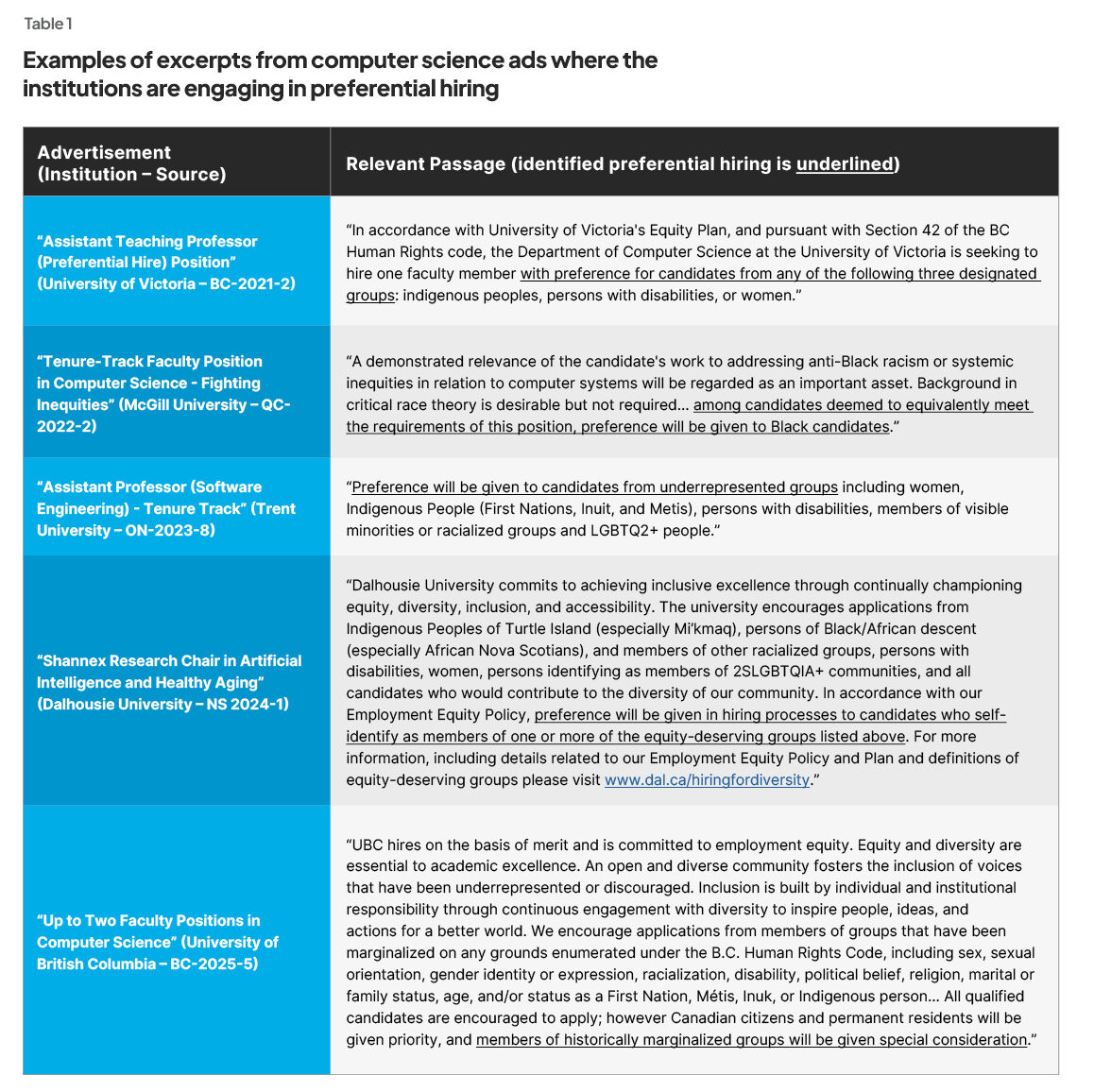
Preferential hiring is a situation in which all qualified applicants can apply for the position(s) listed in the ad, but the institution will give (explicit) preference to applicants belonging to a preferred group, specified by a non-academic qualification. Table 1 outlines some examples. Preferential hiring is a kind of academic culling practice, because it introduces a selection based on characteristics or preferences unrelated to academic qualification(s).
The preferred group will typically be defined by identity markers or self-identity, often under broader DEI initiatives, that may couch these initiatives within Employment Equity5 to outline the preference. These markers include but are not limited to race, gender, sex, and disability status. Further, the search may often clearly state that it is seeking those who are systemically marginalized or underrepresented, who may belong to an “equity group”—a member of a group designated as equity-seeking or deserving of special consideration.
a. From the “Mission and Origins” page, “CS-CAN-INFO-CAN [CS-CAN] counts among its members more than 60 organizations active in computing research: academic departments of computer science and computer engineering; laboratories and centers in industry, government, and academia; and affiliated professional societies” (https://cscan-infocan.ca/mission-and-origins/).
As a note, a generalizing feature of the definition is that the preferred group is identified by a non-academic qualification. Also, preferential hiring may differ institutionally beyond the application stage of the hiring.
Others may debate our definition of preferential hiring, particularly where it focuses on substantive preferences and not outreach. However, in all examples we cite, groups must be identifiable and defined, with a clear indication that there is some preference for that group to apply for the post. There are two types of activities that might fall under preferential hiring that we did not consider to be explicit enough:
As the University of Victoria6 has articulated, the reasons that proponents for preferential hiring may support this academic culling practice include:
Those who express concerns about this academic culling practice, such as the Society for Academic Freedom and Scholarship (SAFS), may argue that these practices favour applicants on non-academic grounds, that they may be wrongfully discriminatory, and that they violate the merit principle—that academic decisions should be made solely on academic grounds. Additionally, a letter from SAFS7 regarding an ad8 in November 2022 that expressed preferential hiring argues:
Taking group membership into account when hiring has the effect of harming individual scholars because others may see them in stereotypical ways and wrongly undervalue their work. In addition, because scholars want to be valued for the quality of their research, their teaching, and their contributions to intellectual life, seeking scholars for their race, ethnicity or other identity forces them to suppress their dignity or decline an advantage. Finally, recruitment based on a non-academic criterion undermines respect for the ideal of dispassionate inquiry, as summoning people by identity tends to confuse scholarship with advocacy and to create consensus around dogma…
Because favouring candidates on non-academic grounds is wrongfully discriminatory, doing so cannot serve to create a fair and equitable university. This normalizing of identity characteristics is bound to have long-lasting, unwelcome consequences, not only because it suggests that a candidate’s appearance or identity is a significant indicator of his or her promise as a scholar, but because it institutionalizes practices that have led to some of the worst outcomes in human history. Good intentions alone are never enough to exonerate such discreditable practices.
Sometimes also known as “limited hiring”9 or a “designated search,”10 with restricted hiring all applicants must belong to a preferred group, specified by a non-academic qualification. In other words, restricted hiring is preferential hiring where the applicant pool itself is restricted to the preferred group. Restricted hiring is an academic culling practice because it excludes otherwise qualified applicants by limiting the applicant pool on non-academic grounds.b Table 2 provides examples.
b. For the sake of thoroughness, just as an ad indicating a preference for applicants in a particular academic subfield is not preferential hiring, restricting an academic position to an academic subfield is not a form of restricted hiring; this is controlling the applicant pool by using an academic qualification, so it does not fall under the definition.
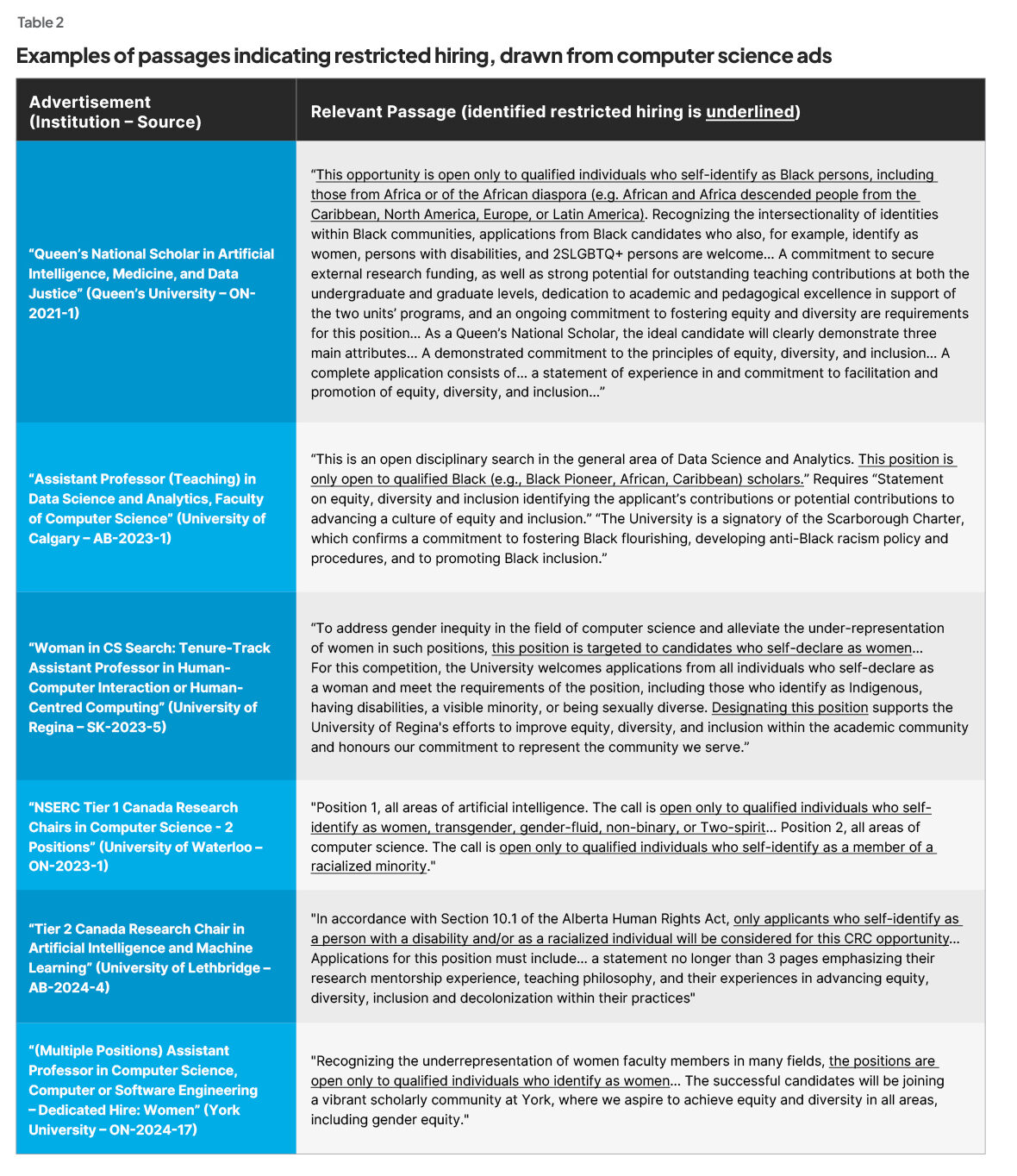
While many of the ads that engaged in restricted hiring were individually posted, there can also be groups of postings that deploy DEI “cluster hiring,”11 where instead of coordinating hiring around a shared scientific research topic, they are undertaken for DEI-related initiatives. For instance, the ad posted from the University of Calgary (AB-2023-1) shown in Table 2 was part of what this institution called the Inclusive Excellence Cluster Hiring Initiative.12
Restricted hiring is a more exclusionary academic culling practice than preferential hiring, and it is far easier to identify when presented in an ad due to its explicitly exclusionary nature. However, unless the institution outlines how its policy will be implemented during the search, it may be unclear how the preferred group in preferential hiring will be treated compared to the rest of the applicant pool. For ease of classification in this paper, whenever restricted hiring occurs, we will classify it solely as such, rather than as preferential hiring.
Arguments for and against restricted hiring are nearly identical to those around preferential hiring. Under restricted hiring, at best such a search can only yield a selected candidate that an institution may justify as sufficiently qualified. Also, as in some of the ads we have documented, some institutions justify the decision to use restricted hiring (and preferential hiring) by appealing to policies in Human Rights codesc that outline ameliorative policies or programs.
A DEI Pledge is the requirement or expectation that an applicant will commit to DEI, in at least one of the following three forms:
A feature of the DEI pledge is that future researchers can easily generalize it to include other practices that are also academic culling practices. In other words, they can substitute “DEI” with another political, religious, or ideological type of prescribed doctrine, to study them in a similar manner, e.g., they might replace “DEI” with “Christianity,” then define a Christianity pledge, or with “Liberal Party” to define a Liberal Party pledge. The definition delineates between broad institutional statements not directed at the applicant as an expectation and those that are particularly required or requested of the applicant.
An ad can contain a DEI pledge and for brevity we may at times write that the ad “is a DEI pledge,” just like we may call an ad “preferential hiring” or “restricted hiring.” It is possible for ads to contain other academic culling practices along with a DEI pledge.
As there are three ways through which the DEI pledge can be imposed, as noted above, we provide concrete examples of each. To determine whether an ad is a DEI pledge ad, it must be at least one of the three forms.
The first form of a DEI pledge casts DEI-related commitments as a job expectation. An important feature of this is that it is not the institution declaring DEI-related expectations as valuable; rather, it implies that the applicant is expected to have a DEI-related commitment if he or she is accepted for the job. Table 3 provides examples.
c. This may include Section 16 (1) of the Canadian Human Rights Act (https://laws-lois.justice.gc.ca/eng/acts/H-6/section-16.html), or corresponding sections in provincial Human Rights codes, e.g. section 42 of the BC Human Rights Code, section 14 of the ON Human Rights Code.
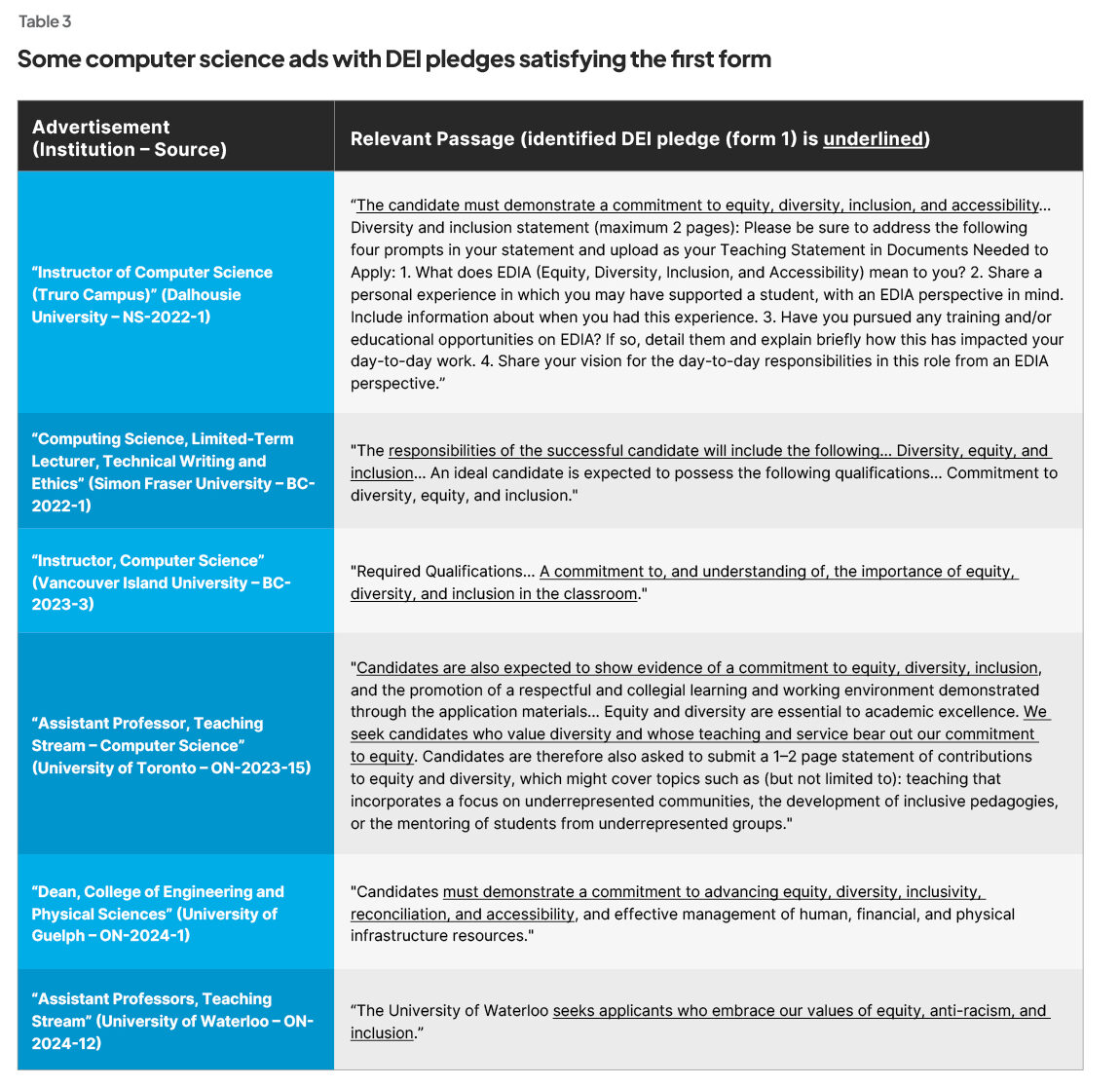
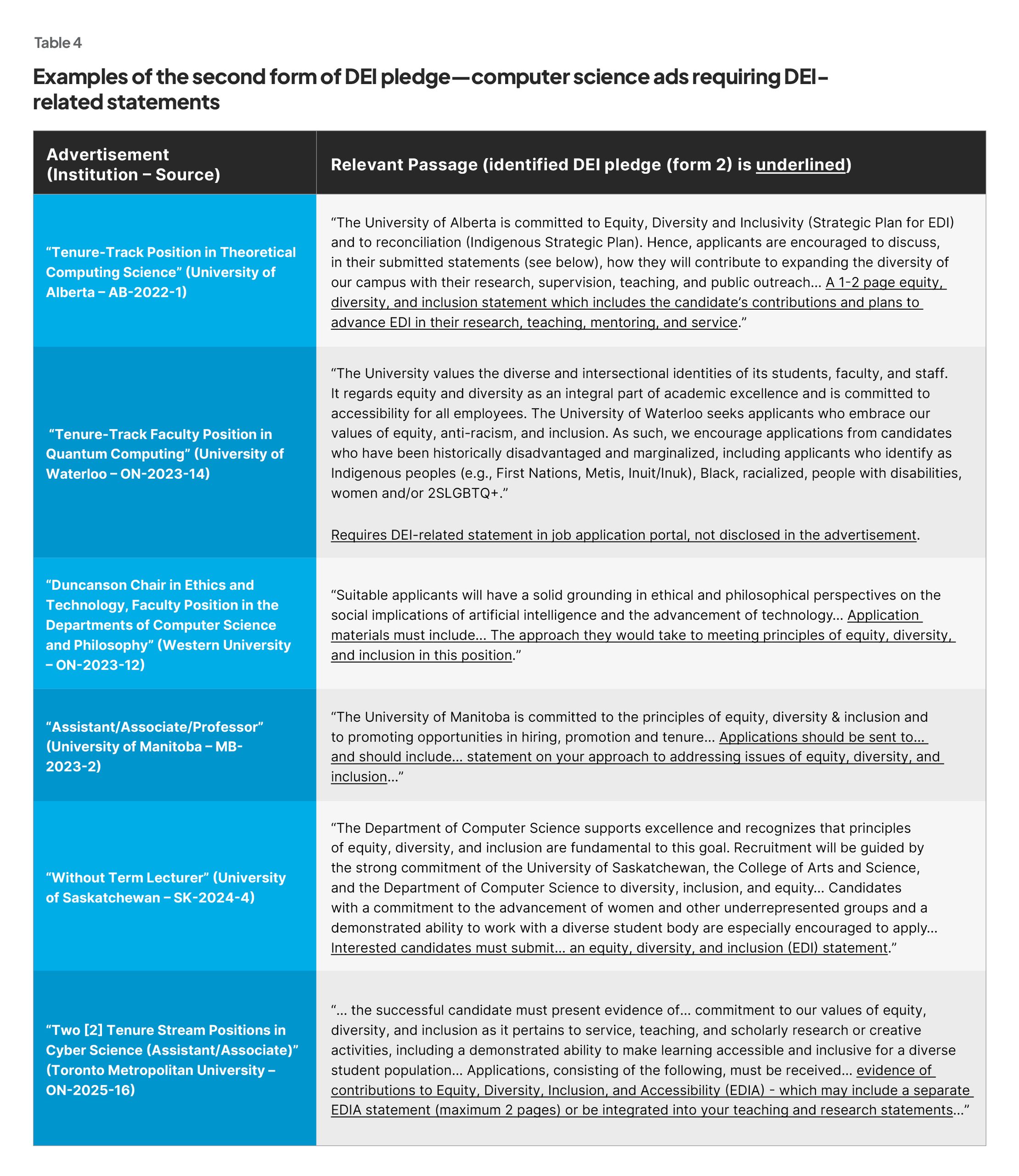
The second form of a DEI pledge is the expectation, either in the application or in a job application portal, that the applicant will submit a written statement about their experience with and support for DEI (see Table 4 for examples). This may be a standalone statement or the institution may request that it appear in other parts of the application. What an institution requests in the ad may vary, but fundamentally the academic applicant is required to submit a DEI-related statement. In North America this form of DEI pledge has garnered considerably more discussion than the other two forms.13
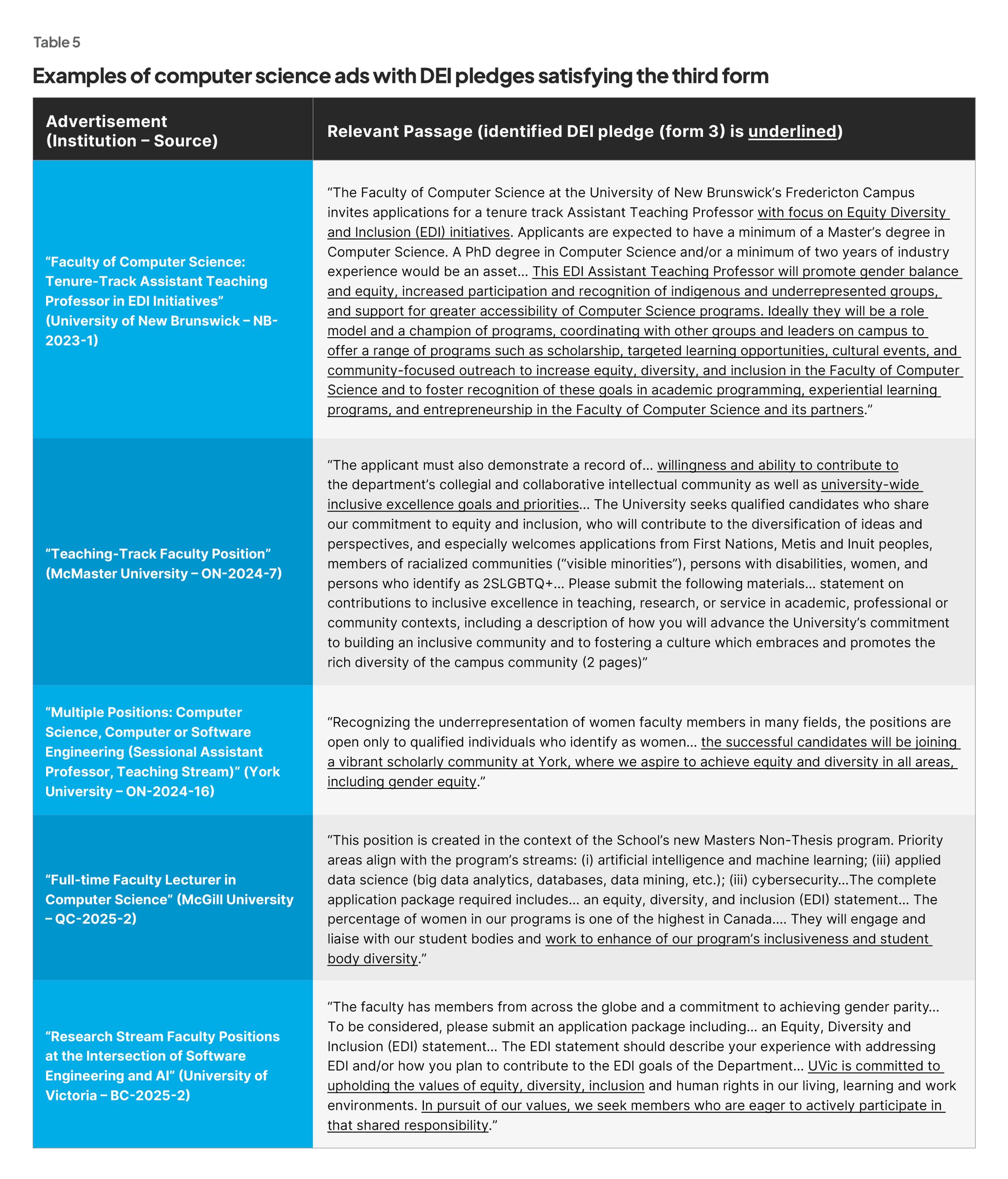
Finally, the third form of a DEI pledge outlines DEI-related activities the applicant will be expected to participate in according to the ad (Table 5). The ad must clearly communicate the expected DEI activity(ies) in which the applicant is expected to participate.
This paper considers DEI pledges as the most intrusive of the academic culling practices we study in this paper. While the primary focus of universities should be academic, these pledges can further buttress DEI-related policies including preferential hiring or restricted hiring. Highly qualified academics may abstain from applying because of DEI measures; they might support some of the measures or disagree with some of them. So, when an academic opts to apply for one of these jobs and is being asked to take the DEI pledge, including its expectations, they are being given an impression of how academic freedom, namely their intellectual autonomy, may function if they are hired by that institution. As an academic culling practice, DEI pledges have the effect of requiring applicants to prove that they adhere to or are complicit with DEI measures.
DEI pledges can cause foundational damage to academic freedom. A May 2023 letter14 from SAFS emphasizes this potential:15
Requiring applicants to swear fealty to a particular conception of university community and university goals amounts to imposing a political or ideological criterion on hiring and, as such, is contrary to the best university traditions of academic freedom and scholarly independence, traditions that enable scholars to fashion their own values and that enjoin hiring committees to consider fairly, on academic grounds alone, applicants who are critical of prescribed commitments and doctrines.
Asking for commitment to equity, diversity and inclusion ideology and practice pressures academics into serving a social movement they might well not support. It will encourage applicants to prevaricate or to misrepresent their actual views, and even to engage in self-deception.
Such demands are inconsistent with academic commitments to intrepid and dispassionate research, for they will cause scholars to shy away from speaking positions they believe might appear at odds with EDI [DEI] means or ends. The academic mission of the Department of Computer Science will suffer either because promising researchers and teachers will be screened out of job competitions or because a chilling orthodoxy will envelop the university. To require that prospective professors show they hold a particular set of views regarding social relations and responsibilities cannot but undermine candour, respect for intellectual autonomy and academic values generally.
More broadly within the mathematical sciences in North America, DEI pledges have been criticized, e.g. see Thompson,16 and Barvinok.17 For further discussion on arguments for and against DEI pledges and their relationship to academic freedom and institutions in Canada, we recommend Mercer’s 2023 essay.18
To the best of the author’s knowledge, this work is the first of its kind to study academic freedom within Canadian computer science departments specifically, and Canadian STEM fields more broadly, at the country’s institutions. This work is built upon Page’s19 long-running preliminary research. Due to the nature of this work and the broadness of its discussion of DEI and DEI-related policies, including the public’s opinions on these subjects, this paper summarizes only recent and relevant results explored within this paper.
In 2025 when they explored several different aspects of academic job posting ads in Canada, including academic culling practices introduced in Page’s framework, Hunt et al.20 developed a university discrimination index (UDI) by reviewing roughly 50 active ads from each provinces’ largest institutions—totalling 489 ads. They found that over the 489 ads reviewed, 477 of them included some DEI-related communication, which ranged from the promotion of DEI in institutional statements, to DEI pledges, to DEI surveys and questionnaires, to preferential or restricted hiring.
In the United States, many of the examples of the preferential or restricted hiring we have documented as taking place in Canada are generally prohibited employment policies.21 In recent years, the US has made considerably more attempts to broadly understand aspects of academic culling in relation to DEI, even at the institution-specific level.22 For instance, in 2023, John Sailer of the National Association of Scholars extensively reported on the use of DEI cluster hiring as a means that various institutions have used to advance DEI measures.23
In 2025, Arnold et al.24 analyzed 10,170 ads from the US over the fall 2024 academic hiring cycle to measure the prevalence of some academic culling practices related to DEI pledges, specifically DEI-related statements. They found that 23.3 percent of the total group of ads contained DEI pledges, but in STEM fields specifically 25.5 percent required DEI pledges. The authors noted that the frequency of pledge requirements in STEM fields was comparable to both the Humanities at 23.5 percent and the Social Sciences at 24.8 percent. The authors also found that states that explicitly banned the use of standalone DEI statements still employed them. This fact was uncovered when the authors found ads asking for DEI-related information in other application materials: part of the second form of the DEI pledge definition. To date, Arnold et al.’s work is the largest scale analysis of the prevalence of DEI-related statements in the United States, following an earlier 2021 study by Paul and Maranto.25
Presently in Canadian STEM research, when someone is awarded a chaired position (i.e., a federally-funded or private-endowment professorship meant to attract or retain top-tier scientific talent) or receives government funding, their peers tend to see it as a sign of a successful research program, which then has an impact on their hiring options, promotion, and performance reviews. In the late 2010s changes26 began to unfold within government funding programs and research chair positions, including the Canada Research Chairs (CRC) program27 and the Canada Excellence Research Chairs (CERC) program.28 These changes began with the introduction of DEI measures into various award granting processes, as well as into the review and assessment of an applicant’s work. These standards were sometimes implemented under the label of “best practices.”29 To learn more about this DEI-related shift in government programs, see Horsman’s30 and Snow’s31 analyses of federal granting agencies in Canada.
This DEI-related dynamic with federal granting agencies has manifested in numerous ways. First, as will be discussed in greater depth below, in 2024, through a systematic search of CRC ads over the second half of 2023, Burgess found that approximately 55 percent of those ads contained restricted or preferential hiring practices.32 Second, the examples that Horsman and Snow have discussed are not the only programs, competitions, or initiatives of this kind. In December 2025, Canada’s federal government announced the Canada Impact+ Research Chairs competitions33—a $1 billion investment to attract internationally-renowned researchers to Canadian institutions, with the intention of addressing priority research areas on a national scale. As the University of Manitoba, a participating institution, articulated, as part of this competition, “Equity, diversity and inclusion are embedded as foundational principles in Impact+ objectives, expected outcomes and reporting requirements of the competition. The three agencies expect that institutions and chairholders will demonstrate and implement the highest EDI [DEI] standards for the duration of their award.”34 Similar to the other government funding programs noted, this focus has led to new ads announcing requirements that amount to academic culling practices in STEM fields, where the institution sometimes requires candidates to demonstrate their commitment to DEI considerations in addition to their other application materials. In January 2026, the Department of Computer Science at the University of Manitoba posted on CS-CAN35 an ad for an Impact+ Chair position in Artificial Intelligence, which states that applicants should submit as part of their application:
…a personal statement reflecting on the applicant’s positionality, demonstrated commitment, and approach to issues pertaining to anti-racism and social justice (including principles of equity, access, and participation) in the following areas: teaching, research, and service.
This paper investigates academic job postings and provides six novel contributions to the study of academic culling practices in Canadian STEM fields and academic institutions: three data sets with archived ads, then three case studies based on each data set, respectively. We summarize the three data sets and collections below, followed by the three case studies.
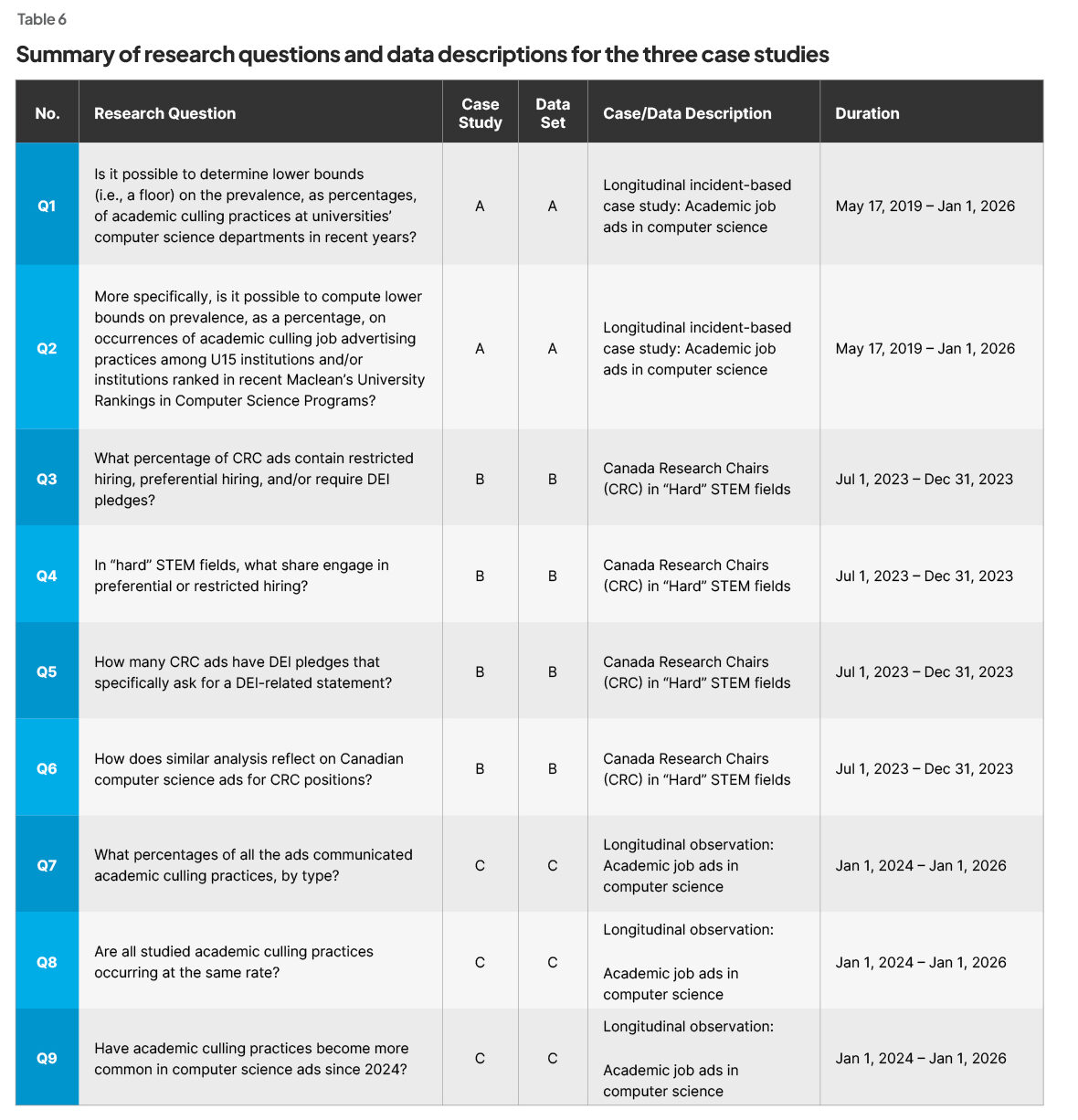
Table 6 summarizes the research questions that each of the three case studies asked and the timeframe during which data were collected. Below, we discuss details and how the data were collected. By design, the results are easily verifiable from the data sets summarized in this section. The results typically consist of basic counting, computing cumulative averages, and overall averages. All the ads in all the data sets were manually found, reviewed, verified, and collected by the author. (Note: It is important to stress that in years prior, had even one single incident of academic culling occurred, it would have likely been considered controversial.)
The present study advances Page’s36 long-term preliminary work; this data set consists of ads reported to contain academic culling practices for computer science academic positions. These data were collected by the author from approximately the middle of May 2019 until January 1, 2026, expanding the data set the author had initially collected with evidence-based classifications of computer science ads that engage in academic culling practices. Beyond the author’s initial observations, DATA A improves both the classifications of the ads and the reproducibility of these observations by including an archive of all the ads. DATA A consists of 158 records of archived incidents. This constitutes what is likely the largest publicly available collection to date of incidents of academic culling practices in Canadian institutional hiring in STEM fields.
The primary way in which the author discovered and gathered the ads was by regularly monitoring the CS-CAN “View Jobs” web page37 over the documented period. Supplemental to this, in earlier stages of this data gathering and as Page was documenting the increasing incidence of this phenomenon, the author communicated with SAFS about some of these postings.38 As the first years of records in DATA A show, SAFS archived many of those ads together with their own letters expressing concerns regarding some academic culling practices and the institutional responses to their letters. Page sometimes included these letters and documents in the archive of the records for historical purposes, and to help readers understand how institutions have responded to concerns about academic freedoms brought about by academic culling practices. In 2023, due to a considerable increase in the incidents of computer science ads engaging in academic culling practices over the previous year, the author’s collection methods shifted from seeking and archiving the computer science ads with SAFS to a systematic collection of incidents. Then, once all the reported ads were documented at the end of the period, he created DATA A by collating the incidences and expanding and organizing the data fields.
What differentiates records in DATA A from the author’s preliminary work is that DATA A is not only an archive of all the ads retrieved, but provides further evidence to support and refine the classifications and fields found in the new data set we provide. Each time an ad was posted containing evidence of an academic culling practice, we recorded it and retrieved a copy of the ad. We note that DATA A does not include any records from the earlier works where it does not share these stronger features. DATA A is incident-based like the author’s preliminary work, so it does not encompass every single incident of academic culling practices, and a lack of a record does not imply that other institutions did not participate in academic culling practice, or that other ads did not occur beyond those recorded and documented.
Beyond expanding every field with further details and relevant passages, including provincial information and an expanded type of classification for each ad’s positions (e.g., including “CERC” for Canada Excellence Research Chair positions), DATA A also includes information on whether the application may require a DEI-related statement beyond a DEI pledge. Table 7 shows the fields of each record in DATA A.
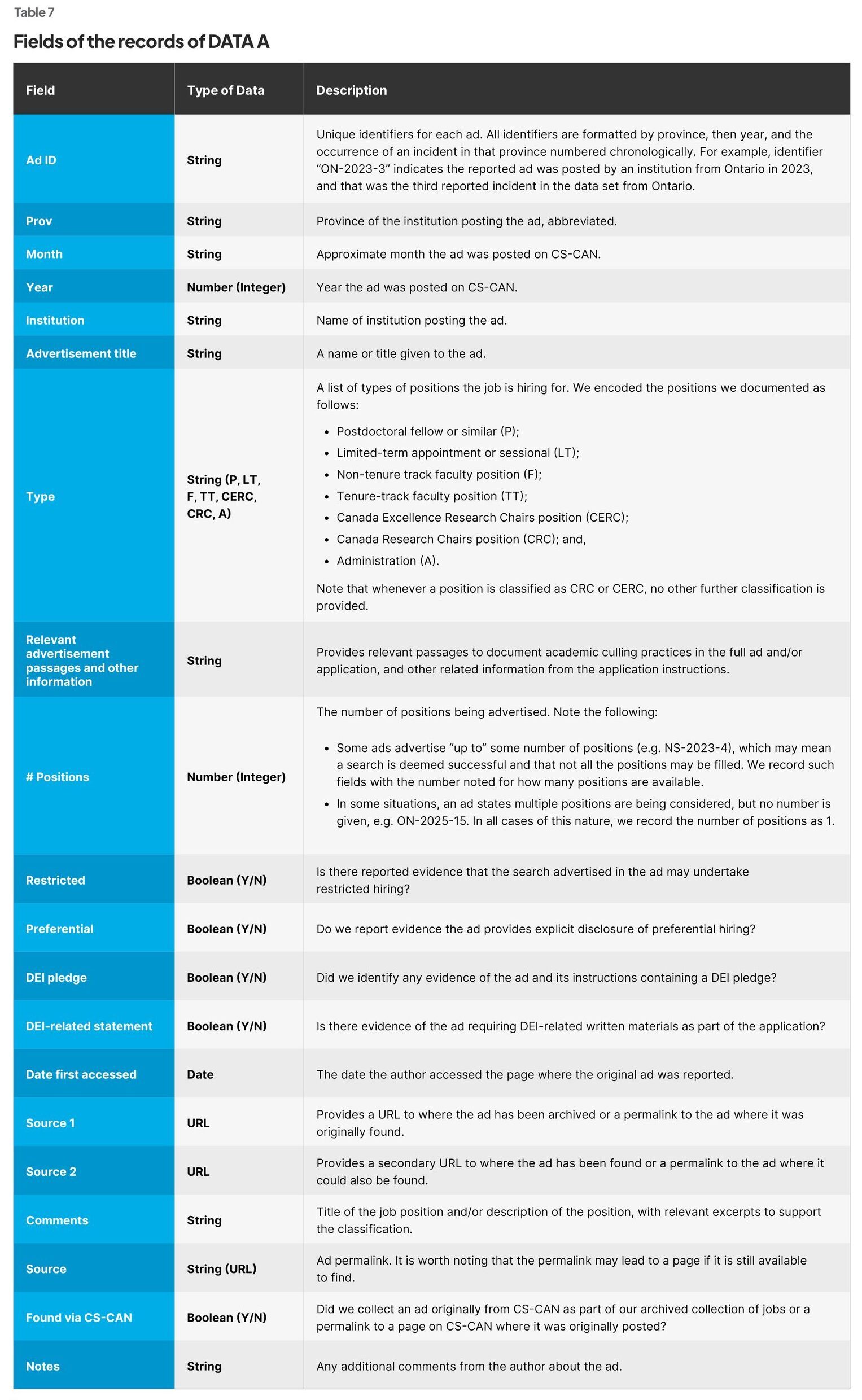
All ads reported in DATA A were either posted to CS-CAN or to an institutional website where they advertised a position for computer science or qualified applicants from computer science.d
The overall research theme is to measure the extent and severity of academic culling practices in postsecondary institutions. Flowing from this, the first research question asks: Is it possible to determine lower bounds (i.e., a floor) on the prevalence, as percentages, of postsecondary computer science departments participating in academic culling practices in recent years?
d. Refer to Table 7 for each type of position(s) advertised.
U15 Canada (“U15”) is an association of 15 leading public research universities across Canada (Table 8). According to the U15 website,39 they train 64 percent of full-time graduate students in Canada and perform $866 million of research for business.
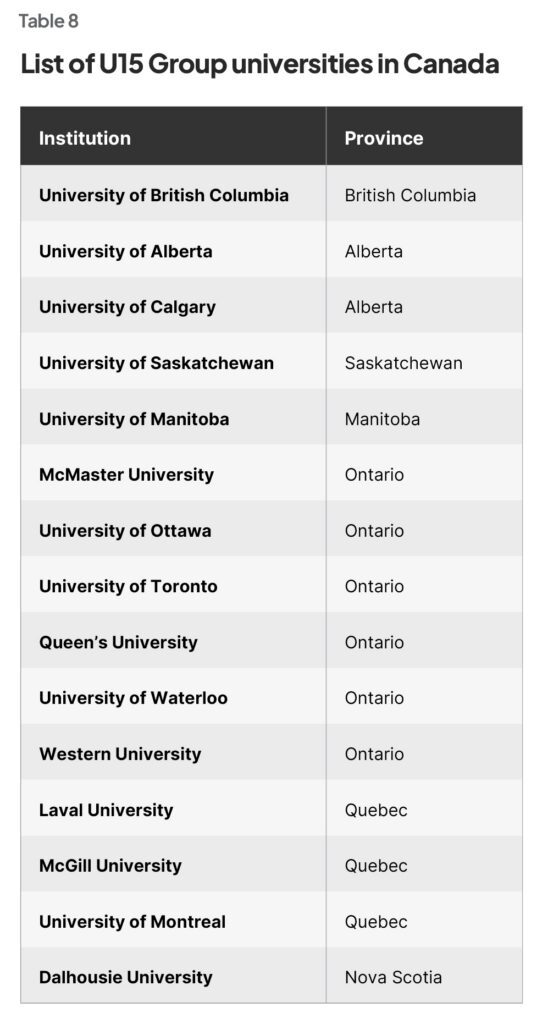
As another application of DATA A, we explore institutions where computer science programs are usually well regarded by other sources. In 1991, Maclean’s magazine began its University Rankings,40 claiming they “identify the best programs, provide tips on applications and scholarships, and offer up-to-date insight on what it’s like to enter a university or college right now.” Some computer science departments have recognized being highly placed in these rankings as a “prestigious distinction,” including the Cheriton School of Computer Science at the University of Waterloo.41
Considering ads from the U15 group and the Maclean’s University Rankings in Computer Science Programs (Maclean’s-ranked universities), the second research question explores: Is it possible to determine lower bounds (i.e., floors) on prevalence, as percentages, of their participation in academic culling?
In Appendix A, we provide the relevant information from all the records to review the main analyses in this paper and details about how the ads were archived.
The number of reported incidents in DATA A invites further review through other methods of gathering and analyzing Canada Research Chair (CRC) positions in STEM fields, given the spike in 2023. This is examined in the second data set, DATA B. It advances both the systematic CRC ad data collected by Burgess42 focusing on Canadian STEM fields, and Page’s43 later preliminary work. DATA B is an examination of the ads and instructions that institutions have posted, beyond the CRC program requirements, from the second half of 2023, over a period of six months.
According to its website, University Affairs “is… the largest source of career ads for people seeking academic positions in Canada.”44 The ads included in DATA B are derived from Burgess’s data set of CRC ads, where he systematically tracked all CRC ads on the University Affairs website from July 2023 until the end of December 2023.45 We refer the reader to Burgess’s46 original data set, which contains records for all 71 CRC ads, including when and where each ad was originally located. As additional sources beyond this, and whenever possible to further support the existence of the ads, DATA B refers to the same ads posted elsewhere as Page found them. DATA B contains only CRC ads posted on University Affairs and may not include others over the studied period, e.g., ad BC-2023-10 of DATA A.
DATA B contains records of 24 CRC ads that may be in STEM fields outside of health, medical, and social sciences. This is meant to capture a sample of the “hard” STEM fields that some may assume would be void of academic culling practices. We improve upon and further classify the ads, including whether we found any evidence that the institution required the applicant to provide a DEI-related statement, and we provide more passages as evidence of academic culling practices. Table 9 shows the fields for each DATA B record. For data from these files that are relevant to our analysis, as well as other details, see Appendix B.
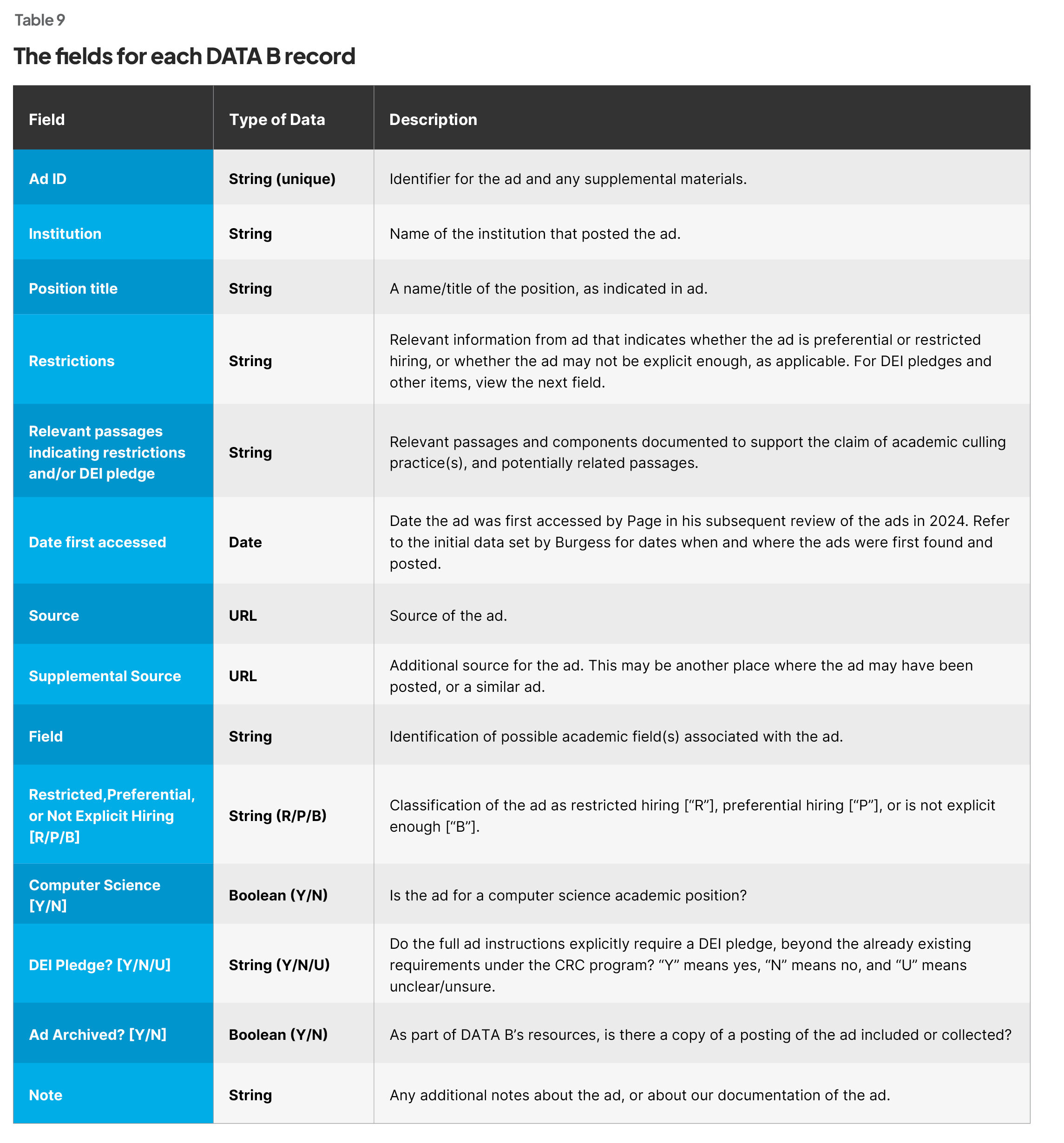
The goal in analyzing DATA B is to provide insights into the following four questions.
What percentage of CRC ads contained restricted or preferential hiring? What percentage required DEI pledges?
Burgess found that approximately 55 percent of the ads in his original data set in 2024 engaged in preferential or restricted hiring. When considering only “hard” STEM fields, which appear in DATA B, is there a similar outcome?
How many CRC ads in DATA B participate in DEI pledges that specifically ask for a DEI-related statement?
How does similar analysis reflect on Canadian computer science ads for CRC positions over the latter half of 2023?
After 2023, we sought to provide a systematic and longitudinal evaluation of STEM ads to help provide insight into how many postings for academic positions are incorporating academic culling practices. DATA C lists 117 records of computer science ads posted on CS-CAN (i.e., the major job dashboard for academics in computer science) over the entire period 2024 to 2025. Of the 117 records, 76 ads are from 2024, and 41 from 2025. DATA C contains the records of these ads and documents we refer to as “snapshots.” Both help to systematically document the ads and academic culling practices discovered therein.
To capture the two years of computer science ads that we have documented, we downloaded copies of the information on the CS-CAN “View Jobs” web page,47 each of which we entitle “snapshots.” To ensure we were capturing ads specifically posted in 2024 and 2025, we took snapshots before and after the period being investigated. Our earliest snapshot is from November 14, 2023, and the last snapshot included in DATA C is from January 1, 2026. In total, we collected 103 snapshots. We manually reviewed each of them to build the initial DATA C records. Whenever possible, we attempted to timestamp each document.
To make reviewing DATA C as straightforward as possible, we identified 27 selected snapshots that together contain all the ads from the start of 2024 until the end of 2025. To decide upon the selected snapshots, we determined whether they were from near the start of a month, near the end, or near the mid-point. We found that we had a snapshot for every month over this period from near the start of the month. We then examined each of these snapshots against DATA C’s records to see if jobs listed were missing between each selected snapshot. We found that we needed only two snapshots for February 2024, but all the remaining selected snapshots occurred near the start of the month. Figure 2 plots the dates of all 103 snapshots and the 27 we chose to be selected snapshots.
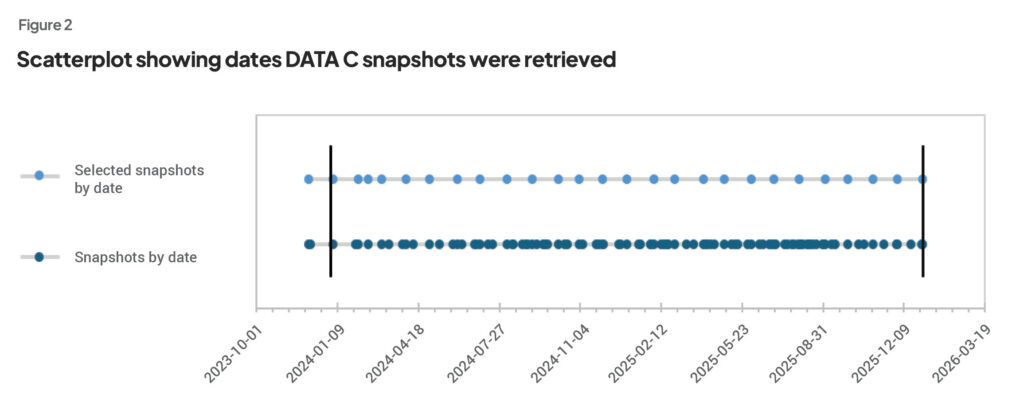
Note: The vertical bars indicate the starting and end dates of the studied period.
Finally, DATA C also incorporates the incident-based reporting information of the records in DATA A, which, like the snapshots, was systematically monitored manually over this same period. With this addition, DATA C gives records for all computer science ads posted on CS-CAN and related academic culling practices we have documented with DATA A over the entirety of 2024 and 2025. Table 10 shows the fields in DATA C’s records.
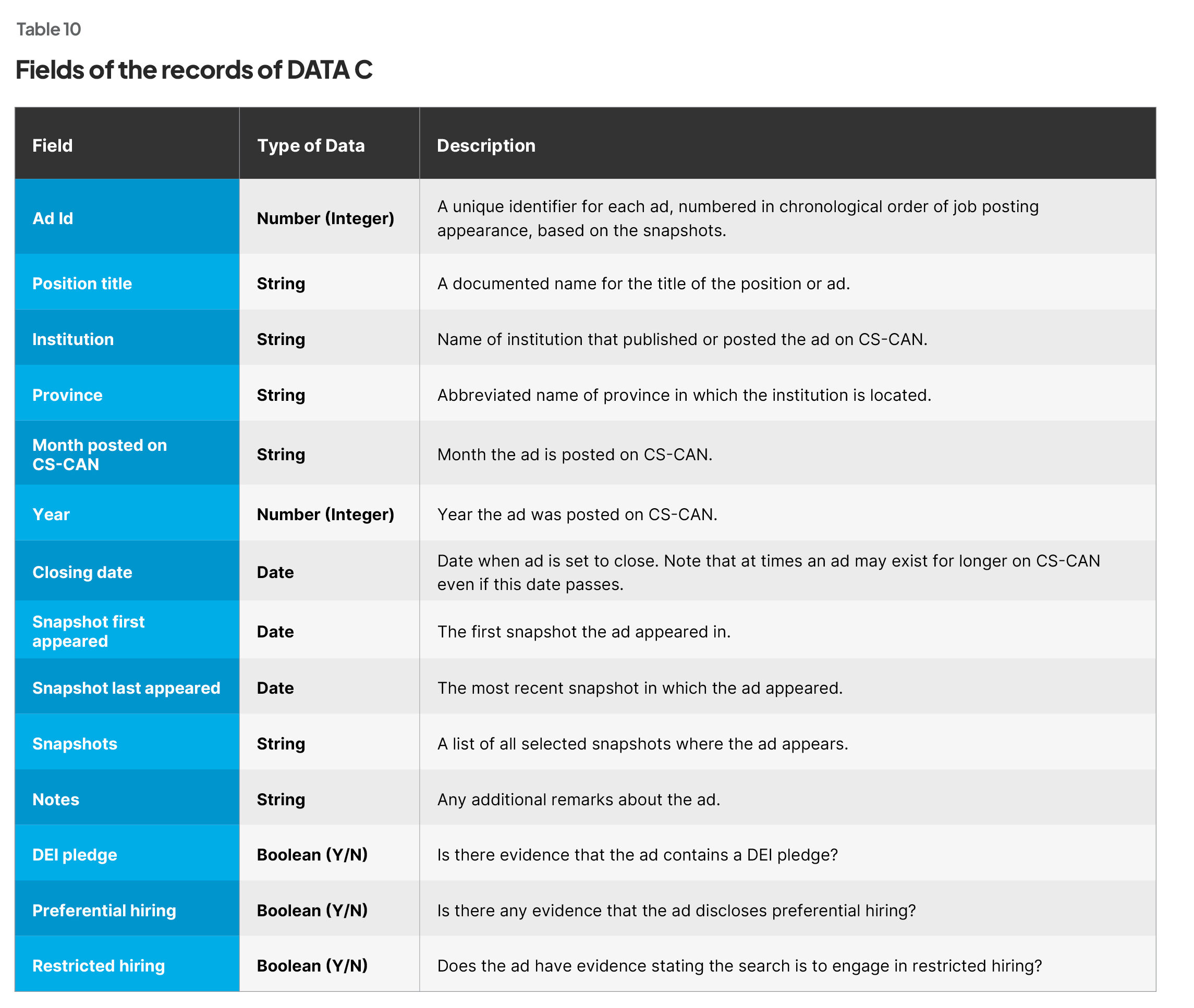
Appendix C includes summaries of the records in DATA C and any additional details on how we archived the snapshots in DATA C.
DATA C is the outcome of our systematic tracking of all ads posted on CS-CAN, where we documented, nationally and by province, all ads that have evidence of academic culling practices. This provides a novel setting for an updated study of computer science ads over 2024 and 2025 to get a detailed, statistical understanding of the prevalence of academic culling practices in computer science. The following questions are addressed in the analysis:
What percentages of all the ads communicated academic culling practices, by type?
Are all studied academic culling practices occurring at the same rate?
Have academic culling practices become more common in computer science ads since 2024?
Three corresponding case studies present the results of the three aforementioned data sets. CASE STUDY A reports over time incidents of academic culling practices in computer science job postings at 33 universities in Canada, then narrows the scope to examine prevalence at U15 and Maclean’s-ranked institutions (i.e., the most prestigious programs). CASE STUDY B looks at “hard” STEM positions in the Canada Research Chair (CRC) program. And CASE STUDY C presents the results from CS-CAN, the main job postings hub for computer science academics.
DATA A consists of 158 academic job advertisements in computer science, spread across a total of 33 universities in Canada, that each show at least one incident of academic culling. In 2019, we found evidence of academic culling in only one job posting, but that rose to a high of 53 job postings in 2023. Figure 3 visualizes this increase longitudinally, reporting the cumulative total. Figure 4 breaks this down by year and practice, and Figure 5 illustrates the individual culling practices and the cumulative total. DEI pledges are the most common culling practice, but restricted hiring is the only practice present every year.
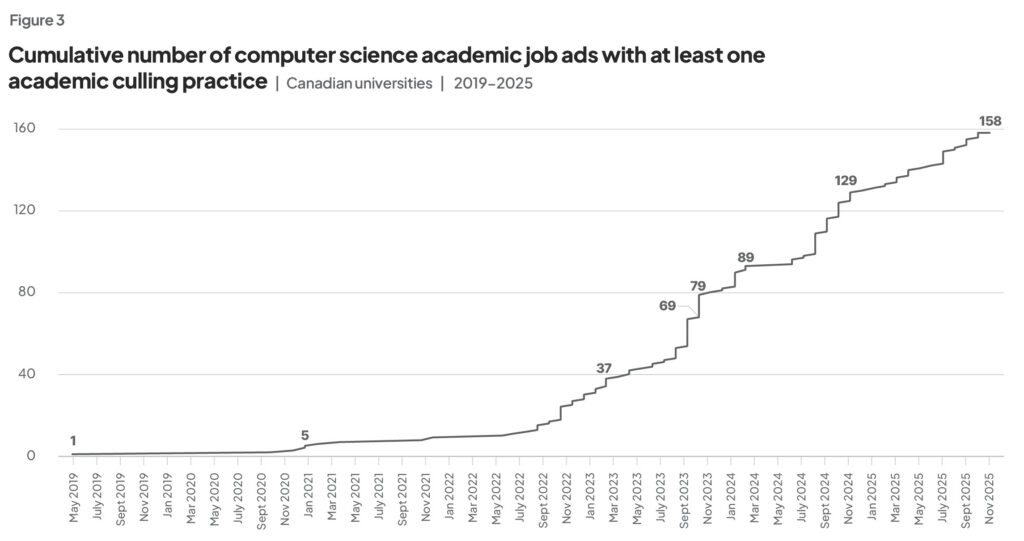
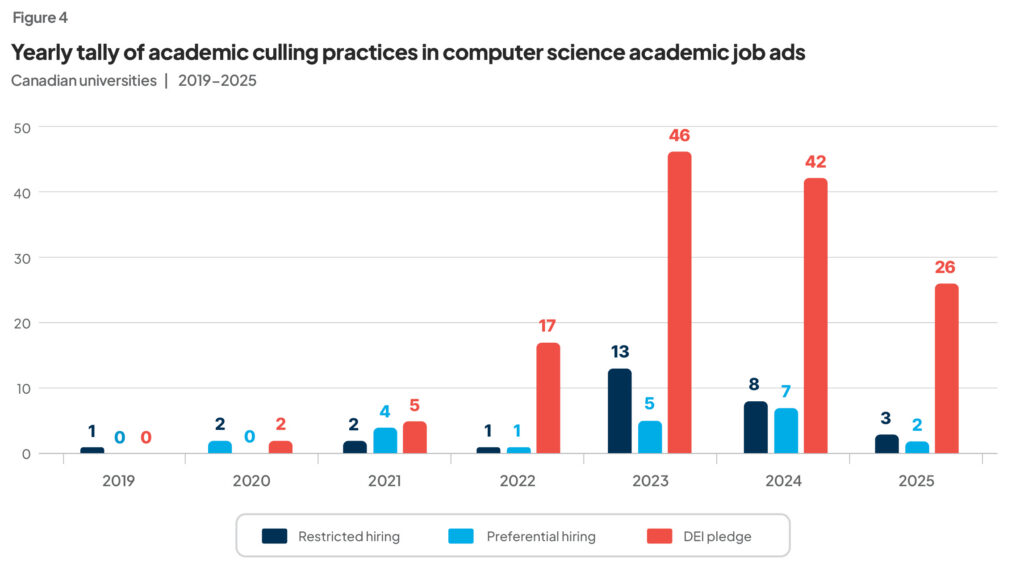
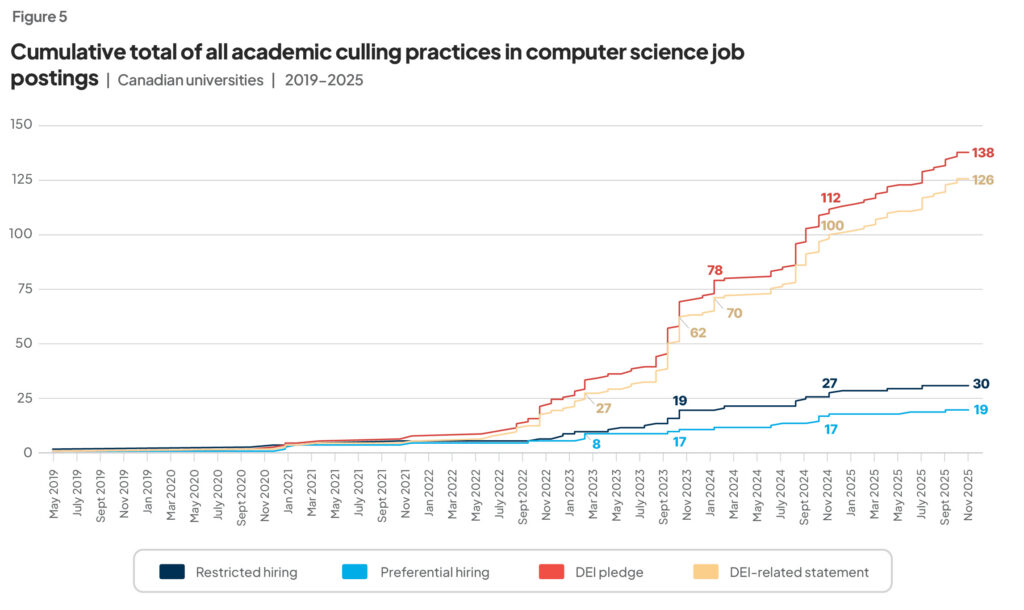
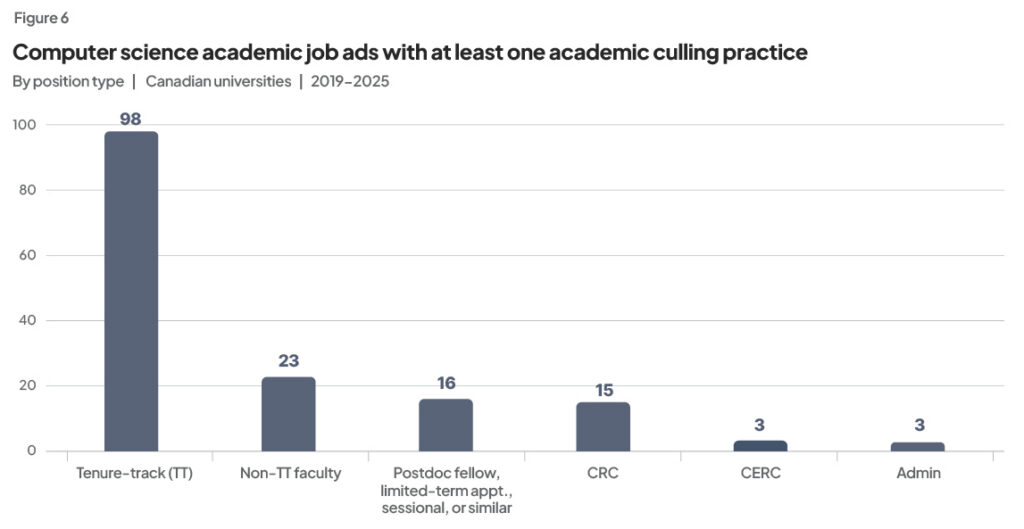
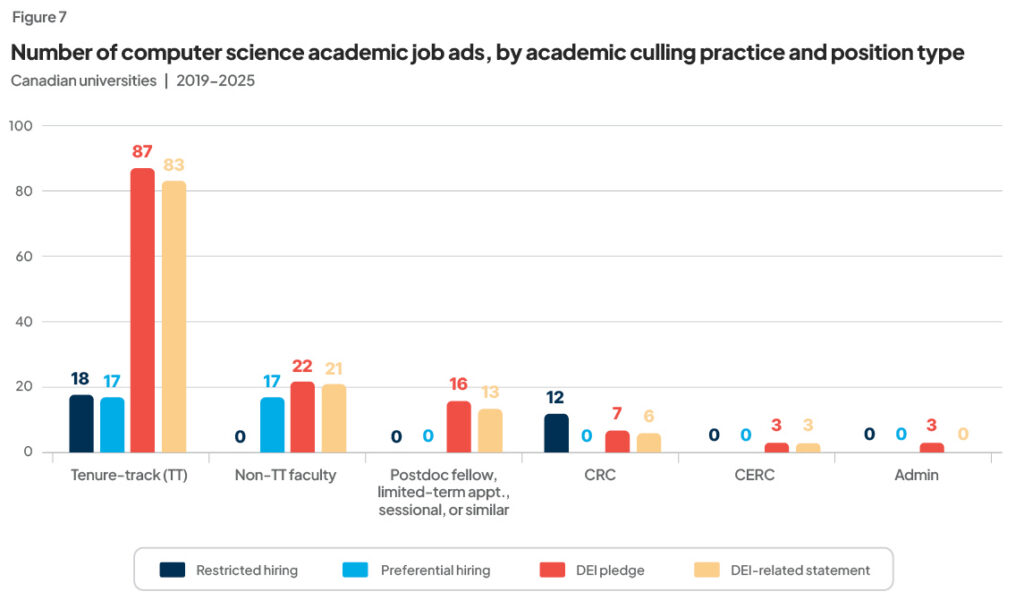
The first ad included in DATA A is titled “Canada Research Chair Positions” from Western University48 in May 2019 (ad ON-2019-1 in DATA A). Since then, reported ads grew every year until 2023. Within the records of DATA A there are numerous types of academic positions that may be of interest to those studying academic culling practices. For those especially interested in post-graduate, contractual, and sessional positions, non-tenure faculty positions, and tenure-track positions, we documented 16 ads, 23 ads, and 98 ads, respectively, that engaged in academic culling practices. For those interested in Canada Research Chair (CRC) positions and Canada Excellence Research Chair (CERC) positions, DATA A reports 15 ads and 3 ads, respectively, that reveal academic culling. Finally, DATA A contains 3 ads for positions within administration that also show academic culling. Figure 6 breaks this down by position type. Figure 7 further differentiates each position type and academic culling practice.
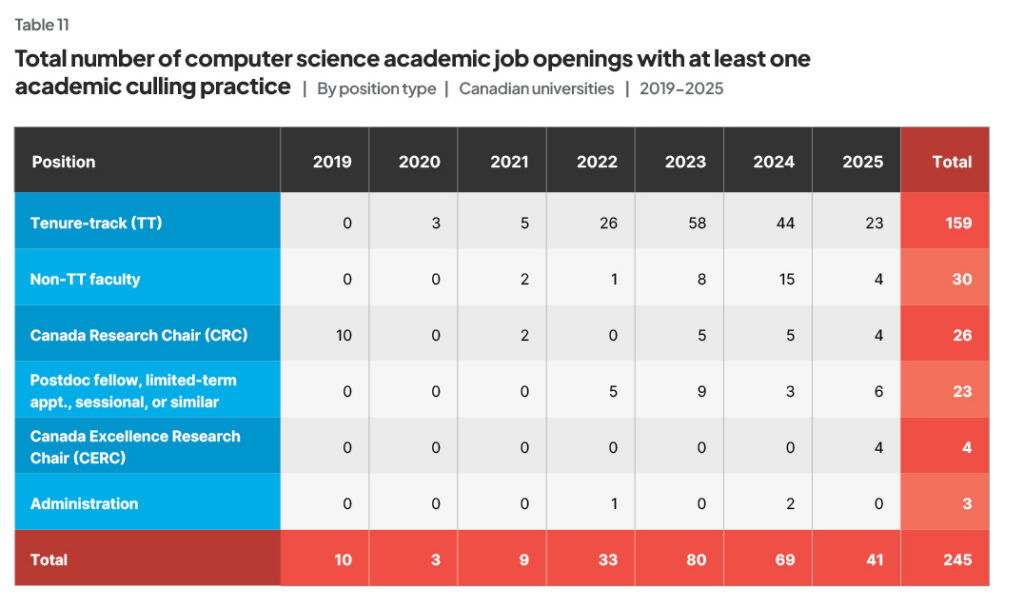
Some ads are for multiple job openings. Of the 158 total ads in DATA A, we estimate that at least 245 positions were involved (see Table 7 for further details explaining how we determined the number of positions). Table 11 tallies the distribution of these 245 positions by year and position type.
The sheer volume and proportion of academic culling practices is one thing, but it is also important to determine whether this is concentrated in a few institutions or widespread across leading universities.
We explore the prevalence of academic culling in the following two ways:
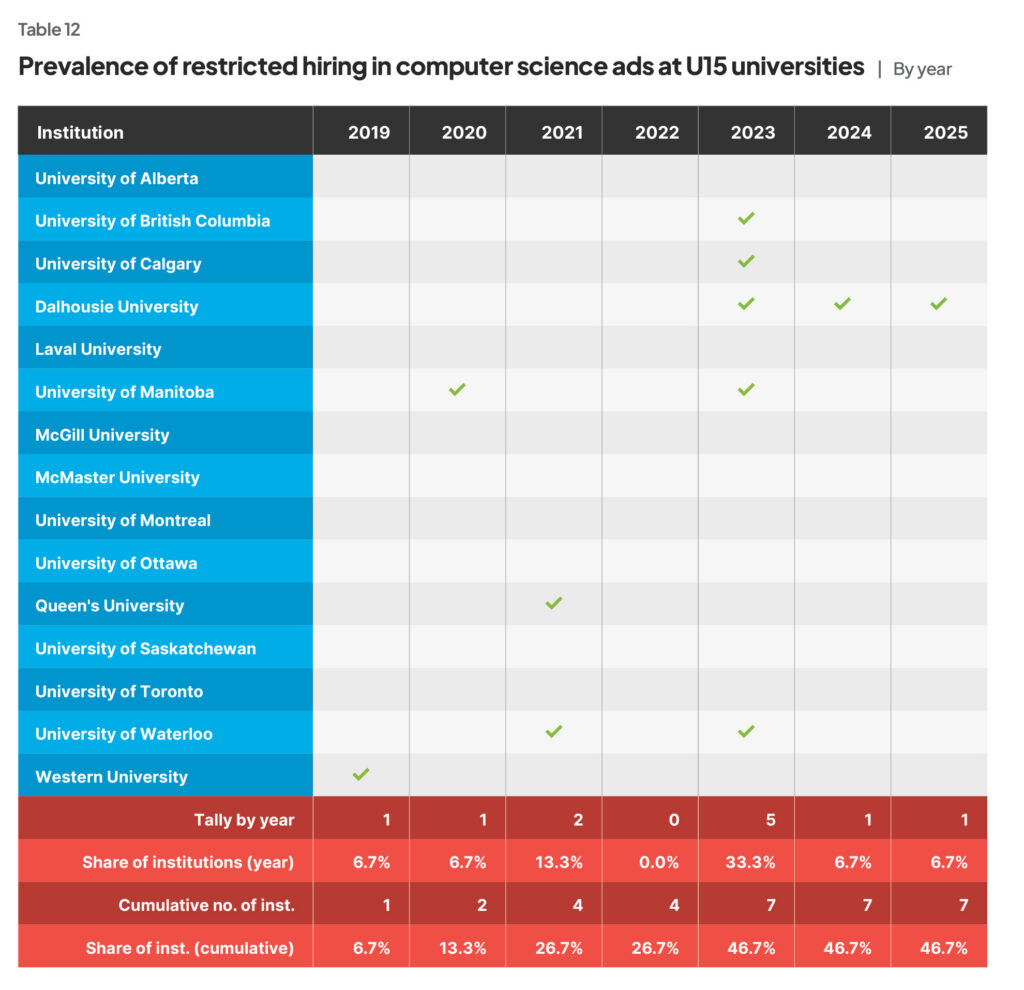
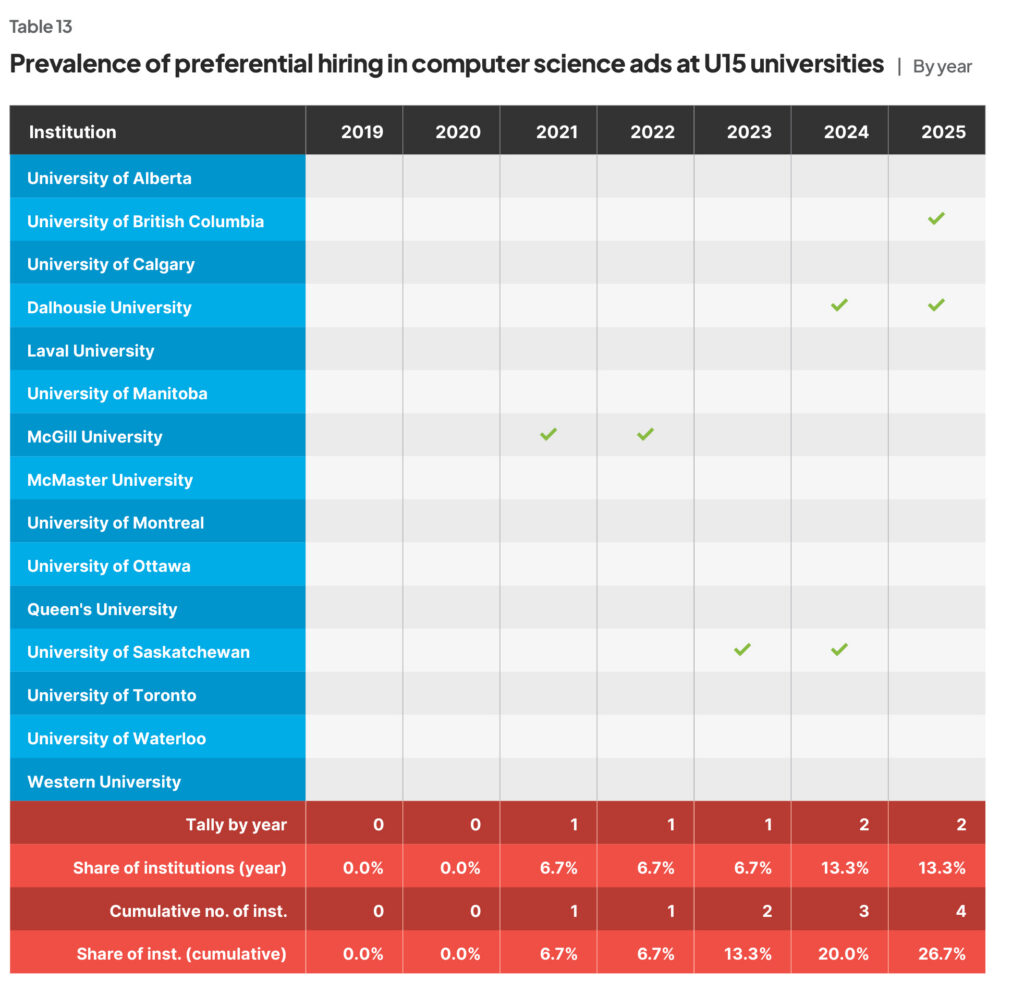
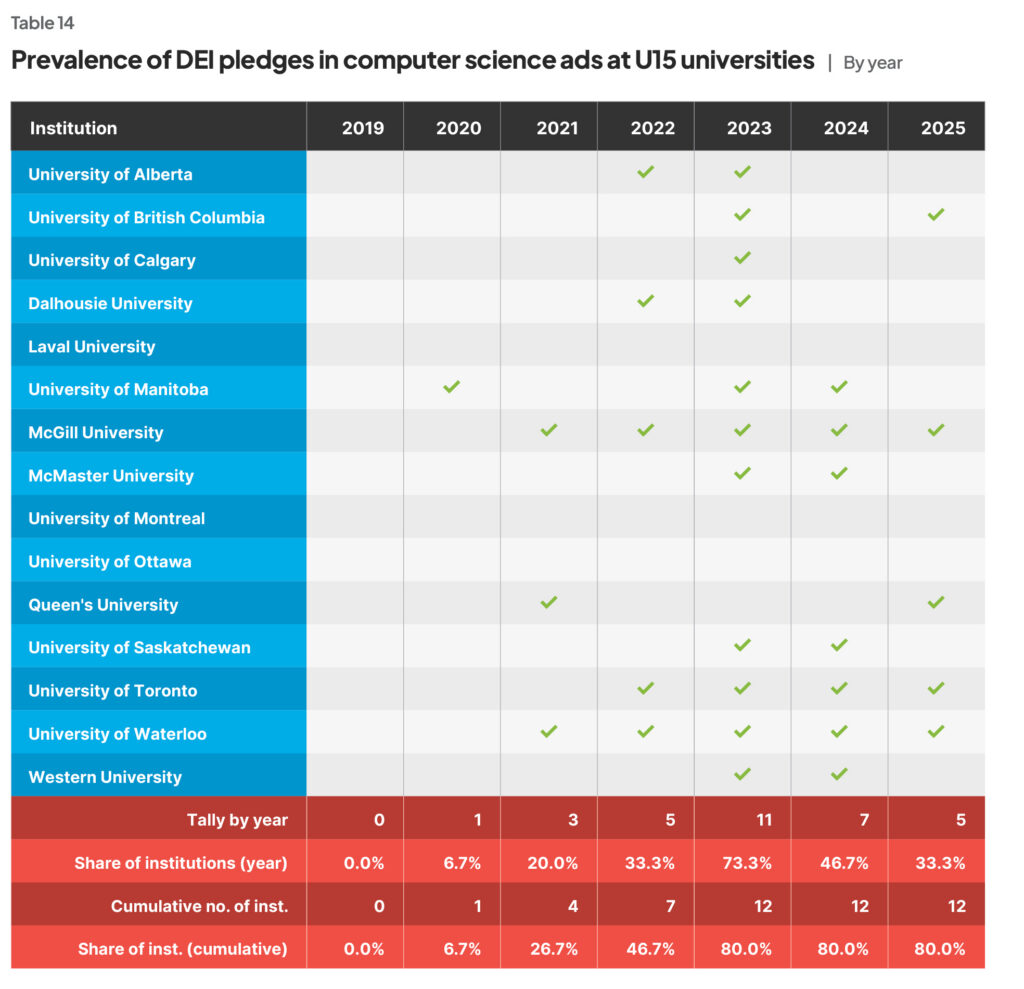
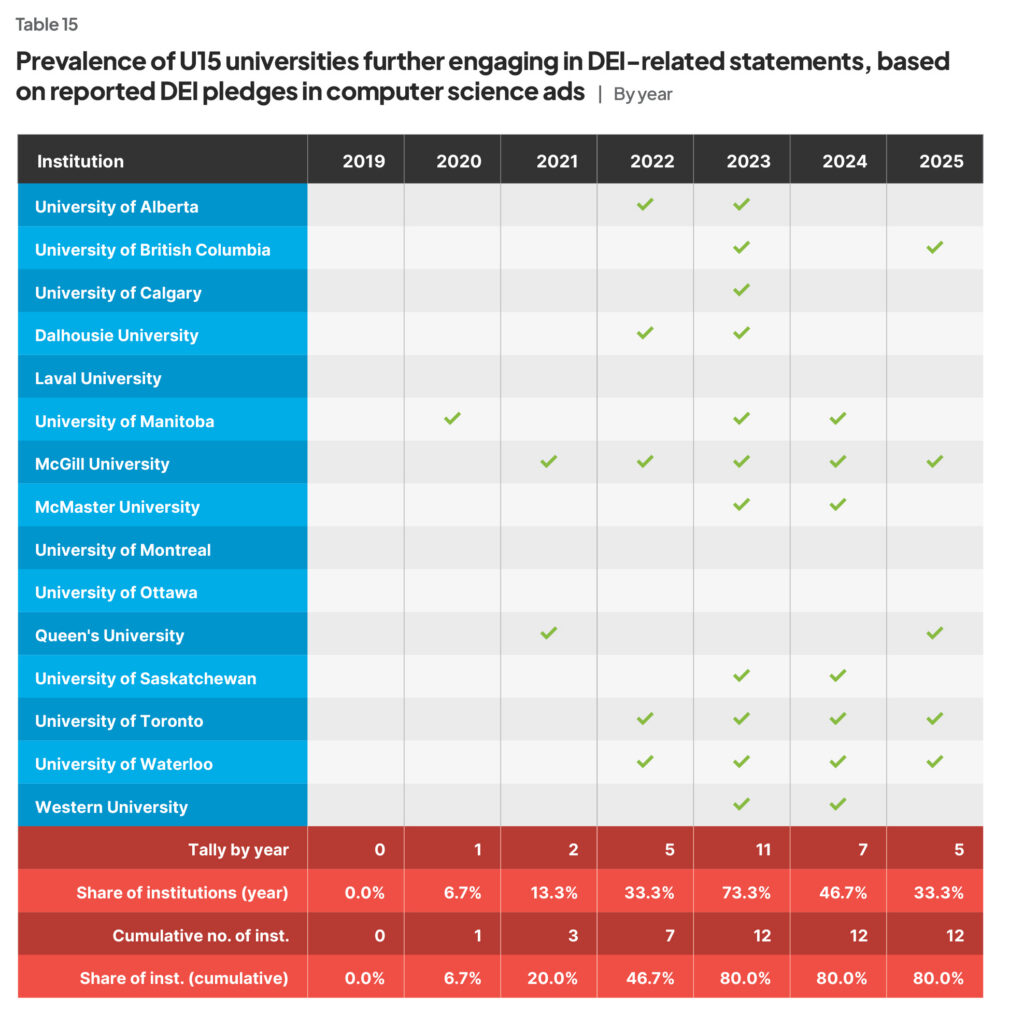
First, we explore the U15. To find lower bounds on the prevalence of academic culling practices among the U15 universities, we count the number of institutions with at least one ad documenting restricted hiring (Table 12), preferential hiring (Table 13), DEI pledges (Table 14), and within DEI pledges those in which an ad asks for a DEI-related statement (Table 15).
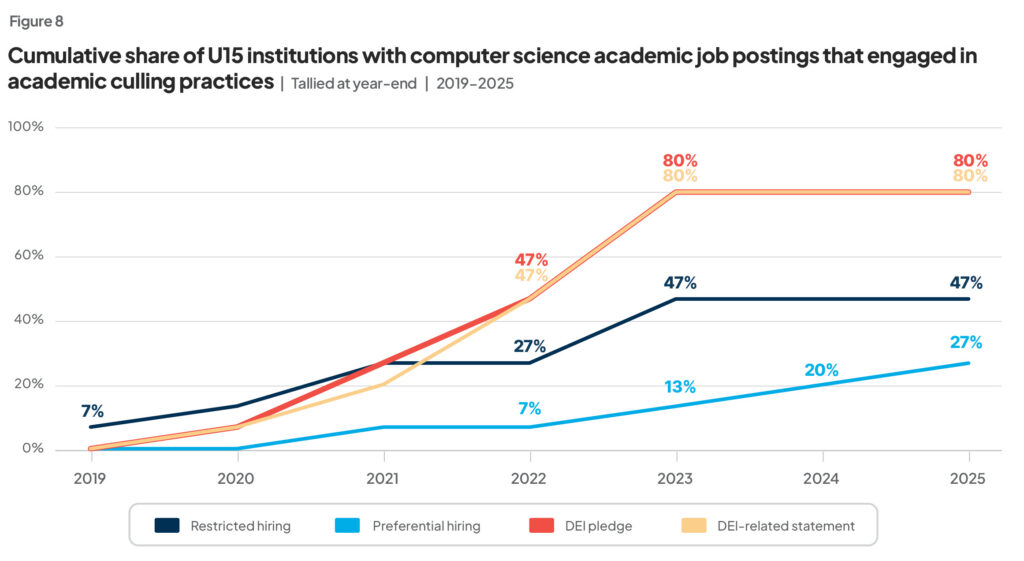
Table 12 shows that up to the end of 2025 at least 46.7 percent of the U15 institutions engaged in restricted hiring. The peak of this practice occurred in 2023 when at least a third of the U15 engaged in this practice.
Among the U15 universities preferential hiring was not nearly as prevalent as restricted hiring over the studied period. However, the practice reportedly appeared at more of the U15 institutions over time, going from 0 percent at the start of the studied period in 2019 to almost 27 percent of those institutions by 2025.
By examining the year columns in Table 12 and Table 13, we can count the number of institutions that participated in restricted hiring or preferential hiring, and thereby determine combined prevalence of both practices. It is apparent that by 2023 at least 60 percent of the U15 universities engaged in preferential hiring or restricted hiring. That was also the year when the highest number of U15 universities participated in these practices (at least 40 percent).
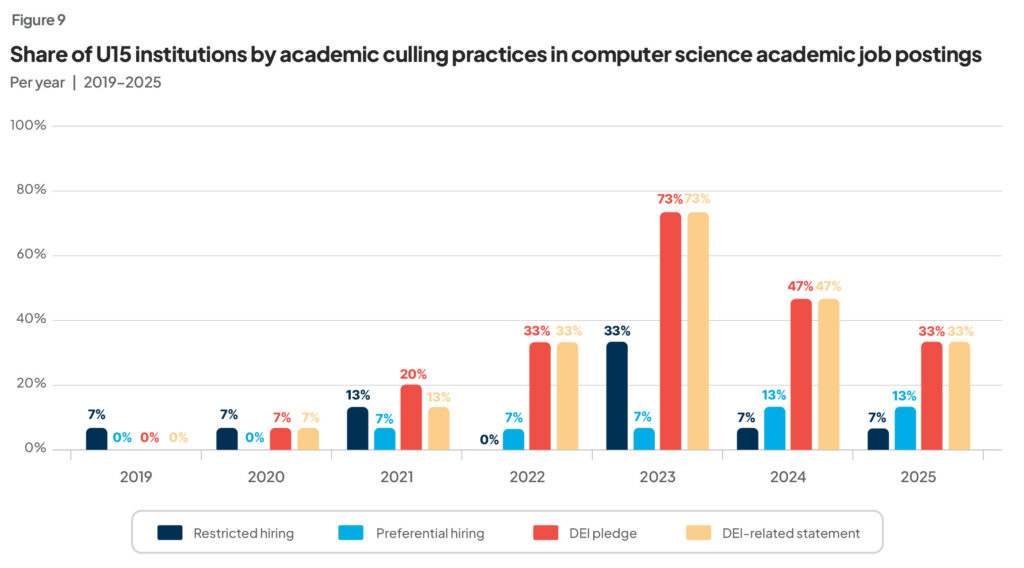
From zero reported incidents in 2019, by 2023 at least 73 percent of the U15 universities posted computer science ads with DEI pledges. After 2023, our lower bound on the number of U15 institutions annually participating in DEI pledges decreased, but not to pre-2023 levels. By the end of the studied period, at least 80 percent of the U15 institutions had posted at least one computer science ad with a DEI pledge (Table 14). Note that we found similar results when we specifically considered ads that asked for DEI-related statements (Table 15).
To put together our overall results for the U15 universities, we can merge the entries of the rows and columns for the institutions and years in the first four tables above to produce Table 16. This table then provides lower bounds for the prevalence of academic culling practices in general across the U15 institutions, based on computer science ads.
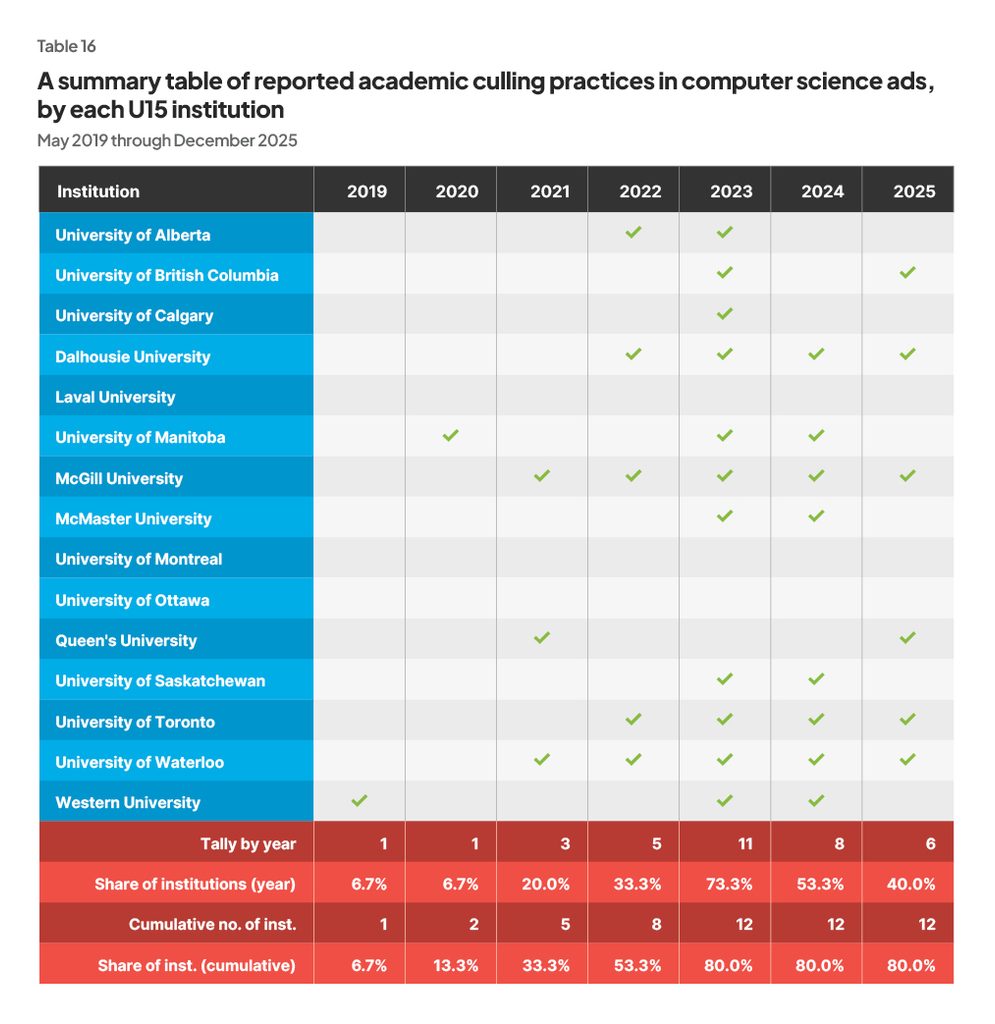
In summary, from 2019 to 2025, at least 80 percent of U15 institutions engaged in at least one academic culling practice in their postings for computer science academic jobs (Figure 8)—i.e., every U15 institution except Laval University, the University of Montreal, and the University of Ottawa. The peak was in 2023, when at least 73 percent of U15 universities participated in academic culling practices in one year (Figure 9). By 2023, already at least 80 percent of the U15 institutions had engaged in academic culling at some point over the period studied, and this remained the case by the end of 2025.
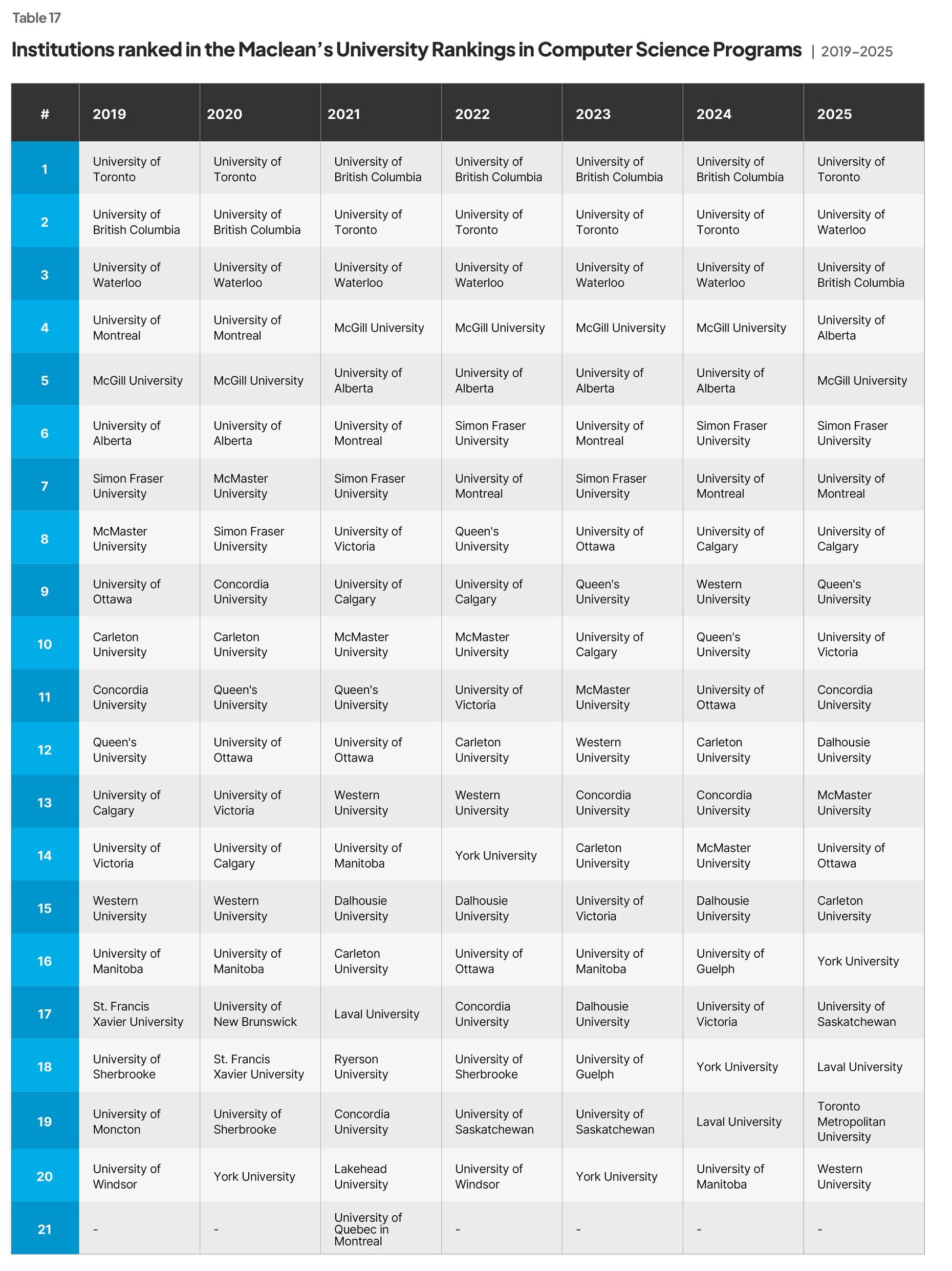
The institutions included in the Maclean’s University Rankings in Computer Science Programs varies from year to year. We examined the years from 2019 until 2025. Table 17 lists the institutions included for 2019,49 2020,50 2021,51 2022,52 2023,53 2024,54 and 2025.55 Institutions in the ranking are listed in descending order, starting at the top-ranked. We provide the rankings of the institutions, top-to-bottom, as listed numbers, and have assigned each of the tied institutions to one of two adjacent rows. We use the Table 17 grid in the tables that follow.
Like our previous analysis, we now identify, by year, in association with Table 17, whenever a Maclean’s-ranked institution engaged in academic culling practices in their computer science job postings. The institutions do differ from year to year so showing the data in a format similar to Tables 12 to 16 would become more complex than needed. So, Tables 18 and 19 are organized differently.
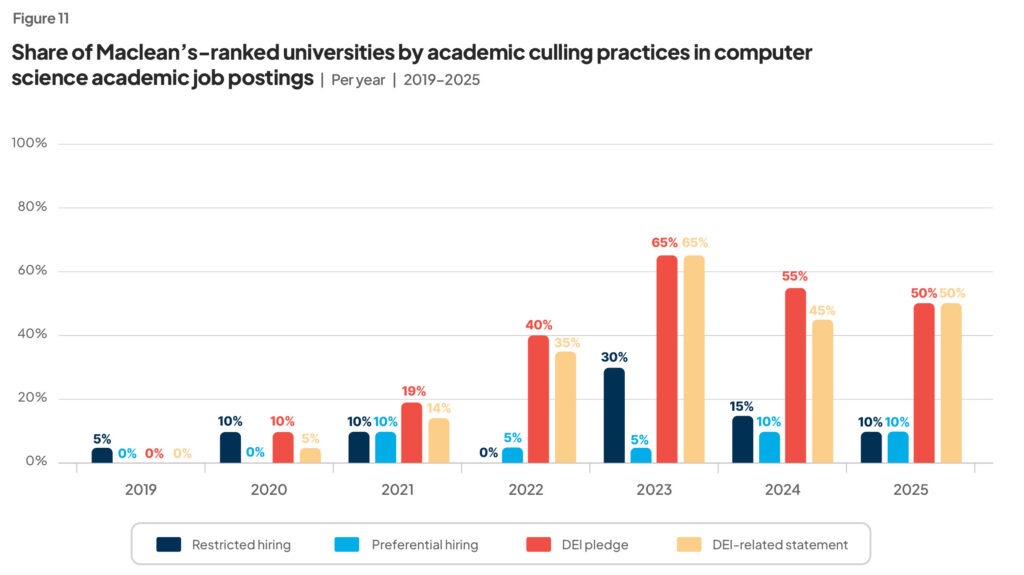
Table 18 reports on ads for computer science academic jobs at the 20 or 21 universities ranked by Maclean’s from the middle of 2019 until the end of 2025. For each institution, there are four subcells per year, where “✓” appears if there is at least one ad for the institution listed at that number (row) (from the grid created in Table 17) posted approximately that year. For each year, the academic culling practices are divided into the following subcells: restricted hiring (“R”), preferential hiring (“P”), DEI pledge (“D”), and then among those DEI pledge ads that ask for a DEI-related statement (“S”). All percentages are rounded, and the final row is an annual summary of the share of institutions that have demonstrated any of the academic culling practices in their computer science program hiring. The most common academic culling practice, DEI pledges, peaked in 2023 when they were required by at least 65 percent of the institutions.
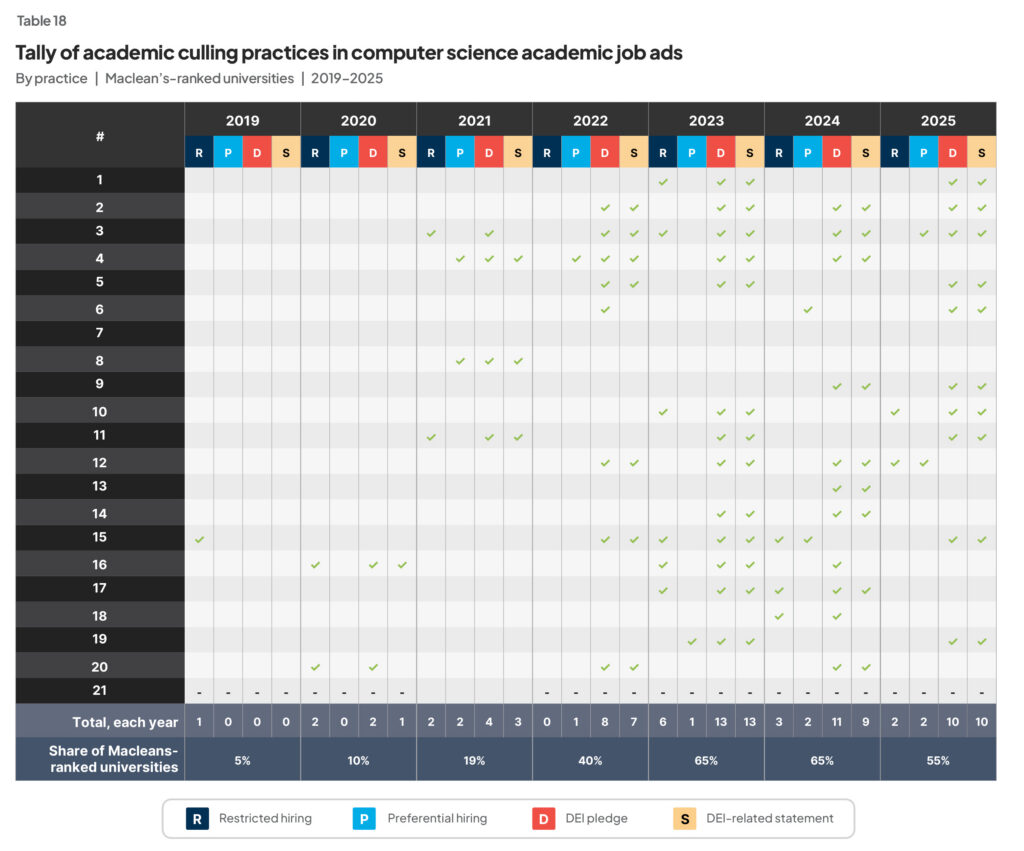
Table 18 counts each job posting only once, but to gauge the prevalence and find a lower bound for institutions within the ranking that engaged in academic culling, we kept a cumulative count. Table 19 tallies an active cumulative total of Maclean’s-ranked universities, by practice, from May 2019 through the end of 2025, where they had computer science academic job postings showing academic culling practices. Similar to Table 18, Table 19 provides basic statistics for the institutions ranked each year in the Maclean’s University Rankings in Computer Science Programs, that have posted at least one reported academic culling practice ad from May 2019 until the end of the ranked year (as archived in DATA A). The final row indicates the share of ranked institutions, with rounded percentages, engaging in at least one academic culling practice ad since May 2019. Note that any lower bound computed on prevalence for some year depends on the institutions ranked and can technically decrease due to the changing, active nature of the institutional rankings (i.e., institutions with no documented ads with academic culling practices replace those that have done so in the past in the ranking).
Table 19 shows that the share of institutions in the Maclean’s University Rankings in Computer Science Programs engaged in academic culling practices in their job ads increased from at least 5 percent in 2019 to at least 85 percent since 2024. It continues to be the case in 2025 that at least 85 percent of the ranked institutions engaged in at least one academic culling practice.
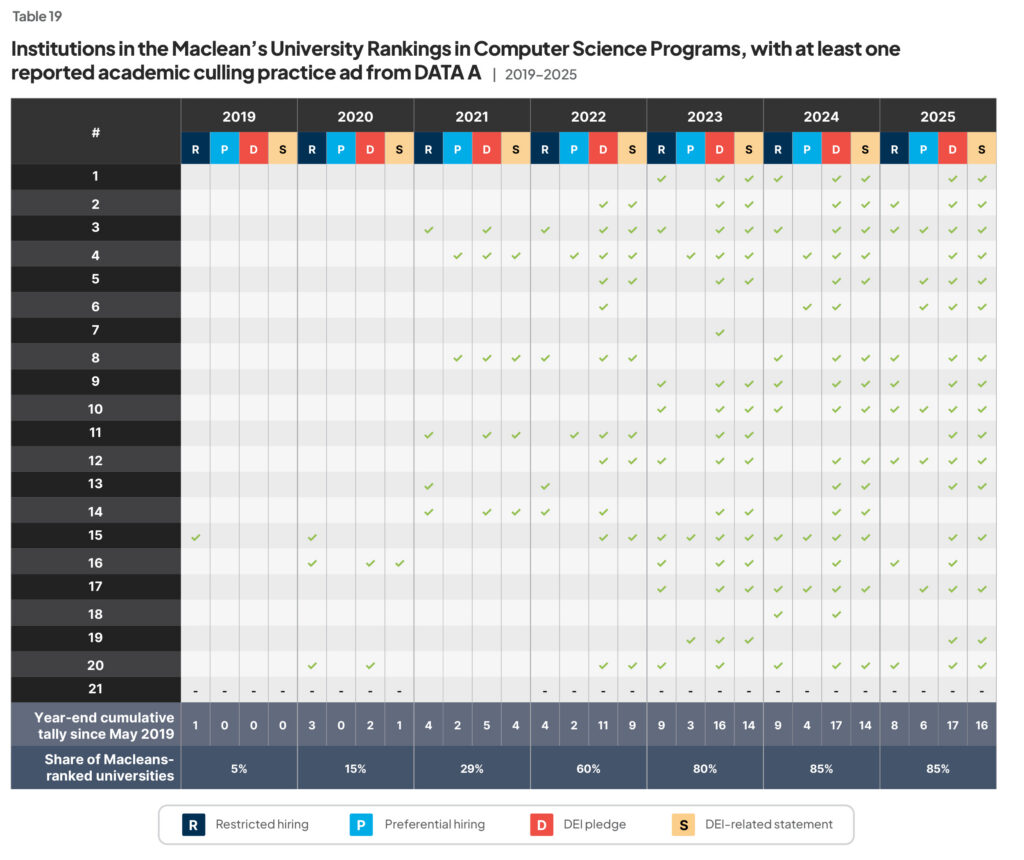
DEI pledges were the dominant academic culling practice found in the ads, where many of these incidents closely followed the practice of asking for DEI-related statements. Note that restricted hiring remained more common than preferential hiring. Further, in 2025 we found that at least 55 percent of the ranked institutions that engaged in restricted hiring or preferential hiring also used DEI pledges at the same time; we found that this combination of forms had increased each year from 2019 until it reached 55 percent in 2023—a proportion that continued to hold until 2025.
In summary, from 2019 to 2025, at least 85 percent of Maclean’s-ranked universities engaged in at least one academic culling practice in their computer science academic job postings (Figure 10). The peak was in 2023 when in that year alone, at least 65 percent of Maclean’s-ranked universities participated in academic culling practices in their job advertisements (Figure 11). By 2024, at least 85 percent engaged in academic culling, and this remained the case by the end of 2025. And the most common academic culling practice is DEI pledges—peaking in 2023, when at least 65 percent of the institutions used them.
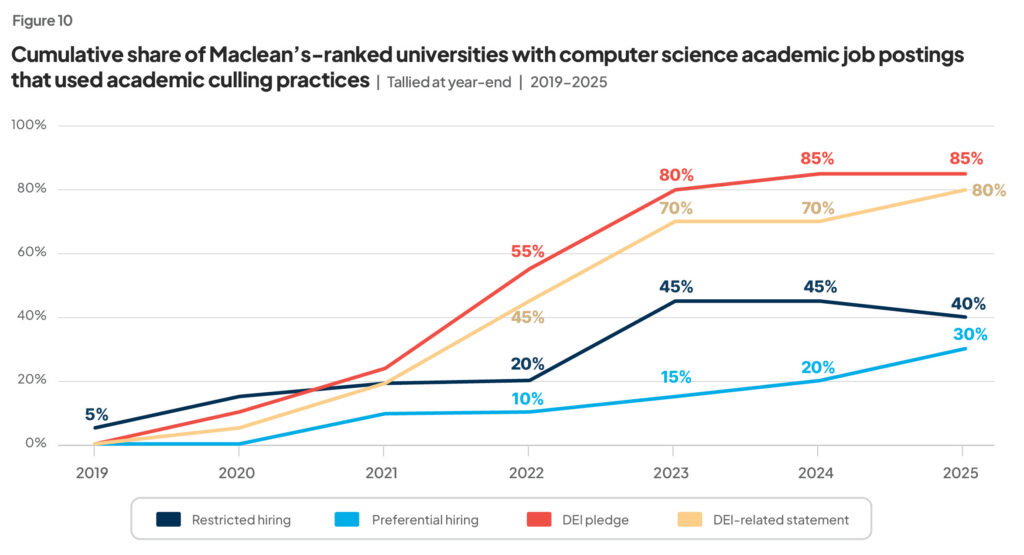
Note: The data set is dynamic (see Table 17). The institutions in the Maclean’s ranking change from year to year, so different universities are entering and exiting the data set annually. In other words, institutions where academic culling is identified may drop out of the rankings and be replaced by universities where we could not identify such practices (e.g., see the change in restricted hiring from 2024 to 2025).
Others have published reports detailing the DEI pledges, preferential hiring, and restricted hiring that occur in ads under the Canada Research Chair (CRC) program. This paper is the first contribution to explore these requirements by institutions on a more granular level. To verify our results, refer to Appendix B.
In the latter half of 2023, institutions posted 24 CRC ads on University Affairs for jobs in STEM fields (excluding social and medical). At least 19 of the 24 ads engaged in one of the three academic culling practices (79 percent). Eleven of the ads could not be clearly classified as either preferential hiring or restricted hiring, while the remaining 13 ads could be. In addition, in 16 of the 24 ads we found evidence of a DEI pledge requirement (Figure 12).
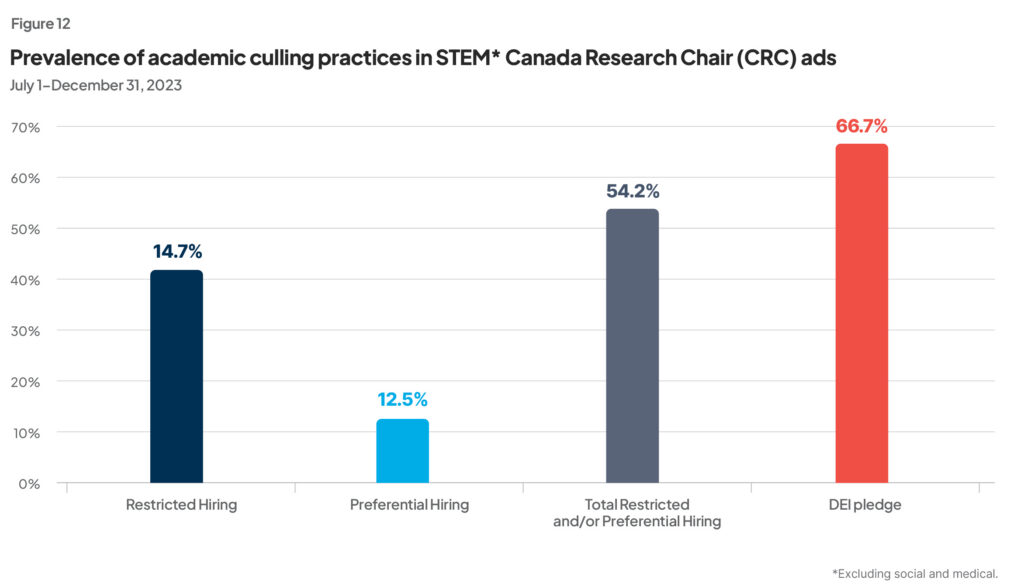
Figure 12 shows that at least 54 percent of the CRC ads posted for CRC STEM positions from July 1 to December 31, 2023 engaged in either preferential hiring or restricted hiring. That proportion nearly matched the approximately 55 percent that Burgess found across all the CRC ads in his systematic tracking of those positions in the second half of 2023. Supplemental to this analysis, Appendix D shows similar results among only the original ads we could collect to archive for DATA B.
We next address the question of how many CRC ads asked for a DEI-related statement. We remind the reader that this calculation is to determine whether the institution is asking for DEI-related materials directly in the application and not just implicitly through CRC program requirements. Two-thirds of all the CRC ads in DATA B required a DEI pledge, so we reviewed those records. Table 20 gives the results.
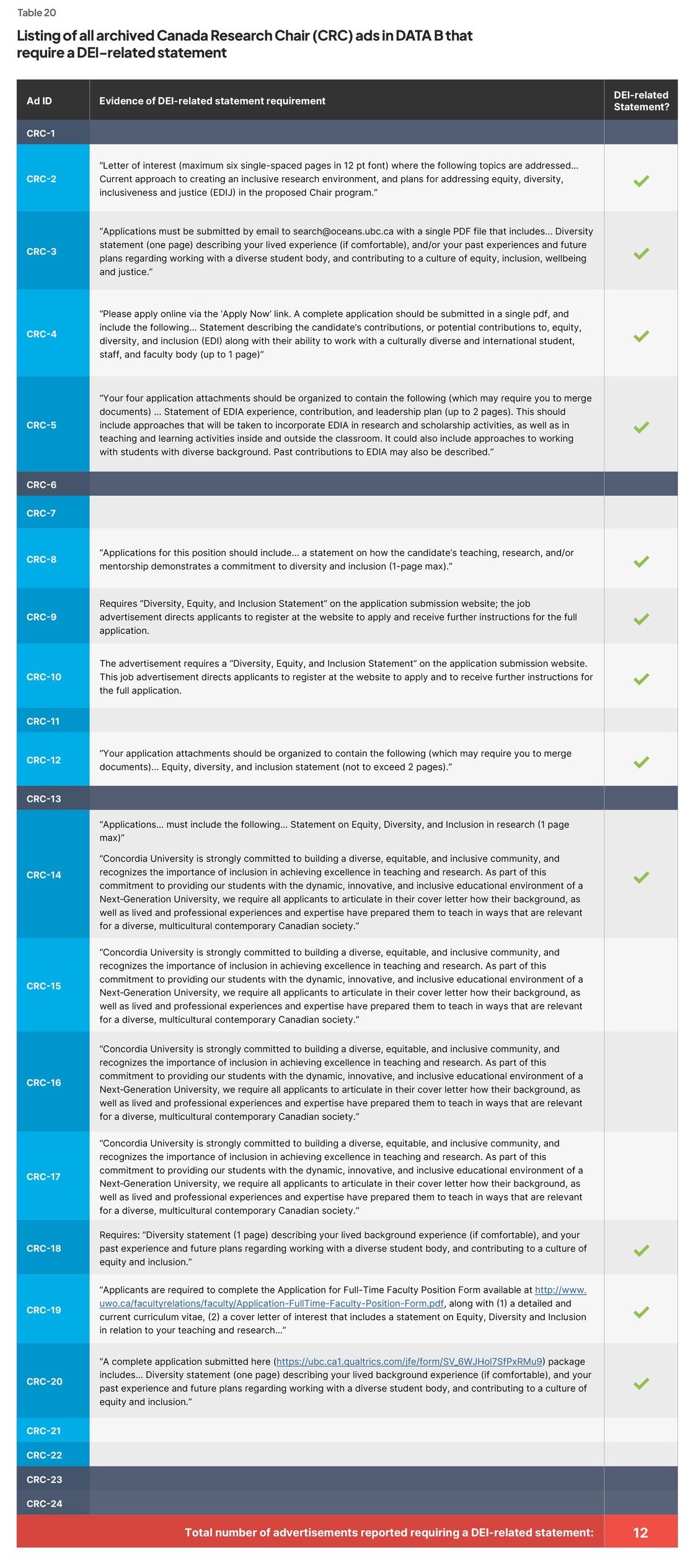
As would be expected, some ads did not explicitly ask for a DEI-related statement as part of the materials an applicant was to submit; in one instance, the ad instead asked for materials in line with the CRC program itself.e When we were unsure, we included the relevant passages in the above table so that readers can decide whether they wish to include those records or not.
As tallied in Table 20, at least 12 of the ads in DATA B (at least 50 percent) contained a requirement for a DEI-related statement.
To address the final research question, we inspected and reviewed all the CRC ads that fell under or include computer science. We identified five ads: CRC-4, CRC-7, CRC-9, CRC-10, and CRC-17.
We found that at least two of the five ads engaged in restricted hiring, and at least one of the five ads engaged in preferential hiring. At least four out of the five computer science CRC ads included DEI pledges. Finally, there was evidence of academic culling practices for at least 80 percent of the computer science ads.
We systematically tracked all ads on CS-CAN (the primary job-openings dashboard for computer science academics) using snapshots from the start of 2024 until the near end of 2025. We classified all the computer science ads on that dashboard over 2024–2025 by academic culling practice based on the evidence we found, resulting in DATA C. The monitoring in our first case study found that ads from Quebec often showed less evidence of academic culling practices than those from the rest of Canada. Given the culturally distinct aspects of Quebec institutions and this observation, we have broken the CS-CAN job ads down into two categories: (1) all of Canada and (2) Canada less Quebec.
To address this study’s first research question, we summarize the outcomes of the monitoring process. DATA C recorded 117 CS-CAN ads; at least 69 of them showed at least one academic culling practice (59 percent), from the start of 2024 to the end of 2025. In the Canada less Quebec group, there were 93 ads with at least 61 containing an academic culling practice (65.6 percent), as shown in Figure 13. Figure 14 breaks this down into each academic culling practice; DEI pledges are the most prevalent, at 56 percent of job postings across Canada less Quebec. (For more details on the numbers and discussion in this section, please see Appendix E.)
e. For further details, review the original advertisement of CRC-7 in the data files.
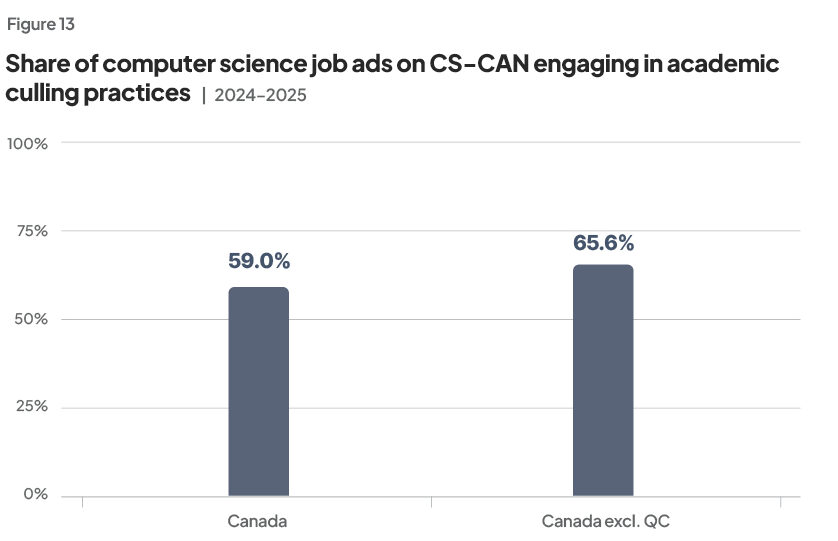
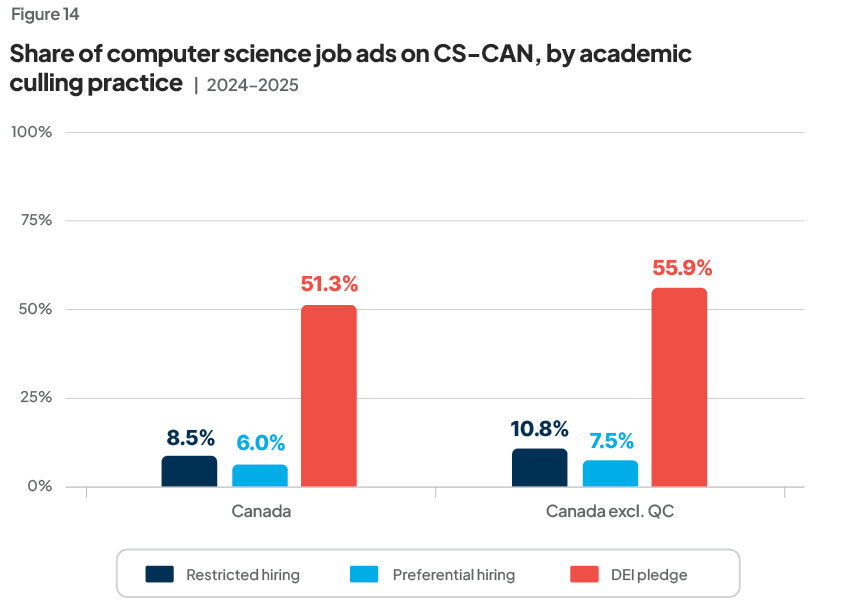
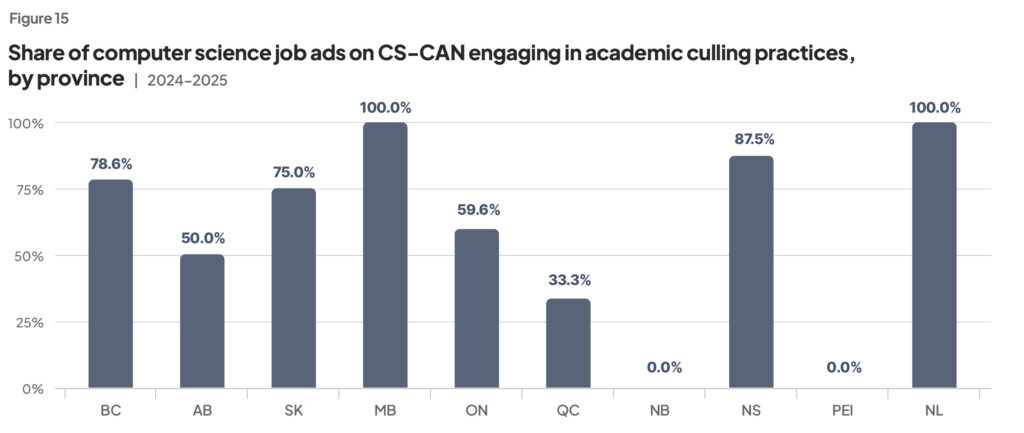
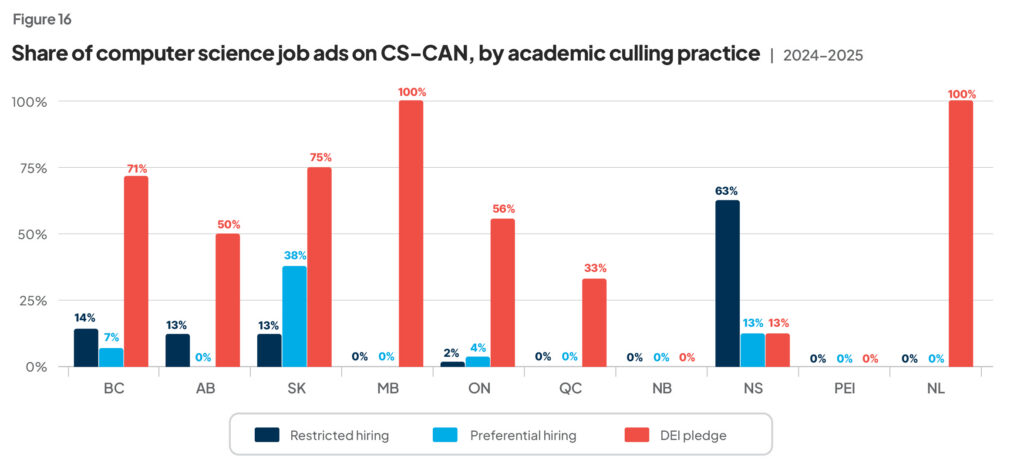
Figure 15 provides the provincial statistics. From the start of 2024 to the end of 2025, every province except New Brunswick and Prince Edward Island had at least one institution that posted at least one computer science ad on CS-CAN that engaged in academic culling practices. During that period, every single computer science job posted on CS-CAN in Manitoba and Newfoundland & Labrador displayed academic culling. That said, in neither of those two provinces did any institution have documented incidents of restricted or preferential hiring (Figure 16). Restricted hiring was most prevalent in Nova Scotia (63 percent of all postings), and preferential hiring was most common in Saskatchewan (38 percent of all postings).
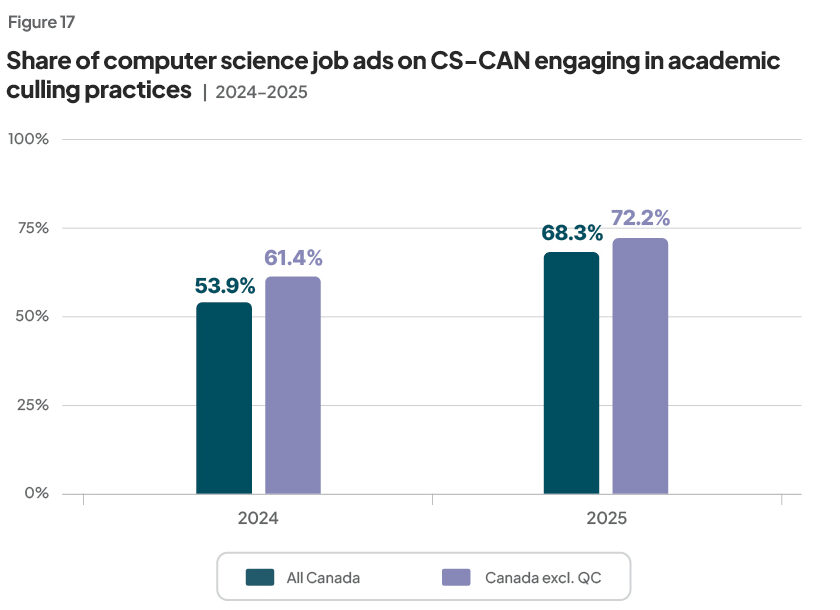
To explore our final question (Q9), whether academic culling practices are increasing or decreasing, Figure 17 presents the share of computer science job ads that show academic culling on CS-CAN for both 2024 and 2025. It appears that academic culling is on the rise.
To further examine this question, Figure 18 presents the raw count of all computer science job ads on CS-CAN, for each month from the start of 2024 through the end of 2025, alongside the raw count of those ads that show academic culling practices. At this level of detail, it may be less clear whether the practices are becoming more common since 2024.
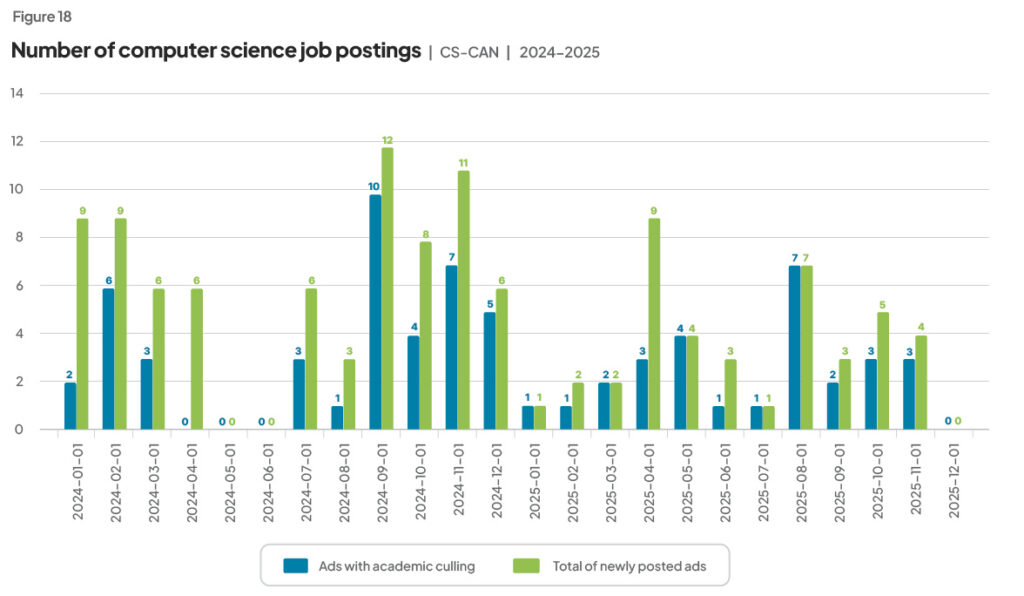
Using the data in Figure 18, we can calculate the cumulative average (i.e., the running average) of the number of computer science ads, as follows:

As a concrete example, suppose we were monitoring CS-CAN ads from the start of 2024 until March 2024 from ads posted from all institutions in Canada. From Figure 18, in January 2024 there were 2 posted ads demonstrating academic culling practices out of 9 ads, in February 2024 there were 6 posted ads demonstrating academic culling practices out of 9 ads, and in March 2024 there were 3 posted ads demonstrating academic culling practices out of 6 ads posted. Then, for March 2024, the cumulative average of March 2024 for any academic culling practice posted on CS-CAN by institutions is,
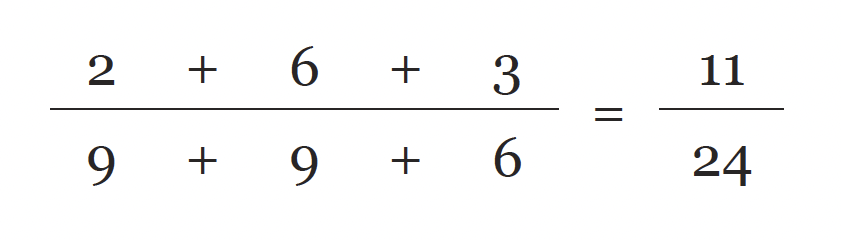
which is approximately 45.8 percent. We can do such a calculation over a studied period, for a given province or even nationally, and by academic culling practice type.
In our answer to the first research question of CASE STUDY C, we summarized that a higher percentage of computer science ads in 2025 engaged in academic culling practices than in 2024. To look at how common it is that CS-CAN ads with academic culling practices appear over time, we can plot each month’s cumulative average using a line chart. When looking at such a line chart, a long, “flatter” shape at a stabilized high average in the plotted trend demonstrates these practices are consistently prevalent. Note that when there is an upward slope in the plot, it means academic culling practices are becoming more frequent relative to the overall history of past months, and less frequent relatively when the plot slopes downward.
Figure 19 plots the results for Canada less Quebec. The practice of academic culling has increased on CS-CAN from a 22 percent prevalence starting in January 2024 to a cumulative average of 65.6 percent prevalence at the end of December 2025. The trend is still upwards; however, the trendline has remained higher and relatively flat since September 2024.
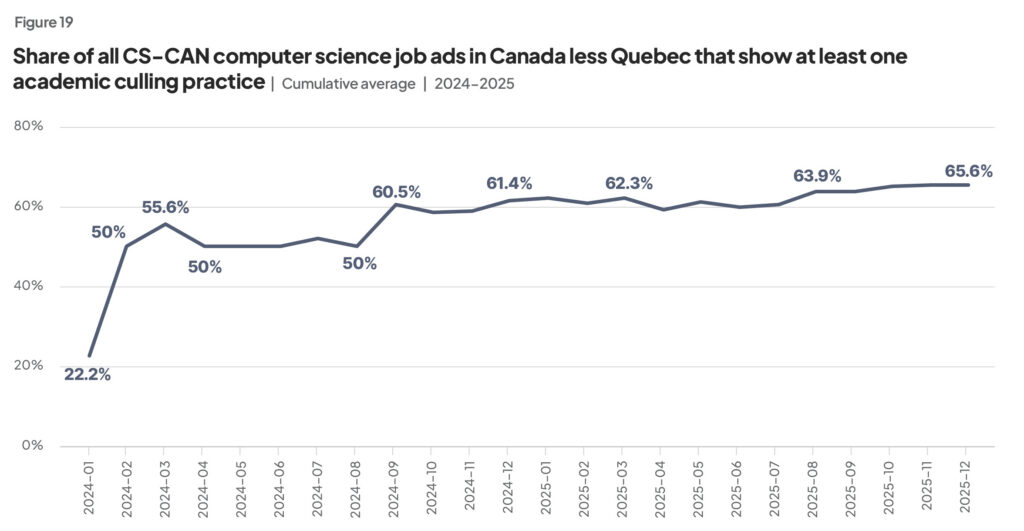
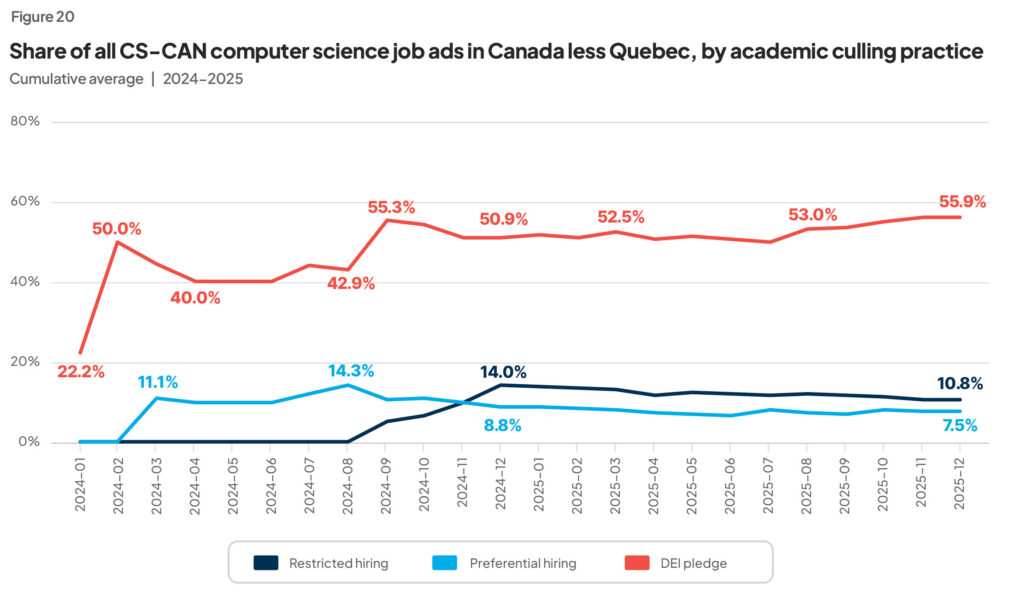
Figure 20 breaks the findings in Figure 19 down by practice. Restricted hiring and preferential hiring are both trending downward, with a running average of 10.8 percent and 7.5 percent of job postings, respectively. This is down from respective running-average highs of 14.0 percent and 14.3 percent a year prior. DEI pledges are the most prevalent and are trending slightly upward, at a running average of 55.9 percent of job ads.
So, indeed, computer science ads that display academic culling practices have become more common overall since 2024.
To quote Barvinok,56 an American mathematician and professor who grew up in the Soviet Union, “Currently, the compelled speech of the compulsory [DEI] statements affects mostly people at the beginning of their careers, that is when they are most vulnerable.” His comment in 2023 about DEI-related statements in American universities matches our observations of computer science ads in Canadian universities. Of the 158 ads for academic posts showing culling practices that we documented in DATA A, 137 of them were postdoctoral, limited-term, non-tenured, and tenure-track positions; this large majority can also be found by looking at the estimated number of positions in Table 11. It was rare that tenure-track (TT) positions in DATA A targeted the rank of associate professor (or above) exclusively.
The year 2023 is of particular interest. Our results reveal a substantial reported rise in academic culling practices that year (see CASE STUDY A). This rise may coincide with the hiring of a large number of academic positions due to several factors we do not explore in this paper, but which may include a higher number of retirements, possible institutional growth or changes, changes in institutional policies, cultural events, or policies implemented in response to the COVID-19 pandemic at institutions. However, that these incidents are occurring at such a high frequency in 2023 is indisputable, and even one reported academic culling practice may be concerning.
CASE STUDY C systematically demonstrates that after 2023, no matter how many computer science ads were posted on CS-CAN, academic culling practices were more common by the end of 2025 than by the end of 2024. This was true even though fewer ads were posted in 2025 than in 2024. Likewise, as we show, there has been no recent decline in academic culling practices in the form of DEI measures in Canadian STEM ads. In fact, we provide concrete evidence to the contrary in the academic field of computer science.
Our work only addresses the initial steps an applicant must take when applying for an academic job. It does not address whether the academic culling practices yielded the expected outcome (e.g., whether a preferential hiring search identified a member of the preferred group who was eventually selected). We must stress that in cases where we were not able to identify the presence of an academic culling practice it does not imply that no such culling practices are occurring elsewhere in the hiring process, nor can we guarantee that the institution is engaged in merit-based academic hiring practices. In short, if we could not document an academic culling practice it does not imply that it was not happening elsewhere in the job application process.
A major challenge in studying ads is the temporal nature of the data source for reproducibility purposes. As is common for many job portals, ads or postings often become unavailable, especially if the website lacks a publicly available archive for older postings or if a job is filled. Even with a permalink to an ad, the posting itself may no longer be available. That sometimes occurred when we were reviewing CS-CAN ads later, after documenting them. Our work includes collecting the ads wherever we could. We did so not just to document academic culling practices, but to improve reproducibility and provide the documentation to support our findings.
A novel aspect to our collection of ads for the case studies is the fact that it is not based on just a small handful of examples. In DATA A, we archived all the ads. However, in some instances where we documented an ad being posted on CS-CAN where that ad also had a permalink, we could not capture such CS-CAN ads in earlier years of our data collection. In addition, at the time of publication, we are not able to determine the total numbers of ads posted on CS-CAN for the years prior to 2024—unlike in CASE STUDY C. Note that for any CS-CAN job posting under CASE STUDY C where we did not find an academic culling practice, we did not keep a copy of the ad.
Our data sets can include ad re-postings. Despite that possibility, we still counted an ad whenever it was newly posted because we could not distinguish between those ads that were renewing a search by re-posting the same ad, ads that were a new search for the same position, or ads that were seeking a candidate for a new position. To try to maintain a systematic approach, we simply documented any new job postings to avoid not documenting any new incident. A natural question that was beyond the scope of our work is trying to determine if a search was successful or not.
There may be some debate about how strong our definition of preferential hiring is. Some may claim that any preference communicated in an ad about the applicant pool that is based on a non-academic qualification may indicate preferential hiring. Based on the ads we documented, we suspect it is likely that preferential hiring will be reported far more commonly if it is to include elements such as strongly encouraging specific groups to apply, or where an institution invites applicants to identify themselves as belonging to certain, named groups. Our definition of preferential hiring may be more restrictive than other, broader definitions, but we welcome further study of this academic culling practice. Our definitions are not meant to narrowly focus on DEI ideology, but instead capture a general practice; this too may be a consideration for further specialization as has been seen in the recent work of Hunt et al.57
Our definitions of academic culling practices are general so they can be used to look at other potential contemporary academic freedom and institutional issues in academic hiring that might lead to the exclusion of otherwise qualified academics. We suspect that measuring academic culling practices may become more challenging to capture through ads, alone, if an institution further advances toward becoming a post-academic institution (i.e., one shaped by a culture entrenched by these practices, in a more implicit way). For instance, a DEI pledge goes beyond asking for a DEI-related statement, but it may not include wider sweeping institutional statements, projects, or internal policies that may imply direct expectations of future faculty through policy beyond the ad, including daily academic life, research, and promotion. As an example, one potential vehicle for this possibility includes deeply ideological assertions that DEI is an integral part or essential to academic excellencef through concepts such as so-called inclusive excellence.58
Our research contributions welcome further study in various areas. For instance, this research may be expanded to include similar studies in other STEM fields, such as, but not limited to, biology, chemistry, physics, mathematics, and statistics. Likewise, our work encourages further study of the same topics but with other job portals or posting sites, including AcademicJobsOnline or University Affairs.
We hope our work invites further documentation of ads and their archiving, both for historical purposes and for further research. The construction of more data sets to better diagnose where academic culling practices are occurring and to what degree is necessary for further study in Canada. Also, our work may motivate other researchers to explore other stages of academic job searches and study how individual institutions participate in specific academic culling practices.
f. See DATA A for many examples, for instance: “The University regards equity and diversity as an integral part of academic excellence” (ON-2021-2 – University of Waterloo, “NSERC Canada Research Chairs (Tier 1) in Computer Science (2 positions)”), “Equity and diversity are essential to academic excellence.” (ON-2022-4 – University of Toronto, “Assistant Professor, Contractually Limited Term Appointment”).
By summing the number of positions over all the records of DATA A alone, we estimate at least 245 academic positions (see Table 11) have been affected by academic culling practices. So, it follows that if each posting had a small number of interested academics see the ad, then these observed academic culling practices had the capacity to affect hundreds to thousands of qualified academics, including early-stage researchers and potential applicants who might have otherwise applied but ended up choosing not to do so. Hence, we suspect that the scale of academic culling and its potential effects, including potentially on the long-term career paths of scientists and other academics within public post-secondary academic institutions, is a broad, generational issue for Canadian computer science and more broadly for Canadian STEM fields, and merits both academic study and further transparency.
Through longitudinal incident-based reporting and systematic, data-driven documentation, we have concretely demonstrated that over the last 5 years Canadian computer science departments have embraced DEI measures in academic hiring, to the extent that they have begun a widespread adoption of academic culling practices. Through three case studies we determined several lower bounds and other measurements for academic culling practices that are prevalent in institutions. Included with these contributions, we have documented the largest-known general data sets (together, DATA A, DATA B, and DATA C) and created an archive of documented computer science ads and other STEM ads in Canada to date that illustrate these unprecedented practices.
In our first case study, we provided statistics for longitudinal, incident-based monitoring of academic culling practices in computer science ads from May 2019 until the end of 2025. We documented 158 such incidents, recorded and archived as DATA A, where most of them included DEI pledges, and as we later discussed, a majority of the computer science ads were for early-career academics, e.g., tenure-track assistant professor positions and limited-term appointments.
Then as an application of DATA A for the first case study, we reviewed from 2019 until 2025 different prominent institutions for jobs they posted in computer science research and/or educational programs, specifically, the U15 institutions and the Maclean’s University Rankings in Computer Science Programs. We were aiming to determine a base line of the prevalence of academic culling practices during that time.
Beyond other observations, we established that in 2023 alone, at least 73 percent of the U15 institutions participated in academic culling practices. As of the end of 2025, the prevalence of U15 institutions engaging in academic culling practices has not returned to below 2022 levels.
We further demonstrated that over the past five years at least 80 percent of the U15 institutions have participated in academic culling practices, even when we look very narrowly at only ads for computer science job postings. While other academic culling practices such as restricted hiring and preferential hiring were present and their reported prevalence appeared to increase over time, by 2023 DEI pledges were present in ads from at least 80 percent of the U15 universities over the studied period.
Next, measuring prevalence by the same metrics, we reviewed institutions belonging to the Maclean’s University Rankings in Computer Science Programs from 2019 to 2025. We documented a largely similar increase in academic culling practices in computer science ads among the ranked institutions each year.
From 2024 to the end of 2025, at least 85 percent of ranked institutions participated in at least one academic culling practice. Here too, we found examples of all academic culling practices, but the most prominent of them was the DEI pledge.
In our second case study, we advanced the understanding of academic culling practices as they are occurring in the CRC program by systematically reviewing Burgess’s CRC program positions over the second half of 2023. The study classified his data set further than he had done and restricted it to presumed so-called “hard” STEM fields, leading to DATA B. Our goal was to understand whether fields that were normally considered void of these sorts of practices showed a lower prevalence for them than did all CRC positions as a group during the same time period.
We determined that almost 80 percent of all the STEM CRC positions revealed at least one academic culling practice and at least 54 percent of the CRC ads described restricted or preferential hiring. The latter result is especially interesting as it almost matches the approximate 55 percent of culling practices that Burgess determined was the case for his data set, which included all CRC positions listed on the University Affairs website. As we observed in our prior case study, DEI pledges were the most common academic culling practice throughout DATA B (at least two-thirds of the ads). Of the DEI pledges in CRC ads, at least 50 percent of the ads included in DATA B had institutions asking job applicants for DEI-related statements. Finally, we found evidence that at least 80 percent of the computer science CRC ads included academic culling practices.
In our final case study, we systematically monitored CS-CAN ads from 2024 to 2025. We found that almost 60 percent contained at least one academic culling practice. We documented these findings through our third data set, DATA C. We provided a detailed analysis of academic culling practice types by the categories “Canada” and “Canada less Quebec,” as well as provincial categories.
We established that in 2025 alone, at least 68 percent of all CS-CAN ads across Canada, and at least 72 percent of all CS-CAN ads across Canada less Quebec, deployed at least one academic culling practice. In Canada less Quebec, there was a stronger presence of academic culling practices in provinces outside of Quebec than when Quebec was included, which is reflected in our provincial statistics for Quebec from 2024 to 2025. During those years, the prevalence of academic culling practices in computer science ads across Canada less Quebec was at least 65 percent.
From 2024 to 2025 DEI pledges remained the most prominent academic culling practice across Canada. Further, over that entire period, basic analysis of the cumulative average showed that the number of academic culling practices overall, and DEI pledges specifically, continued to appear consistently or to increase slowly.
Through systematic documentation, this study finds that academic culling practices, most especially DEI pledges, are widely prevalent in computer science departments, prestigious “hard” STEM fields, and in academic computer science job boards in the majority of leading Canadian universities. Our longitudinal observations and analyses are an original contribution to the research and provide a critical resource of real-world examples for further study. Those observations highlight that policymakers, decisionmakers, and taxpayers should be aware that far from being rarities as may have been true in the recent past, academic culling practices are rather ubiquitous.
Academic culling practices have the capacity to sideline, stigmatize, or disadvantage otherwise qualified applicants and can require features that violate a core aspect of the academic freedom of potential faculty: intellectual autonomy. Procedurally, academics can, over time, shape the long-term institutional culture of STEM institutions. Therefore, a high prevalence of academic culling practices prompts a review of whether members of faculty, administrators, or the institutions themselves are taking into consideration the fiduciary function of public academic institutions—the dispassionate search for truth and the advancement of knowledge.
Daniel R. Page, PhD (Western Ontario), is a theoretical computer scientist and senior fellow with the Aristotle Foundation for Public Policy. He has published over a dozen research papers and held teaching or research positions at the University of Manitoba, University of Western Ontario, St. Francis Xavier University, University of Regina, and New College of Florida.
No aspect of this paper was authored with what is commonly referred to as generative artificial intelligence technologies.
We thank the Board of Directors of the Society for Academic Freedom and Scholarship (SAFS) for archiving many of the earlier ads. There are numerous professors we also want to thank for helping us continue to have courage to continue this long-term research, and for their input over the years. Many of these professors have made professional sacrifices to uphold academic freedom and standards.
Who we are
The Aristotle Foundation for Public Policy is a new education and public policy think tank that aims to renew a civil, common-sense approach to public discourse and public policy in Canada.
Our vision
A Canada where the sacrifices and successes of past generations are cherished and built upon; where citizens value each other for their character and merit; and where open inquiry and free expression are prized as the best path to a flourishing future for all.
Our mission
We champion reason, democracy, and civilization so that all can participate in a free, flourishing Canada.
Our theory of change: Canada’s idea culture is critical
Ideas—what people believe—come first in any change for ill or good. We will challenge ideas and policies where in error and buttress ideas anchored in reality and excellence.
Donations
The Aristotle Foundation for Public Policy is a registered Canadian charity and all donations will receive a tax receipt. To maintain our independence, we do not seek nor will we accept government funding. Donations can be made at www.aristotlefoundation.org.
The Aristotle Foundation for Public Policy has internal policies to ensure research is empirical, scholarly, ethical, rigorous, honest, and contributes to the advancement of knowledge and the creation, application, and refinement of knowledge about public policy. Our staff, research fellows, and scholars develop their research in collaboration with the Aristotle Foundation’s staff and research director. Fact sheets, studies, and indices are all peer-reviewed. Subject to critical peer review, authors are responsible for their work and conclusions. The conclusions and views of scholars do not necessarily reflect those of the Board of Directors, donors, or staff.