

Diversity, Equity, and Inclusion (DEI or EDI) is ubiquitous in hiring lingo but rarely put into practice in corporate Canada. This study highlights what we will term the “DEI Paradox”—Canada’s largest corporations laud DEI, while preserving merit-based hiring in practice. In other words, top firms promote DEI—very extensively—but it is almost entirely performative.
This report introduces two metrics that plumb the depths to which DEI ideology has penetrated hiring materials and the wider corporate literature. The study examined 500 job postings across 25 Canadian-owned TSX (Toronto Stock Exchange) firms (20 postings per firm) using a nine-question binary panel to score behaviours indicative of biased or discriminatory hiring culture. We then separately assessed ideologically driven terminology across annual reports, ESG (Environmental, Social, and Governance) statements, and key policy documents published in the 18 months prior to July 1, 2025, using a 42-term lexicon with an estimated accuracy of 95 percent, accounting for contextual ambiguity and documentary artifacts.
Of Canada’s top 25 TSX-listed firms in the sample:
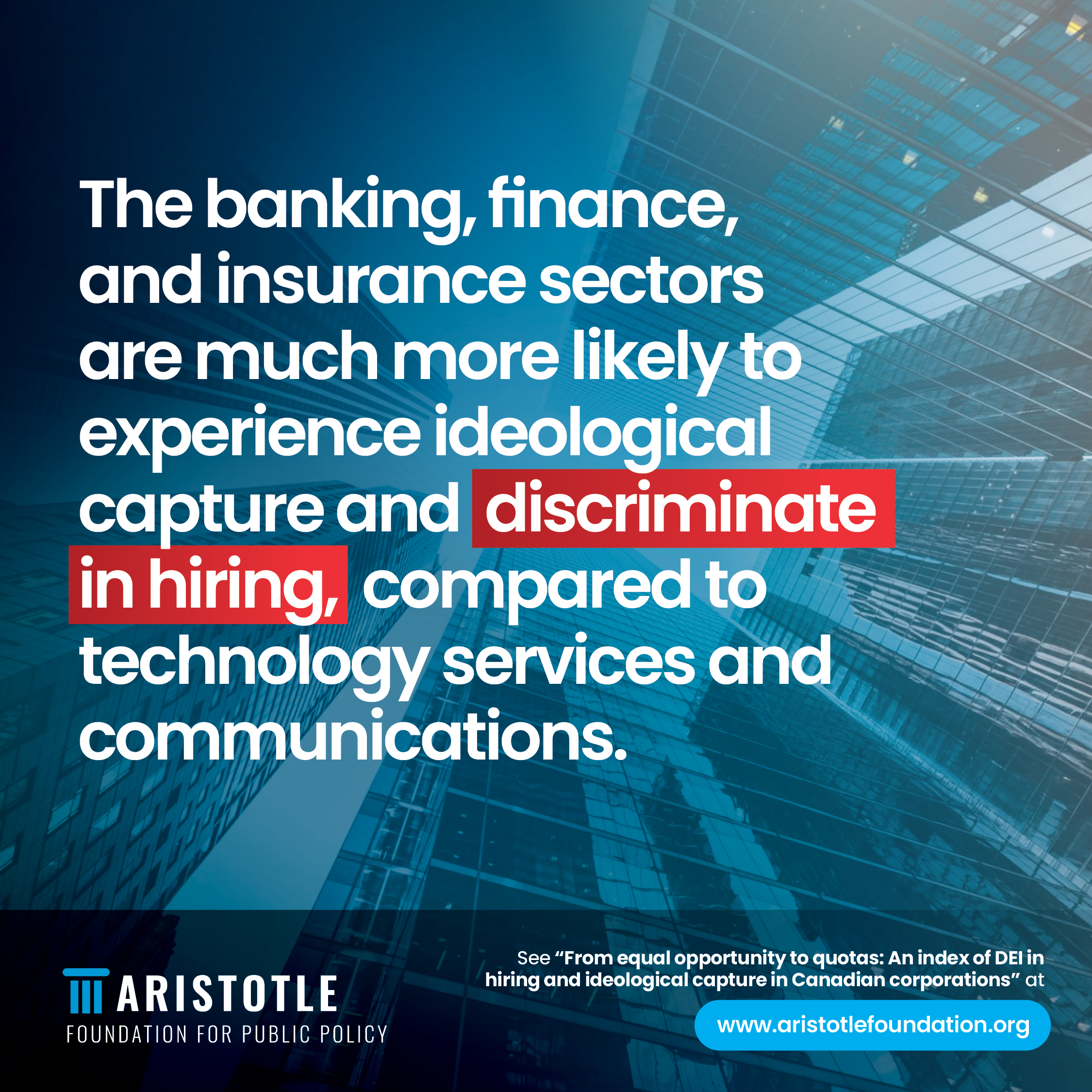
Sector differences are pronounced. “Banking, Finance, and Insurance” scores more than double (more discriminatory) compared to “Technology Services and Communications,” suggesting that heavily regulated, white-collar sectors act as “leading indicators” for DEI institutionalization. The company ranking underscores the spread: Intact Financial tops the discrimination index at 67.0, while Shopify scores zero, illustrating a wide gulf in how major employers operationalize DEI-linked practices (or do not).
The core finding of the study is a structural one: DEI language is now normalized as a form of corporate compliance—performative signals that function primarily as reputational risk-management rather than proof of preferential hiring. Explicit, identity-based exclusion in job postings remains vanishingly rare (0.4%). We find that corporations in Canada very commonly espouse DEI mantras in their hiring materials, as well as more broadly in their public documents, but, unlike on university campuses, the practical implementations of these concepts, which are inherently discriminatory and demote meritocratic employee recruitment, are infrequent. Where the report pinpoints sharper operational stakes is rather in the hiring procedurals, the investiture of unmeritocratic quotas, and the prevalence of ideological re-education.
Our findings thus conclude that DEI is widespread in corporate Canada, but discriminatory hiring practices appear rare on the surface. However, given the results of this study, we now have evidence that there is a statistical basis to conclude that to the degree that a sector embraces ideological language, we can predict a greater likelihood to discriminate in corporate hiring.
DEI (Diversity, Equity, and Inclusion) has, in recent years, become deeply embedded within contemporary culture, influencing academic, governmental, and corporate spheres in an effort to eradicate perceived systemic injustice. The DEI triad, a highly effective tool of ideological assimilation—one that has taken root over the last decade—has been well documented,1 and is now, reportedly, in retreat.2
Last year, the Aristotle Foundation released a University Discrimination Index (UDI) that examined job postings at Canada’s leading public universities, revealing the unintended but de facto discrimination that is a natural consequence of hiring practices proceeding from a full-throttle interpretation of the DEI doctrine.3 Supercharged by the philosophical sophistry of now widely criticized scholar Ibram Kendi, this doctrine holds that “the only remedy to present discrimination is future discrimination.”4
Realizing that many best practices in the corporate universe have been ported across from academia5—largely from prestigious business schools that are recognized as leading advocates for DEI practices6—we wanted to build on the findings of the UDI by turning attention to the private sector and examining the behaviours of Canada’s leading publicly traded companies. Our explicit goal was to reveal whether or not similar bias and discrimination are present in today’s corporate workplace. This study explores the prevalence of DEI in the hiring practices of Canadian corporations by surveying job postings to collect a sample, and then indexing and ranking corporations and sectors by DEI pervasiveness in hiring.
The private sector’s own distinct approach to DEI has been branded “diversity managerialism”—a term that encapsulates how the adoption of DEI ideology serves as a managerial strategy.7 In other words, it is a corporatized, bureaucratic way of approaching DEI within firms, often in a top-down manner.
However, to our knowledge, the relationship between companies’ public statements of intent rooted in identity politics and the demonstrable implementation of matching operational measures, whether in the shape of financial support of external activist groups or the social engineering of the corporate workforce, has yet to be clearly established among Canada’s leading firms. This research attempts to fill that gap.
The mantra that has come to be termed DEI is a practical extension and application of the concepts emerging from critical theory, often cited as an outgrowth of postmodernism,8 and, more pertinently, of critical race theory.9
This ideology gestated on university campuses and spread into broader society,10 notably reaching its peak in 2020 in the wake of the death of George Floyd and the promotion of the Black Lives Matter movement.11 However, as Eric Kaufmann reports, polling indicates twice as many Canadians oppose this new brand of progressive social ideology than support it,12 and only a quarter of the population “consider themselves [to be] woke.”13
Meanwhile, elsewhere in the Anglosphere, reports in Britain and the U.S. by the non-profit think tank More in Common estimate 8-10 percent of the population endorse the “woke” movement.14
Consequently, it has always been a top-down belief system imposed by intellectual and cultural elites on wider society, often to the detriment of those less economically well-insulated from reality.15
The Canadian Human Rights Commission and other advocates for DEI maintain that racism and other prejudices against defined “minority” groups—sometimes referred to as protected classes—persist throughout modern society, despite efforts to eradicate them, by virtue of pervasive and deeply embedded systems of power and oppression that largely go undetected.16
In order to interrupt these unseen mechanisms of oppression, DEI initiatives are characterized by a broad suite of measures that collectively seek to achieve parity of outcomes, and therefore “social justice” for individuals belonging to one or more preordained identity groups. These identity groups are typically defined by race, sex, gender identity, sexual orientation, physical and mental impairment, and some others.17 For instance, the UK’s Equality Act identifies nine such protected characteristics.18
DEI does not focus solely on equality of opportunity for these groups but, in addition, prioritizes post hoc metrics such as racial and gender distributions in pursuit of what advocates call “equitable representation.”19
Over the past decade, the terms “diversity,” “equity,” and “inclusion” have been roundly criticized because the implementation of DEI practices often backfires with real-world effects that,20 it has been argued, are diametrically opposed to the ostensible or common-parlance meaning conveyed by the words themselves.21
For example, diversity does not apply to ideas and opinions but encourages homogeneity of thought.22 Equity, as already indicated, refers to representative outcomes that can only be ensured through invoking quotas, rather than lowering systemic barriers to access opportunities.23 Inclusion, by demanding standards of workplace behaviour that protect all selected identity groups from perceived offence, a wholly subjective measure, actively excludes and disenfranchises employees with dissenting attitudes and opinions.24
In essence, DEI practices in corporations have recently suffered substantial setbacks as major companies in the US have dismantled their DEI offices, laid off staff, and altered their policies to reflect a more meritocratic approach to HR matters.25
Canada, however, which has found itself on the opposing side to its largest trading partner on a host of geopolitical issues, not least trade, has continued to support DEI initiatives that translate directly or indirectly into discriminatory hiring and promotion practices in the workplace.26
The outcomes of these corporate decisions in terms of productivity and economic success remain to be seen, but one recent report suggests they have been deleterious elsewhere in the Anglosphere.27
In this study, we explore how DEI has manifested in the Canadian corporate sector in recent years and how that has created discriminatory environments and behaviours.
This report adopted a two-pronged approach to assess the extent to which social justice and DEI-related frameworks were present in the hiring practices and broader corporate literature of 25 of the largest Canadian-owned firms listed on the Toronto Stock Exchange. The first component, a survey of research questions, was intended to grade the emerging emphasis on DEI in recruitment and internal promotion procedures, which is prone to favour discriminatory behaviours.28 To construct the corporate hiring discrimination index, up to 20 job postings per company were screened during the April 2025 data collection window using a panel of nine binary questions designed to identify social justice language, DEI policy declarations, and more direct evidence of discriminatory bias in hiring practices. The second component provides broader organizational context; it involved an assessment of companies’ public-facing ideological and political posturing—or, in the contemporary vernacular, “corporate wokeness”—drawn from website declarations, published company policies, and annual shareholder reports. Specifically, we examined annual shareholder reports, ESG (Environmental, Social, and Governance) statements, and other relevant corporate social responsibility and policy documents published in the 18 months up to July 1, 2025, in order to measure the density of ideological capture within these corporations and their respective sectors. The scope, sampling criteria, weighting structure, lexicon development, and full methodological details are set out in Appendix A, along with the list of companies in Appendix B and list of job postings in Appendix C.
The survey is a gauge of direct and indirect discrimination applied to the workforce, whereas the second metric is a surrogate indicator that signals a potentially discriminatory corporate stance on matters that are politically divisive in today’s wider society. The latter bears the hallmarks of coercive overreach by employers actively committed to promulgating a workplace environment that indoctrinates its employees.
The results of our survey were decidedly mixed, in that extreme polarities exist. However, upon analysis, we identified a clear pattern of behaviour among Canadian companies. Unlike the results of the Aristotle Foundation’s UDI—where university departments are semi-autonomous—corporations tend to be internally very consistent about hiring policies across the organization. Hence, almost all responses to six of the nine questions in the panel—which reflect examination of each company’s last 20 job postings at the time of assessment—were homogeneous. This meant that all 20 jobs posted by any given company elicited the same response, either all “Yes” or all “No.” The results and key findings are presented below.
Owing to the binary nature of these data at the level of individual companies, this was less informative than expressing the results to each question by commercial sector grouping, which is how we have instead chosen to present our findings. For simplicity, the original 13 sectors we identified when categorizing companies were further sorted a priori into six major umbrella sector groupings—Utilities; Logistics and Industrial services; Banking, Finance, and Insurance; Energy and Minerals; Agriculture, Food, and Retail; and Technology Services and Communications—in addition to the aggregate “All Sectors” category.
As we examined job postings, we first employed three questions to gauge the general promotion of DEI policies in Canadian corporations that, while not equivalent to exclusionary practices, signal the potential for de facto discriminatory hiring in the context of a broader DEI framework. Specifically:
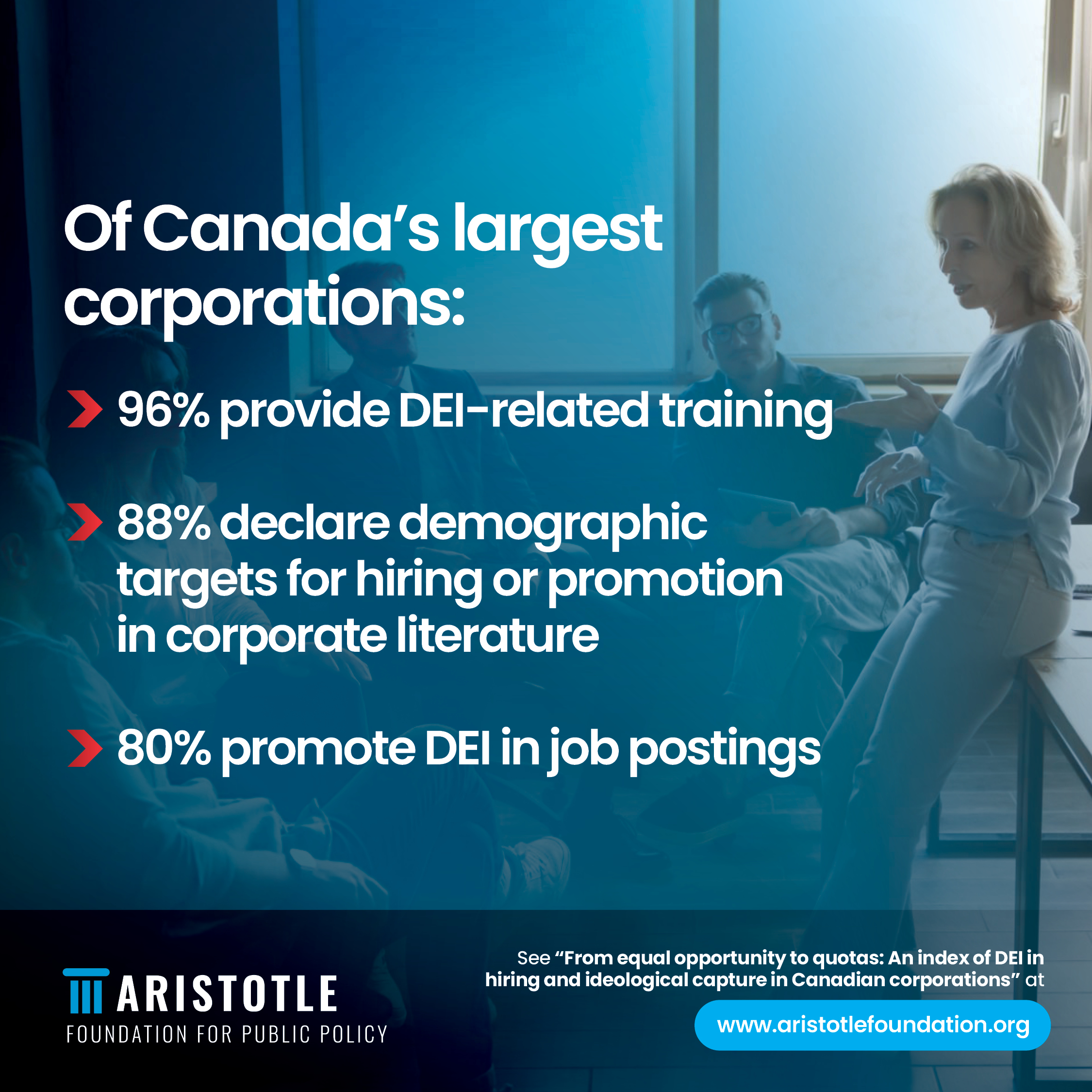
The promotion of DEI intentions by Canadian corporations when posting for new employees is a widespread practice, with 80 percent of companies doing so uniformly during their recruitment process (Figure 1). All companies were consistent across their own job postings. We found that only a handful of firms were silent on their DEI advocacy when advertising job opportunities.
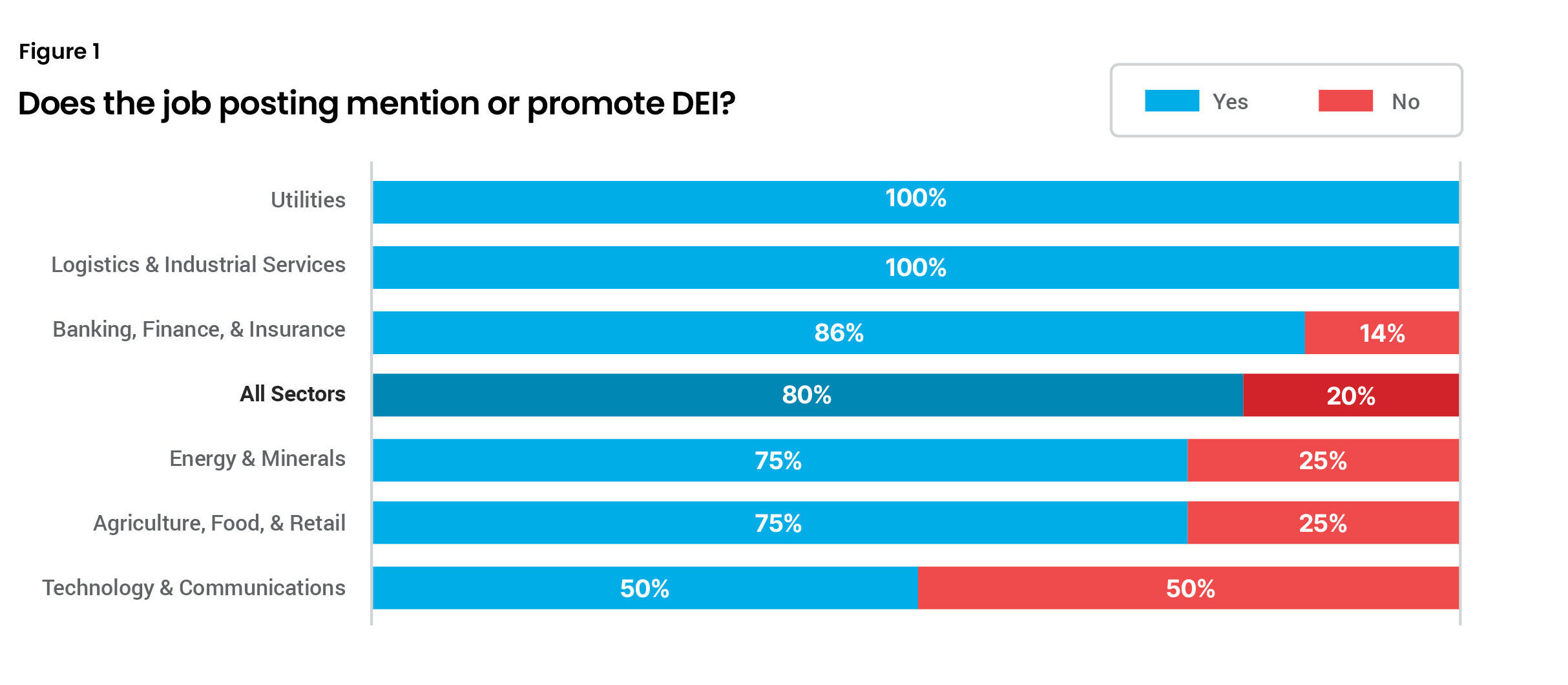
The declarations we found were variations on standard DEI phraseology, such as “we are committed to diversity, equity, and inclusion,” or similar language. Examples include Toronto-Dominion Bank (TD) declaring that “[its] Canadian Personal and Commercial Banking is committed to advancing diversity and inclusion across all dimensions of its business,”29 and TELUS claiming that “we have a longstanding commitment to social justice, diversity and inclusion.”30 Only Shopify abstained from making such a statement anywhere in the corporate literature.
Despite the widespread nature of DEI promotion in hiring materials, the situation is by no means static, and some firms are now rethinking their position. For instance, the Bank of Montreal (BMO), withdrew “diversity” from its list of core values in November,31 marking a very public volte-face.32
Significant variation between sectors was observed. Whilst firms across all sectors responded in the affirmative, companies in energy, technology, finance, and retail (Brookfield, Constellation Software, Dollarama, Enbridge, and Shopify) refrained from including such language in their job postings. High-tech firms were split equally between those vocal about DEI and those who were reticent. This indicates that while DEI promotion is widespread, it is by no means universal. Excluding Technology and Communication, the proportion of firms advocating for DEI among the remaining sectors rose from 80 percent to 86 percent.
Figure 2 reveals the widespread attestation of equal opportunity status. All sectors and more than two-thirds of the individual corporations (70%) included some form of standardized language in job postings that identified them as “equal opportunity” or “affirmative action” employers. In some cases, this appeared alongside references to compliance with federal or provincial legislation. The phrasing varied, but the intent was broadly similar and aimed to communicate adherence to what is (purportedly) a non-discriminatory framework.
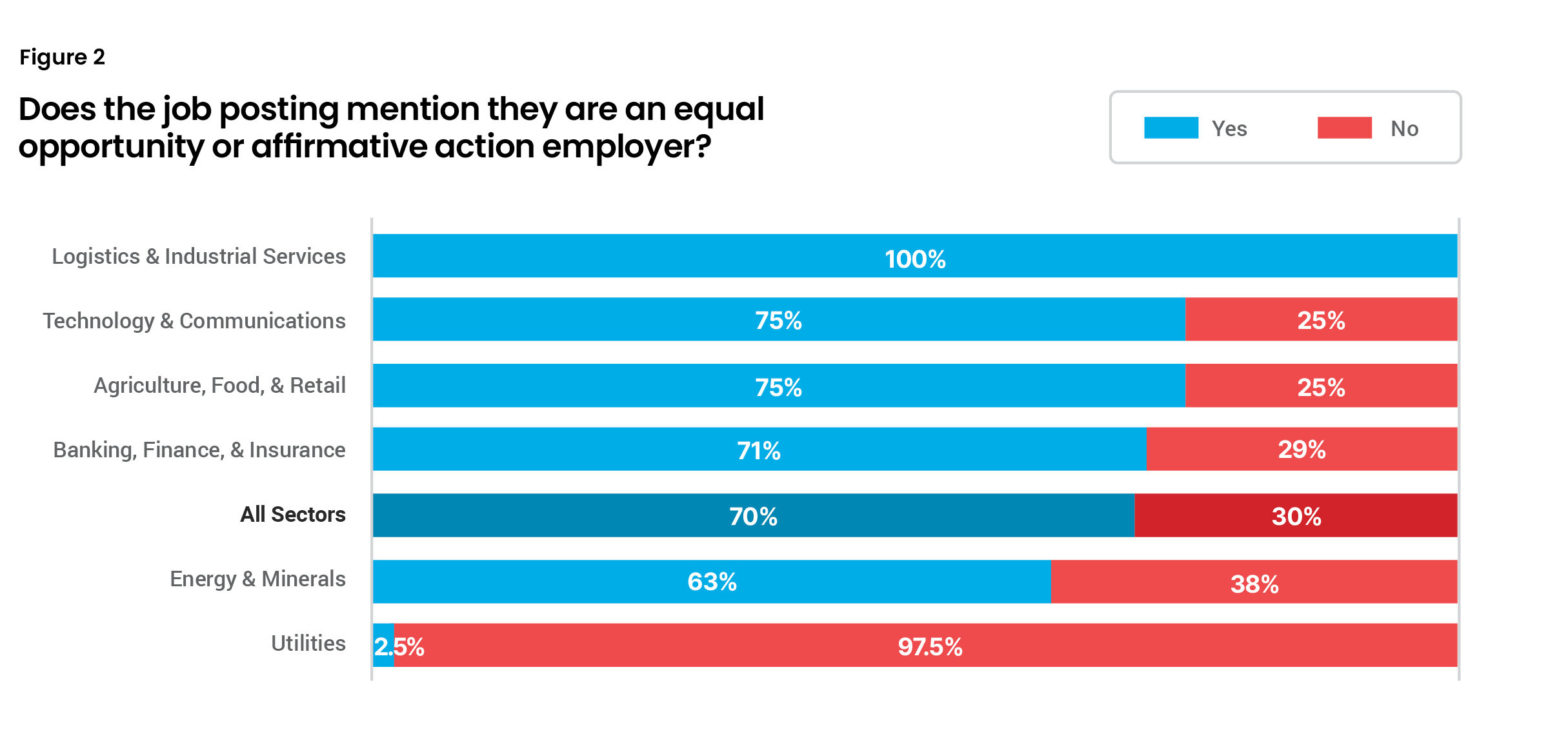
Surprisingly, we found that 10 percentage-points fewer Canadian companies announce their status as an equal opportunity employer (70%) than declare their advocacy for DEI (Figure 1), an observation that is consistent with the notion that equality has been deprioritized in favour of pursuing demographic targets (i.e., equity).
The results in Figure 2 are important in that an affirmative answer to this question can act as a covert signal for potential discrimination because equality is already enshrined in Canadian employment law, making such declarations redundant.33 For instance, consultants WSP Global went so far as to dress up what amounts to routine hiring compliance by claiming their recent job postings were specially tailored to be “gender neutral”34—a curious admission since bias based on biological sex has been illegal in Québec, home to the firm’s headquarters, since 1975.35 Not to mention, the more recent concept of gender expression has been similarly protected for almost a decade.
Interestingly, two utilities firms we examined—considered more “blue collar”—demonstrated the least amount of compliance with these concepts, with only a single job, posted by Fortis, answering “Yes” to this question. The other utilities firm, Hydro One, made no mention at all of their stance on the subject. Other blue-collar sectors like energy were similarly less vocal than other sectors about their advocacy for equality or affirmative action.
Conversely, the sole minerals firm we assessed, Agnico Eagle, was inconsistent in its practices, with only half of its job postings (50%) declaring the firm to be an equal opportunity employer, and the other half making no mention of it.
In total, we identified 6 firms—almost a quarter of the pool—that uniformly answered “No” to affirmative action across their last 20 job postings: Brookfield, BMO, Cenovus, Dollarama, Hydro One, and Shopify. This denotes greater reliance on an unspoken meritocratic framework.
Not a single company on our list made mention in any of their job postings that candidates’ contributions to DEI would be deemed an asset in the hiring process—rendering a Question 3 chart superfluous.
This very clear finding was markedly distinct from those of the Aristotle Foundation’s UDI, where universities routinely expected candidates to express their allegiance to DEI by, for instance, citing past efforts to embrace outcomes-based representational targets—actions that effectively erode merit-based recruitment.36
It would appear that DEI in Canadian corporations is rather less entrenched than in academia, strengthening the probability that many firms simultaneously pay lip-service to the ideological framework of DEI—as delineated by their answers to the first two questions—yet stop short of embedding it as a material criterion when it comes to the practical matter of hiring and promoting their staff. Certainly, our data show that Canadian corporations appear to be disinterested in DEI advocacy as a virtue when assessing job candidates.
In summary, our findings are consistent with a continued, tacit commitment to a recruitment process grounded in the assessment of candidates’ skills, aptitude, and track record, which are the traditional tenets of meritocratic hiring. We recognize that the prevalence of DEI policy statements in highly regulated or publicly scrutinized sectors is very reasonably linked to compliance pressures and fastidious brand management. Firms in these sectors may interpret public affirmation of DEI as a sensible risk mitigation strategy.37 Importantly, such declarations may imply the potential for bias in hiring outcomes, although they do not equate to explicit discrimination. However, such statements do confirm the broad diffusion of DEI language when companies communicate with prospective employees. Likewise, affirmative action and equal opportunity statements, though now demonstrably commonplace across sectors, are not equivalent to exclusionary practices, but likely serve to mitigate reputational and legal risks.
Next, we investigated how prone Canadian companies are to soliciting personal information from job applicants—details that are not immediately pertinent to a candidate’s employability. Surveys of this kind point to an administrative alignment with internal equity reporting requirements. In contrast, firms that avoided such hiring tools were, a priori, more closely aligned with merit-based hiring. Figure 3 reveals this to be one of the more divisive practices across sectors, with significant variation in responses, even though firms responding in the affirmative outnumbered the rest by 50 percent.
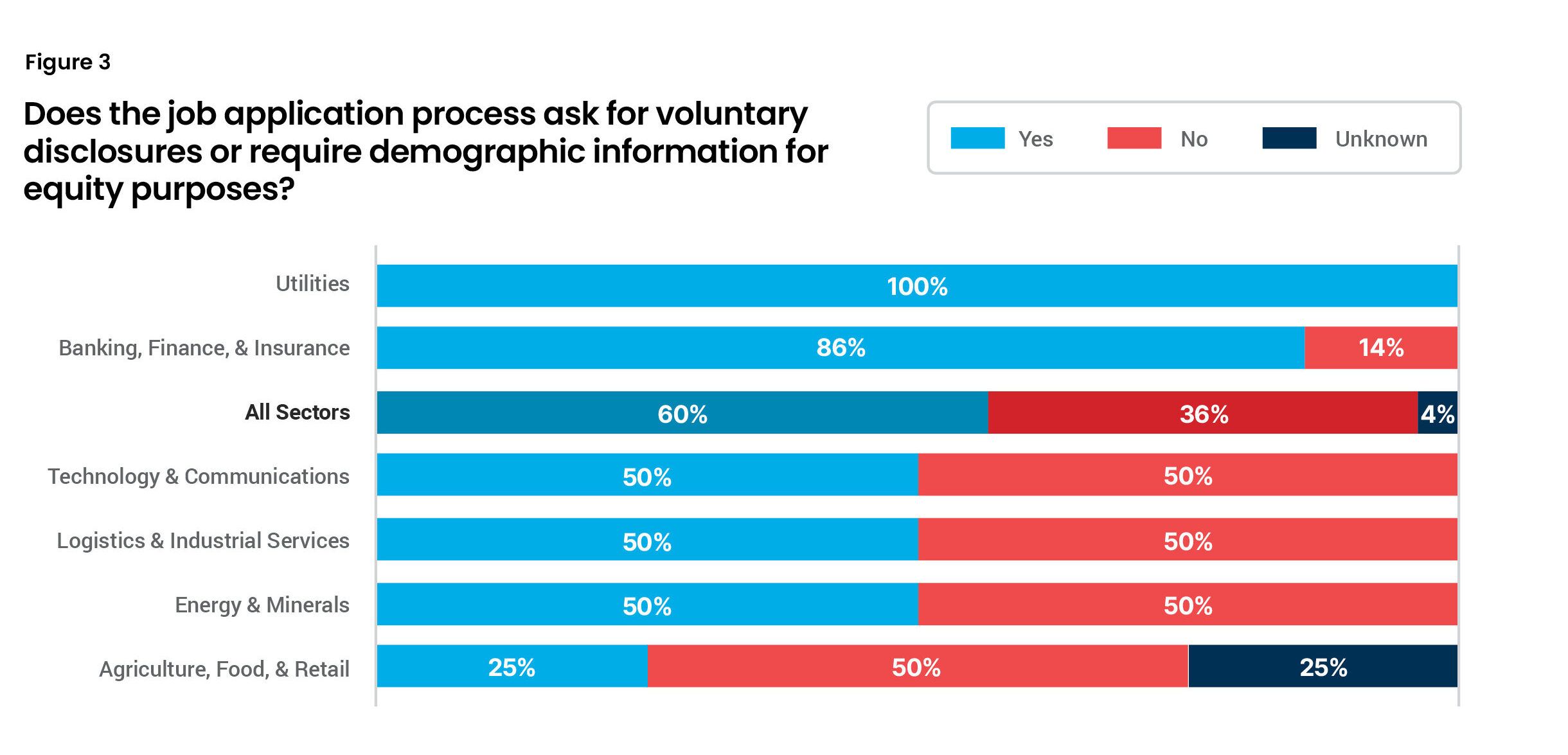
We identified 15 companies (60%)—touching every sector—that invited applicants to provide voluntary demographic data about themselves, such as race, gender, or ethnicity.a While presented as “optional” and typically framed around what is termed “equity monitoring,” such practices have the potential for misuse when it comes to the candidate pre-screening stage and their presence can shape employers’ perceptions of applicants.38
We established that, in total, 300 job postings (60%) answered in the affirmative—matching the fraction of employers—and indicating that the practice was broadly prevalent and uniformly implemented. Curiously, blue-collar utilities firms (Fortis and Hydro One) always requested this information from their candidates. Meanwhile, white-collar sectors such as Banking, Finance, and Insurance were especially prone (86%) to requesting this information from applicants, and were roughly two to three times more likely to do so than companies in Agriculture, Food, and Retail.
The observed divergence highlights a tension. On the one hand, demographic surveys are widely championed as a tool to support equity reporting. On the other, their existence raises concerns about the prospect of covert pre-screening or bias in the handling of applications.39 This makes the practice controversial and less widespread than other discriminatory tactics, such as setting demographic targets.
a. We were unable to establish responses to this question for Loblaws during our assessment process, which accounts for the “Unknown” category in the bar chart.
Another important signpost of ideological capture and the propensity for discrimination during the recruitment and promotion process occurs when firms showcase explicit demographic targets in their corporate literature. Moving beyond DEI as merely a framework or process, we examined whether DEI is used explicitly to pressure hiring outcomes. Figure 4 presents a simple global “Yes/No” response to whether or not a company declares demographic targets or achievements for hiring or promotions. (Of note, Figure 4 pulls data from each company’s literature, and thus did not apply to the individual job postings we examined.)
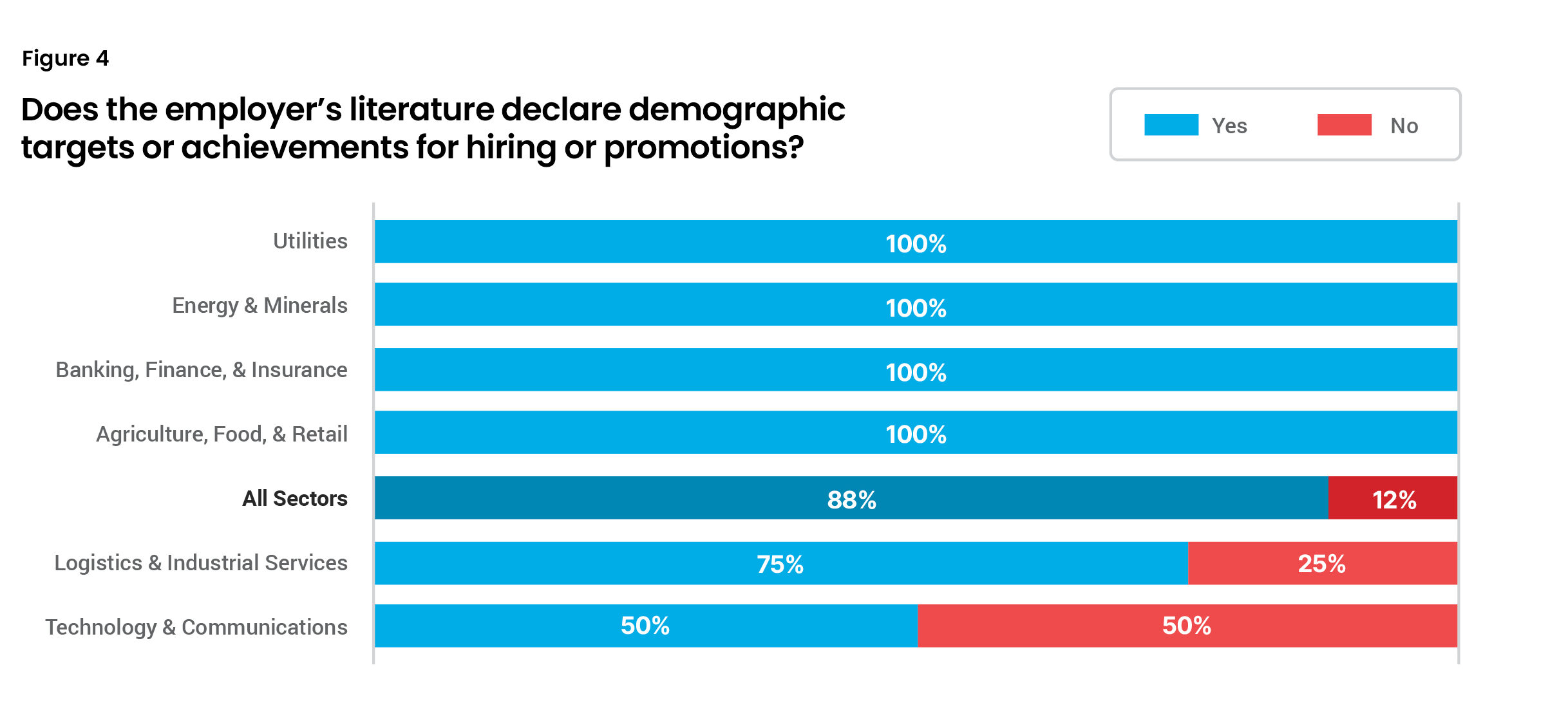
We found that all but three Canadian corporations in the pool (88%) foregrounded their diversity achievements and/or declared some form of demographic targets in their hiring or promotional frameworks, and many reported on progress towards them. For instance, as part of the Black North Initiative Pledge, Hydro One committed to “achieving 3.5 percent Black executives and board members, and 5 percent Black student hires by 2025.”40 Intact Financial similarly reported “56 percent of our students hired in 2023 were BPOC (Black and People of Colour), of which 7 percent were Black students, which was two points above our commitment.”41 Manulife Financial, meanwhile, noted “We signed the Catalyst Accord committing to increase the percentage of women in executive positions in Canada to 30 percent or greater by 2022, which we have proudly achieved.”42
These examples reflect a broader trend in which benchmarks for identity representation have become a standard feature of corporate policy across most industries. Four out of six of the sector groupings (17 firms) openly and unanimously declared quotas, suggesting that representation metrics are now firmly entrenched. These commitments often take the form of gender or other identity-based representation targets, or supply-chain diversity goals (see below).
Three companies—tech firms Shopify and Constellation Software, along with CPKC Rail in logistics—departed from the prevailing consensus by remaining silent about demographic targets. These exceptions highlight that quota-based practices, while widespread, are not universal and are subject to strategic variation.
It was informative to compare the responses to this question to those of our first question, which asked whether firms made plain their DEI intentions in job postings. Of the three companies that did not declare diversity targets (Shopify, Constellation Software, and CPKC Rail), only CPKC Rail responded “Yes” to Question 1, and hence actively claimed to promote DEI during the recruitment process. This highlights a disconnect between advertising rhetoric and a more concrete commitment to DEI goals.
By contrast, companies in highly regulated sectors—such as the large banks and insurers—act as leading indicators, consistently embedding demographic targets in their literature and “marking their own homework” by announcing progress towards equity targets. Once again, Intact Financial was a suitable bellwether, noting that:
[T]he Company currently meets its gender diversity target in Executive Officer positions, with 39 percent women occupying these positions. The Company also aims to increase diversity at the Executive Officer level with at least 10 percent of Executive Officers representation of members identifying as BPOC, indigenous Peoples, persons with disabilities and/or 2SLGBTQI+ by 2030.43
Tangentially but relevantly, we identified seven firms (28%) that published explicit commitments to supply-chain diversity requirements. One notable example was TC Energy—a firm that, in addition to committing to explicit workforce diversity targets, claimed to be “increasing diversity in our supply chain”;44 albeit, the relevant policy was subsequently rescinded in December 2025. These targets often prioritize ownership or representation by minority-, indigenous-, women-, or veteran-owned businesses. While positioned as commitments to “inclusive supply chains,” such declarations constitute indirect discrimination by prioritizing ownership characteristics over performance metrics.
Other companies were less explicit, either avoiding targets altogether or substituting general commitments to “diversity.”
Taken together, the results indicate that demographic target-setting has become a mainstream practice, with divergent practices concentrated in a small number of firms, typically in the tech sector.
We went on to examine the evidence for more direct forms of hiring discrimination marked by the presence of unequivocal declarations of candidate preference or proscription in corporate job postings.
Jobs that explicitly granted preferential consideration to candidates who identified into a specific group were very rare across the 500 job postings we examined (Figure 5).
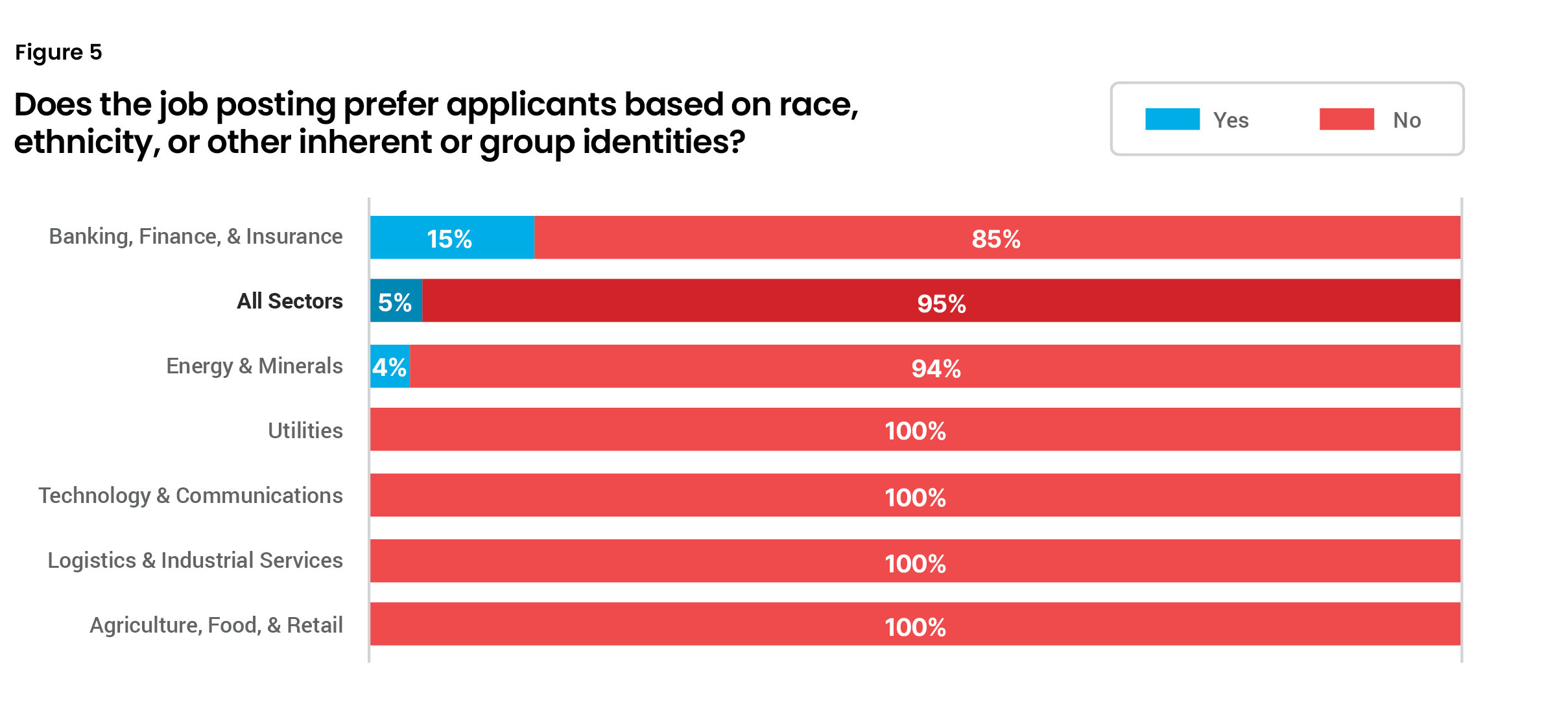
This trend among Canadian companies arguably points to a commendably meritocratic approach to corporate hiring practices. We found only 24 job postings (<5%) that declared or implied preferential treatment based on identity, with 20 of those (83%) posted by a single insurance company, Intact Financial—a firm that uniformly encourages applications “from individuals who are members of equity-deserving groups” in its postings.
Other instances of similar language were seen in energy (3 jobs) and banking (1 job).
However, a number of firms, including Dollarama, Nutrien, and Waste Connections, all declared in their corporate literature that representation from diverse groups is a criterion taken into consideration when determining board appointments.45 These statements suggest that DEI characteristics are linked to favourable appointment outcomes when it comes to high visibility positions such as directorships.
Aside from these top-tier indicators, overall, we found that most Canadian companies typically refrain from stretching DEI rhetoric to encompass explicit preferences in their job postings, providing some reassurance that firms’ recruitment advertising continues to emphasize merit over quotas. Nonetheless, patterns of behaviour within specific firms, like Intact, demonstrate where bias was evident, and where there may be greater risk of discriminatory hiring.
Job postings that excluded candidates outright based on immutable characteristics were almost entirely absent. Figure 6 demonstrates that almost all companies reported “No” across all postings, with no sector showing meaningful evidence of such restrictions being imposed. This contrasts slightly with Figure 5 where special consideration for certain applicants was expressed in some job postings.
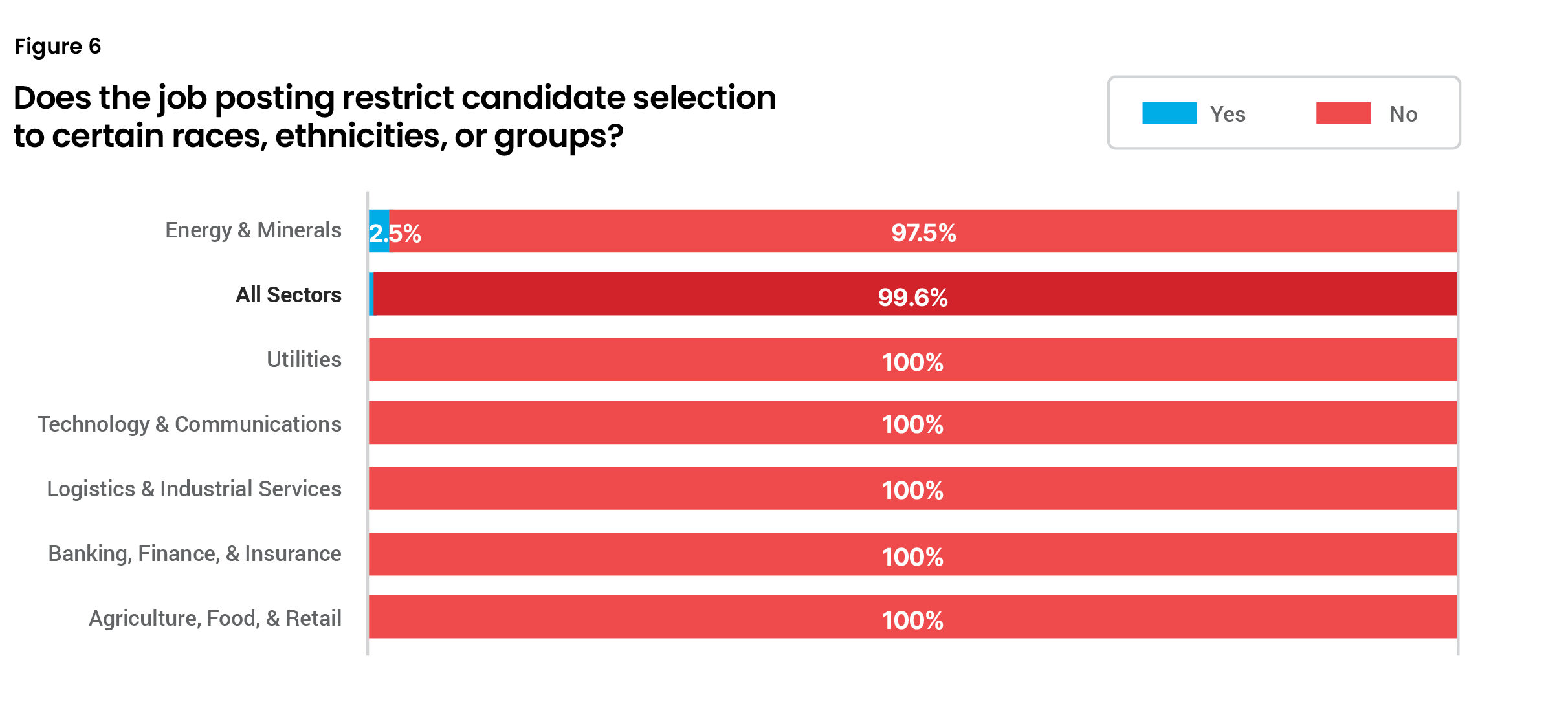
We found only two postings (0.4%), both at Enbridge, that were proscriptive based on identity. Both jobs were a part of the firm’s affirmative action efforts—legitimate practices within the Canadian context—targeting indigenous and women applicants, respectively. (Notably, the latter indicated that merely self-identifying as a woman was the salient prerequisite, meaning that biological males could plausibly apply for these positions.)
These findings are markedly different from what the Aristotle Foundation’s UDI found in academic job postings, where blatant restrictions were more common. The near-total absence of restrictive hiring criteria means that exclusionary practices remain outside mainstream Canadian corporate behaviour, despite such discrimination being legally permissible under the guise of affirmative action. Fear of potential litigation by disqualified candidates may nonetheless be the motivation here—a prospect that most Canadian universities have seemingly ignored.46
Such results reinforce the broader picture (e.g., Figure 5), namely that firms may rhetorically tout DEI, but avoid codifying restrictive or exclusionary approaches in their job postings. This restraint was consistent across all sectors.
Our final area of consideration was to evaluate more broadly to what extent DEI ideology and dubious and/or overly political behaviours have permeated the corporate workplace beyond the confines of job postings and the recruitment process.
Figure 7 further showcases the performative nature of DEI initiatives in the Canadian corporate sector. Almost all corporations in the pool, aside from e-commerce giant Shopify, explicitly offered DEI-related training to their employees, often framing such modules euphemistically as “unconscious bias awareness,” or as learning sessions on inclusive workplace conduct, and as part of code-of-conduct or compliance modules.
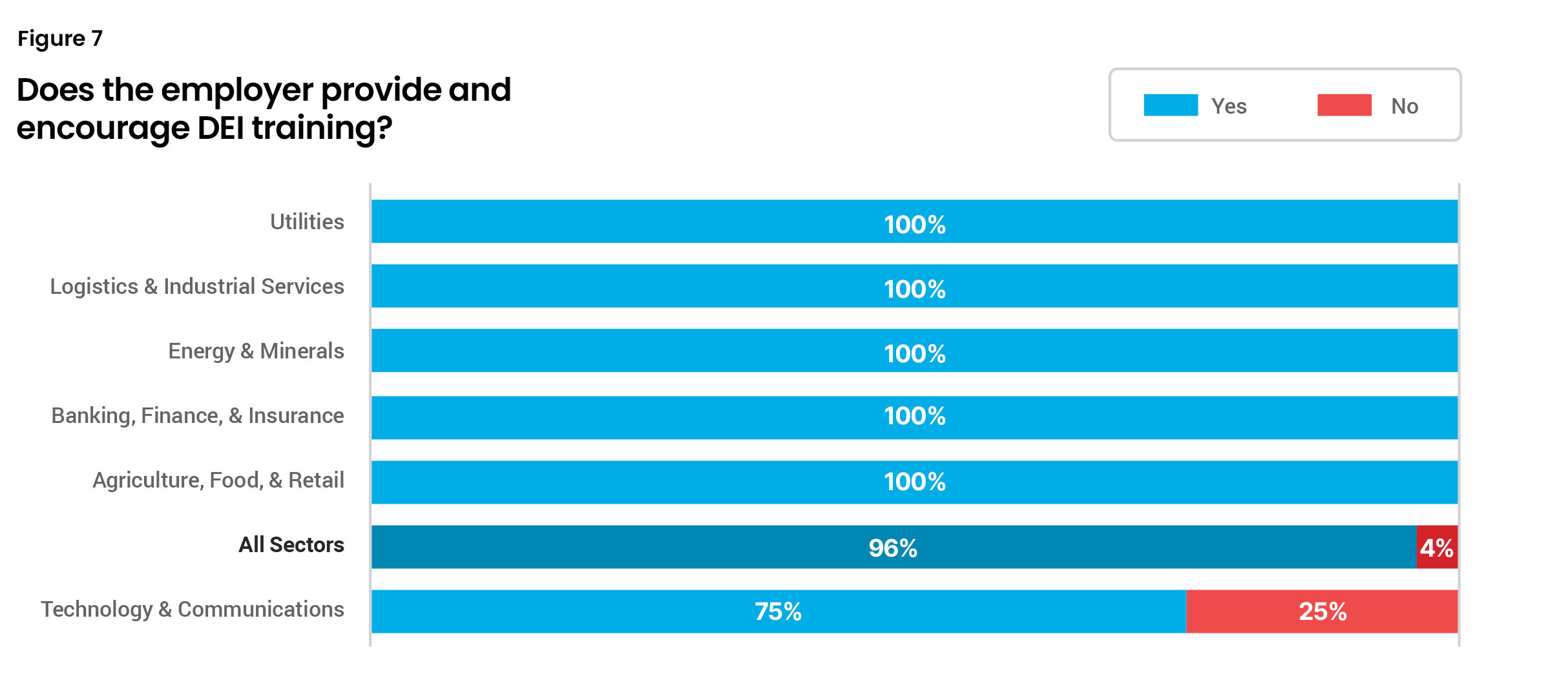
This was an unsurprising finding given the extreme social progressivism that presently dominates Canadian institutions.47 In most cases, the language used suggests encouragement rather than compulsion, though some companies, such as Dollarama (see below), have previously mandated DEI training for their staff.
DEI training varies in range and depth across firms but has long been known to create a discouraging workplace atmosphere by paradoxically asserting that staff should recognize their unconscious bias and seek to second-guess themselves when making decisions, or during interpersonal exchanges.48 At its extremes, such training coercively gaslights employees into disregarding objective truths—such as the binary nature of biological sex, for example, by accepting and embracing the concept of gender identity.49 The linguistic tactics used to achieve training compliance typically involve aggressive silencing of dissenters and the cowing of disagreement through fear of career repercussions.50
The outcome is that DEI training can serve as an internal instrument of discrimination by alienating and marginalizing employees and ultimately prompting their departure.51 Such turnover has the inevitable effect of sanitizing the workplace of ideological unbelievers.
One pertinent example of firms where DEI-training is deeply embedded is Loblaws, Canada’s biggest grocer, which, aside from providing its leaders with unconscious bias training tools and encouraging workers to adopt pronoun badges, actively incentivizes executives by linking their compensation to “performance on fighting climate change and advancing social equity activities,” giving the distinct impression of a system of career advancement founded on ideological incentives.52
Elsewhere, telecoms giant TELUS was recognized by the BC Tech Association’s 2024 Technology Impact Awards, in the category “Gamechanger – Diversity & Inclusion.” In a promotional video congratulating the finalists, TELUS executive Marissa Nobauer, the company’s Director of Reconciliation, Community Engagement & External Relations highlights her firm’s efforts in “incorporating indigenous perspectives into [their] data ethics strategy” and cites the education her team members receive “so that they also understand why that’s important.”53
More explicit still, Circle K declared in its 2024 Sustainability Report that the firm promoted 44 percent of minority attendees who had participated in its leadership development programs.54
By contrast, a notable illustration of the shifting ideological sands comes from Dollarama, whose ESG literature reveals linguistic changes over the last two years. In FY2024, the company required its store managers and assistant store managers to “attend a mandatory training which includes a dedicated diversity and inclusion module.”55 This language was prescriptive, identifying DEI as a standalone, compulsory component of leadership training, separate from other compliance content. By FY2025, the company no longer described diversity and inclusion as a distinct module. Instead, DEI-related themes were folded into broader code-of-conduct training, alongside new mandatory modules addressing harassment, discrimination, and workplace violence.56 In this example, DEI is essentially camouflaged among a broader suite of compliance issues, rather than standing alone, marking a revision—though not necessarily a softening—in Dollarama’s ideological stance. The change reflects a move toward risk-based compliance framing, where the company continues to address discrimination but without spotlighting DEI as a distinct training category.
The distinctions we describe illustrate the ways different firms are managing public perception in relation to modes of workplace training that have become highly politicized. While most are explicit about educating the workforce on DEI topics, others show signs of a shift away from what critics have described as ideological indoctrination.57
Taken together, the results suggest that DEI training is a predominant practice in corporate Canada, but it is often packaged differently from one employer to the next. An emerging trend appears to be toward embedding DEI into broader compliance training, a framing that at once sidesteps growing public derision, while still satisfying stakeholder expectations and ESG commitments.
Separate from our assessment of potentially discriminatory practices in hiring and promotion, we also examined whether firms on our list declared financial support for, or engaged in fundraising partnerships with, external organizations, including registered charities and non-profit groups that are politically active and associated with positions that remain contested in the public square. While not directly related to hiring practices, support for politicized groups indicates the particular values and ideological alignments of a company, which can, consciously or unconsciously, affect hiring choices.
As shown in Figure 8, 22 of the 25 companies (88%) supported groups advancing divisive sociopolitical causes—i.e., causes that are ideologically driven and over which there is contention and an absence of general consensus. Four of the six Canadian sector groupings in our sample uniformly made donations or provided other forms of support to such organizations. In many cases, this appears to reflect a managerial assumption that visible alignment with fashionable causes enhances corporate reputation among stakeholders, even where that support rests on a shallow or incomplete understanding of the underlying issues.58
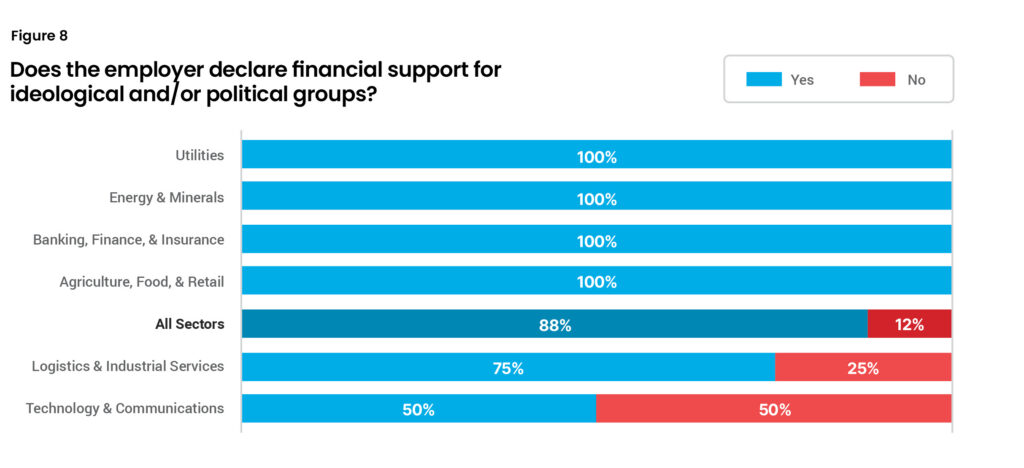
It is important to unpack the layers underneath Figure 8, as the aggregate data fails to convey the gravity of what is being measured. A few examples are necessary to bring this data to life—to understand what it is and why it matters.
One recurring problem is that corporate positioning toward politicized groups, such as those categorized under the umbrella of 2SLGBTQIA+, often lacks nuance and assumes a degree of political consensus that does not, in fact, exist. Our review suggests that many large corporations collapse distinct issues and constituencies into a single moral framework, despite evidence of disagreement among the very groups they claim to support. For example, a growing number of gay and lesbian advocates argue that some contemporary 2SLGBTQIA+ activism is itself exclusionary or discriminatory.59 b
Royal Bank, Canada’s largest corporation, was a prominent sponsor of Égale Canada, a leading advocacy organization for trans rights. Égale has been compared to Britain’s Stonewall in its support for gender-affirming approaches for minors.c RBC’s sponsorship included a campaign encouraging clients and staff to use Snapchat, with per-use donations directed to charities such as Égale as part of an initiative aimed at supporting LGBTQ+ youth.60 For a major national financial institution, this kind of partnership raises obvious questions about judgement and institutional neutrality when the beneficiary organization is associated with highly contested claims about youth gender medicine and related public policy.
b. Support for transgender activism is a particularly revealing example because public opinion on these questions remains unsettled. Survey data indicate limited social consensus on a range of transgender-related policy issues, while a broad majority of respondents report opposition to permitting biological males to compete in women’s sports categories. See Ipsos (2024), “Canadians support protection of the LGBT+ community, but declining support may indicate a step back in progress,” Ipsos (June 1) <https://www.ipsos.com/sites/default/files/ct/news/documents/2024-05/MEDIA%20RELEASE_LGBT%%2B%20Pride_1%20June%20202024.pdf> and Ipsos (2025), Ipsos LGBT+ Pride report 2025: A 26-country Ipsos Global Advisor survey, Ipsos (June) <https://www.ipsos.com/sites/default/files/ct/news/documents/2025-06/ipsos-pride-report-2025.pdf>.
c. This notwithstanding the U.K.’s government-commissioned Cass Review, which concluded that the evidence base for pediatric gender medicine was of low or very low quality. See H. Cass (2024), Independent review of gender identity services for children and young people: Final report, The National Archives
<https://webarchive.nationalarchives.gov.uk/ukgwa/20250310143933/https://cass.independent-review.uk/home/publications/final-report/>. More recently, the U.K. Supreme Court ruled that trans-identifying men are not to be categorized as women for the purposes at issue in For Women Scotland Ltd v. Scottish Ministers (2025).
A similar concern arises in the case of Manulife. In 2024, the company committed US$1 million over three years to scientific research framed around explicitly political premises.61 One beneficiary, womenmind™, a philanthropy-driven initiative at the Centre for Addiction and Mental Health, states that the category “women” includes anyone who self-identifies as such, regardless of sex or gender identity.62 Yet the marked overrepresentation of mental-health difficulties among trans-identifying individuals complicates any research framework that treats sex-based and gender-identity-based populations as analytically interchangeable.63
Whilst firms may opt to support whichever causes are felt to be reputationally beneficial, such acts tend to highlight which values and viewpoints are institutionally favoured, fostering an environment with the potential for discriminating against dissenting employees and cultivating a climate in which perceived ideological fit—not just formal performance criteria—appears relevant to advancement, even when these activities are ostensibly at arms-length from the internal processes of hiring and promotion.64
Such practices, while not explicitly linked to the job application process, undoubtedly engender the potential for discrimination against those applicants whose views and values do not conform to the prevailing narrative of the organization.
Our final measure is a surrogate marker for the degree to which ideological capture has taken hold of corporate Canada, by assessing the terminology used in corporate literature. We examined a broad swathe of firms’ relevant publications and adopted a lexicon of words and phrases that are reliable indicators (Appendix D). Five of the terms chosen were expected to be ubiquitous and highly context-dependent, and approaches using artificial intelligence (AI) platforms were deployed (see Appendix A for details) to quantify “strong hits” by analysis of the surrounding text. More than two-thirds of all instances were validated by manual auditing of the documents.
We developed a lexicon of 42 terms (see also Appendix A) that are representative of the language commonly employed in the context of DEI ideology, built from the results of queries posed to AI platforms, which were then cross-referenced and confirmed by manual inspection. These terms were subdivided into five categories of related words (sex/gender, indigenous, race, intersectional, and DEI). The full lexicon is listed in Appendix E. The resulting density score represented the number of lexicon words identified, on average, per 10,000 words published.
Figure 9 summarizes the results. Overall, in terms of general usage of the lexicon, TD ranked first by a considerable margin—outstripping the nearest rival, Hydro One, by more than 10 points. Tech companies like Shopify and Constellation Software ranked at the bottom, with very few words from our lexicon found in their corporate publications (Appendix F).
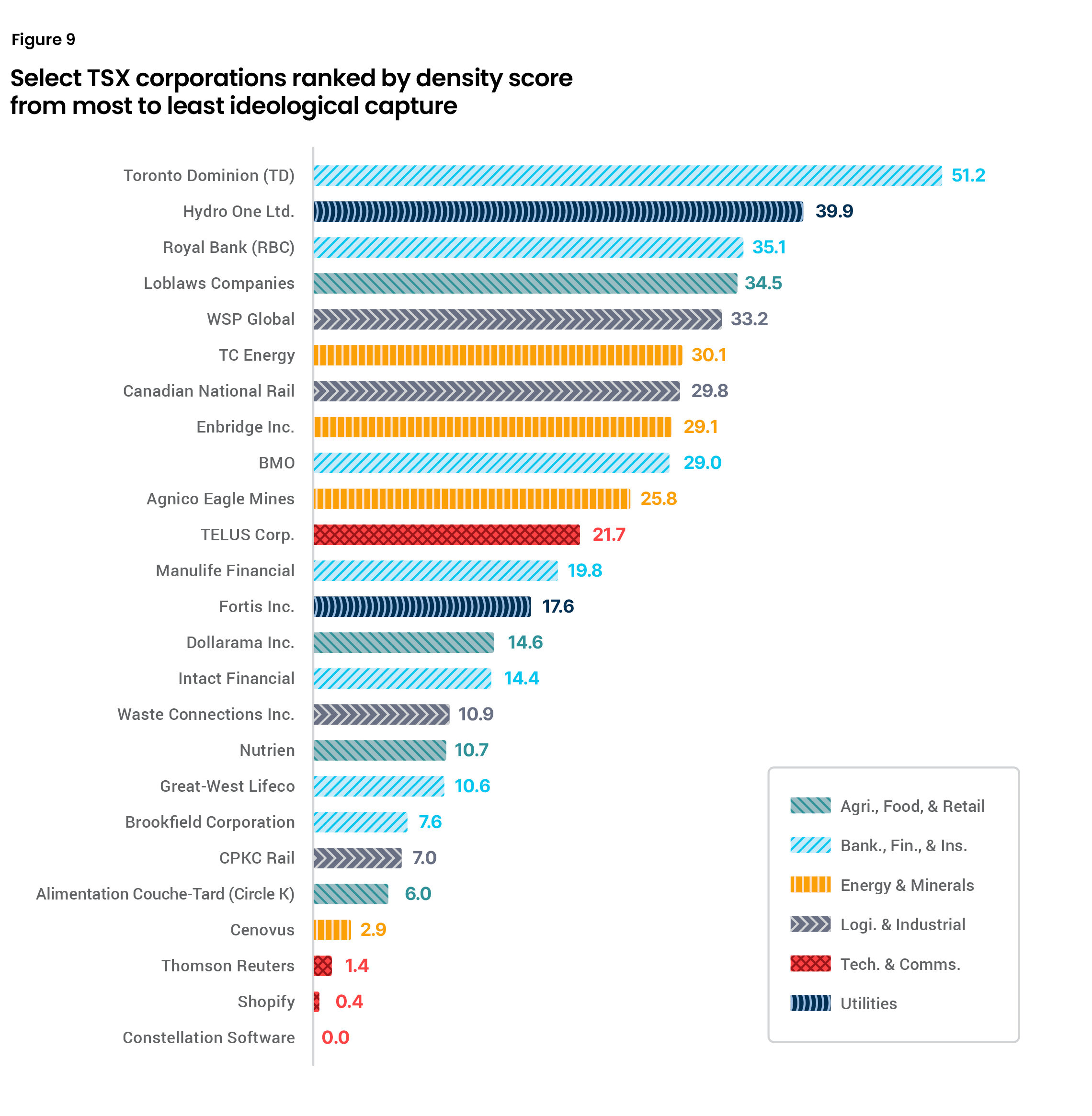
We recognize that energy and utility firms are disproportionately engaged in businesses that are affected by indigenous land rights and related issues and will have correspondingly high-density scores that reflect the realities faced by these sectors in Canada rather than reputational posturing. When indigenous-related words were excluded from the lexicon, Loblaws rose to first place. Loblaws also used words in the sex- and gender-related and DEI categories more frequently than any other Canadian employer on our list.
We found six companies with scores of 30 or more (i.e., >30 lexicon words per 10,000), two in the banking sector (RBC and TD) and the other four evenly distributed across all other sector groups aside from tech and telecoms (mean density score 5.9, N = 4), which romped home at 80 percent lower than the highest average score for a sector grouping—posted by utilities (mean density score 28.8, N = 2)—or five times less frequent.
On average, our pool of 25 companies quoted lexicon words ~22 times for every 10,000. Of those, close to 40 percent were indigenous-related words and another 32 percent were words in the DEI category.
For comparison, analysis of these data by ChatGPT revealed that “A woke-lexicon rate >30 mentions per 10,000 words (>0.3%) is comparable, in sheer incidence, to a high-frequency business term like revenue or financial in a typical annual filing—materially less frequent than function words [such as] the/and/of, but not a tail-level rarity.”
Sector-group-specific rankings were compromised by wildly significant variability. However, the three banks we assessed (RBC, TD, and BMO) proved to be the most consistently ideologically driven, posting on average >36±13 words per 10,000, suggesting that white-collar sectors are the most susceptible to ideological virtue signalling when seeking to attract clients.
Meanwhile, in the high-tech sector, we found that e-commerce innovators such as Shopify scored vastly differently from established telecoms companies such as TELUS, with the latter posting 21 woke words per 10,000 compared to Shopify’s measly 0.4 words, or 50 times less often. This indicates that firms closer to the coalface of innovation tend to be less ideologically captured.
The most frequently occurring word in our lexicon was “indigenous” with an aggregate total of 3,331 instances (31%) across all 25 firms we examined (Appendix E). This corresponded to an average of 6.9 occurrences per 10,000 words of text. When examining SEC filings of major corporations, AI found this frequency only fractionally less than terms such as “global” (~7.0), “customer” (~7.2), and “technology” (~7.2). The word “product” occurs at the rate of ~7.6 words per 10,000. In essence, we found Canadian companies, on average, were referring to indigenous matters almost as often as they were talking about their product lines, based on word usage (Figure 10).
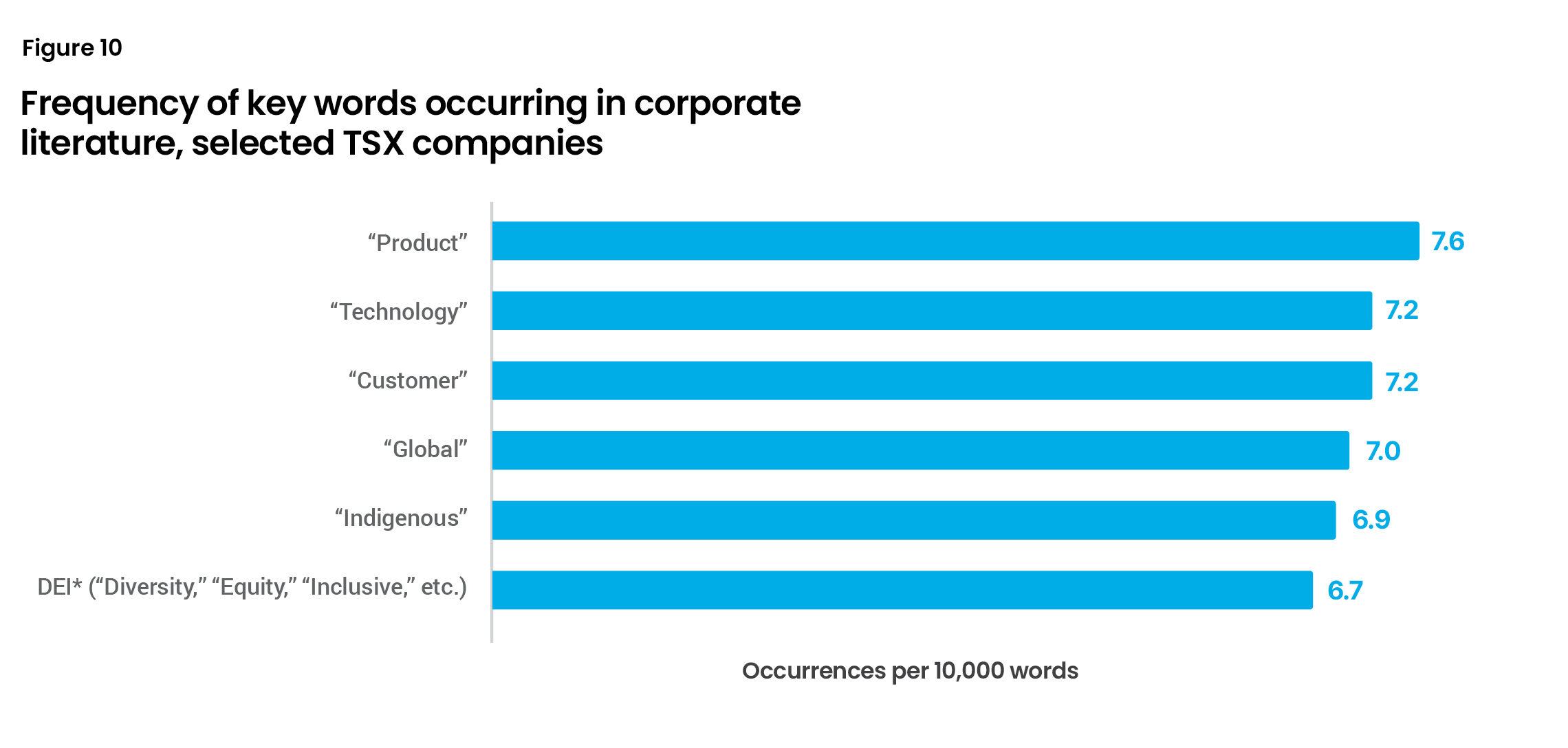
*DEI included the following words: diversity, diverse, equity, equitable, inclusion, inclusive, inclusively
Source: Corporate literature from the 25 surveyed TSX companies (Appendix D)
The next most popular lexicon word was “diversity” with a total of 1,190 occurrences in the specific context of either DEI or social justice advocacy (11% of all lexicon instances). According to ChatGPT, this is comparable to the frequency of firms’ use of words such as “pricing,” “volume,” “purchases,” and “advertising.”
It is noteworthy that some firms may be recalibrating their public messaging in response to recent changes in the political and cultural environment. Closer analysis of food retailer Circle K, who happened to post its most recent annual report in mid-2025 close to our inclusion cut-off date, revealed that the firm’s ideological density score plummeted some 67 percent from 18.4 in 2023 to 6.0 in 2024. Likewise, owing to the late appearance of an update to one of its diversity policies dating back to July 2022, we noted that Waste Connections’ initial density score dropped from 14.2 to 10.9, a decrease of almost a quarter. These are signposts for a marked softening on companies’ rhetoric.
In summary, we found DEI and social justice vernacular to be widespread and commonplace in Canadian companies; however, there is evidence that this prevalence is starting to decline.
The weighted summation of the responses to our survey (9 questions) combined with the normalized ideological-density scores (the 10th component), yielded the final Corporate Discrimination Index (CDI) score for each of the 25 corporations in our sample (see Appendix A for more details).
Sector-specific trends were apparent, with highly-regulated, white-collar sectors like Banking, Finance, and Insurance scoring highest and technology companies appearing to be least discriminatory by our metrics. The average scores for each of the six commercial sector groupings are summarized in the histogram in Figure 11.
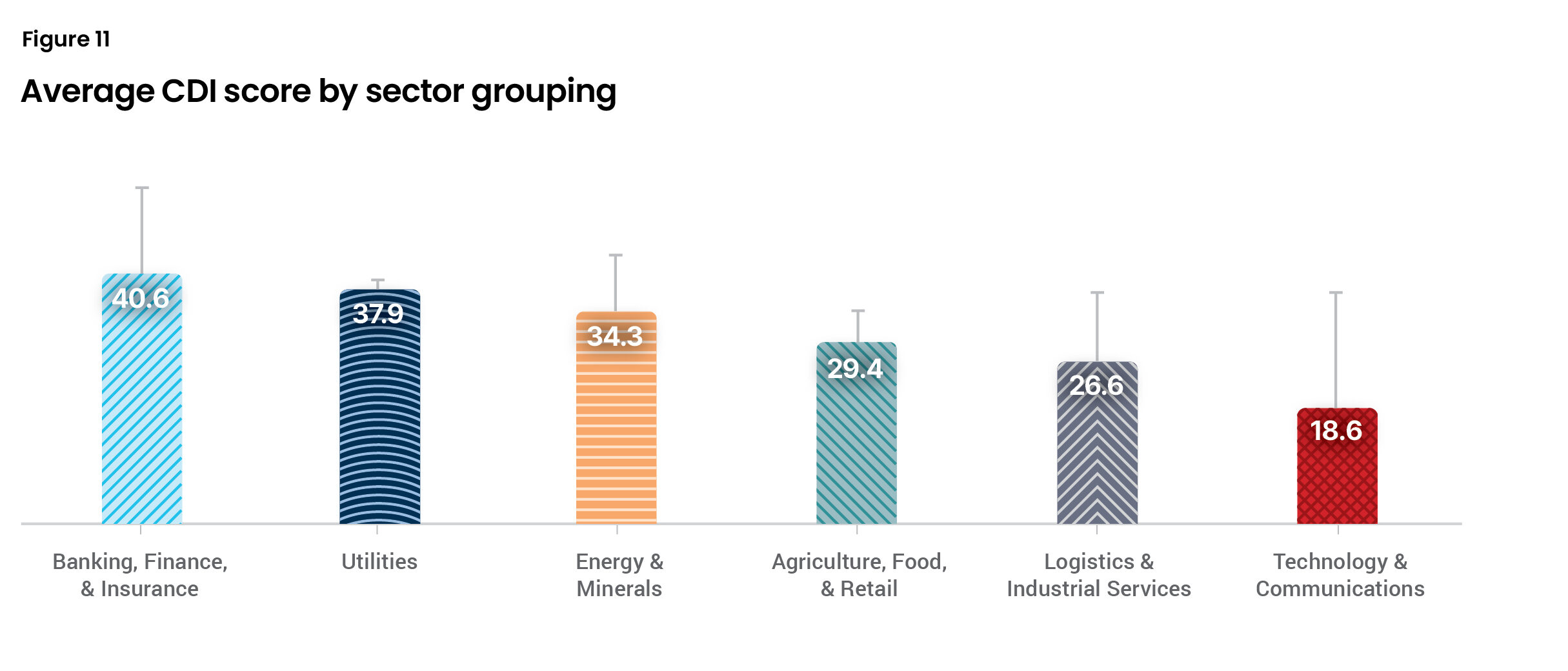
By this analysis, the most discriminatory sector grouping in Canada—Banking, Finance, and Insurance—scored more than double the least discriminatory sector grouping—Technology Services and Communications—marking it out as substantially more prejudicial in its hiring practices by our metrics.
A deeper dive into the companies’ individual performance based on the CDI score allowed us to rank Canadian companies in the following tabulation, listing from most to least discriminatory when hiring (Appendix G).
Figure 12 reveals the true size of the gulf between different entities, with the sector-specific trend confirmed by Intact Financial, who scored more than a dozen times higher (CDI=67) on our scale than Constellation Software, which ranked lowest but one (CDI=5).
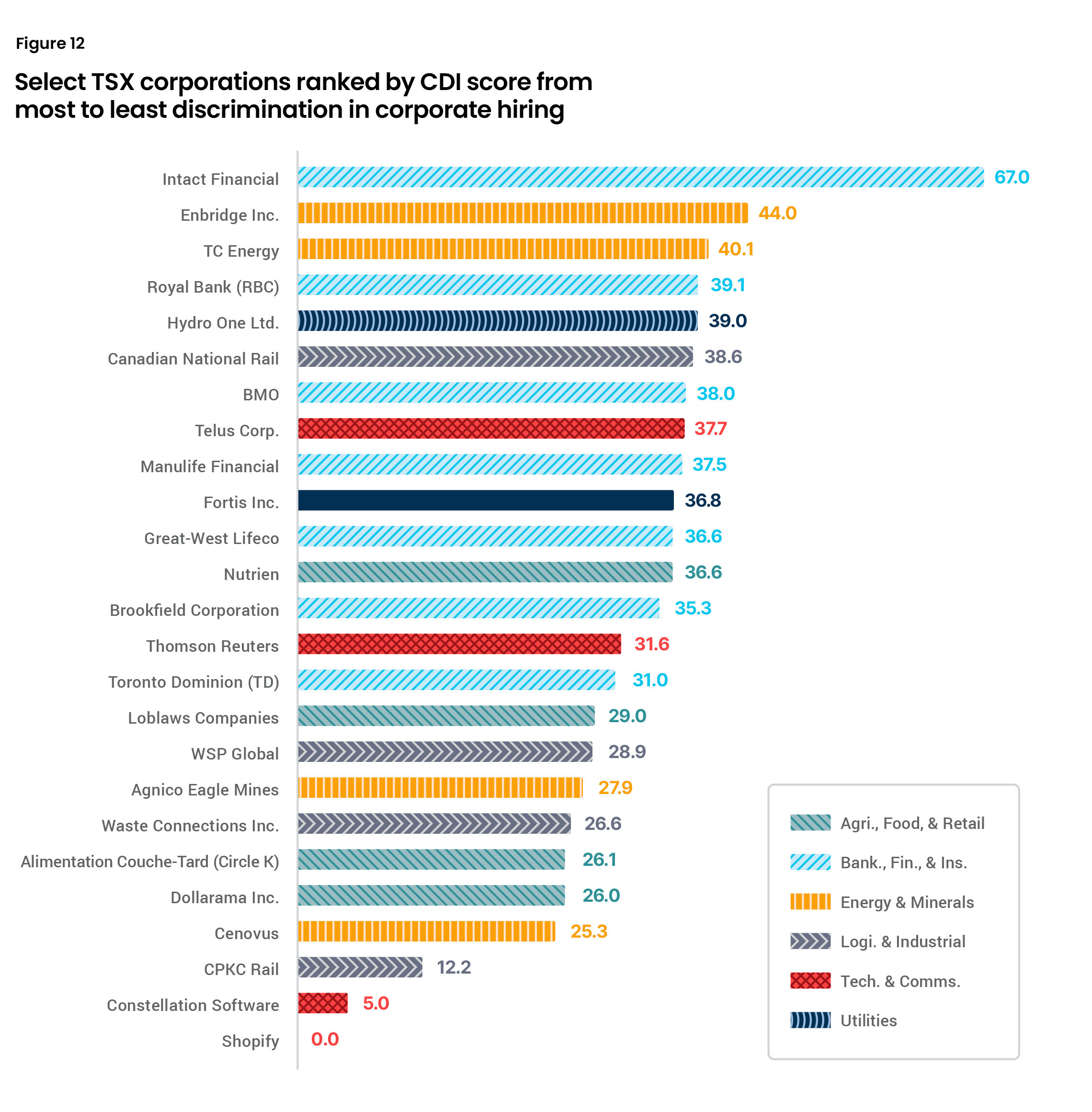
Since the CDI is a weighted score that considers a tiered hierarchy of discriminatory signals and practices, the relative ranking of firms should correlate with the risk of discrimination when job-seeking, with the risk at its greatest towards the top of the table. Moreover, since we developed two indices (despite the small dependence of the CDI on the density score), the two measures begged comparison.
A regression analysis is of value here, as it is a statistical method that does at least three things. First, it helps assess the strength and direction of the relationship between variables. Second, it helps determine whether that relationship is statistically significant, rather than likely due to chance. Taken together, the third benefit is that it can support predictions about how changes in one variable are associated with changes in another.
At the level of individual firms, regression analysis showed a modest positive relationship between the hiring discrimination index and the ideological density index (IDI), with higher CDI scores generally associated with higher density scores, though the relationship was characterized by substantial dispersion and several outlying cases (R2 = 0.17; Pearson’s r = 0.41; Spearman’s ρ = 0.58).
Caution is needed, however, because the density score is incorporated into the CDI as a weighted component accounting for 4 percent of the overall index. While this introduces a degree of embedded correlation, the dependency is limited and is insufficient to explain the overall pattern. When the density-derived component was removed from the CDI, the firm-level association weakened but remained evident, with R2 falling from 0.17 to 0.113. This suggests that the embedded IDI weighting contributed to the observed relationship, but only partially.
Figure 13 presents a comparison of the sector grouping averages for the two indices, which produced a correlation that was much more convincing (R2 = 0.81) and was only moderately sensitive to removing the same density/CDI interdependency (R2 dropped to 0.77). This was suggestive of a sector-specific trend, though such an interpretation must be cautioned by the small sample size and is driven largely by the low scores of a single sector group: Technology Services and Communications.
In other words, at the sector level, there is a relationship between ideological capture—in terms of how frequently ideological terminology is used in corporate documents—and discrimination in hiring practices. Therefore, we can predict that ideologically-dense sectors are more likely to discriminate when hiring.
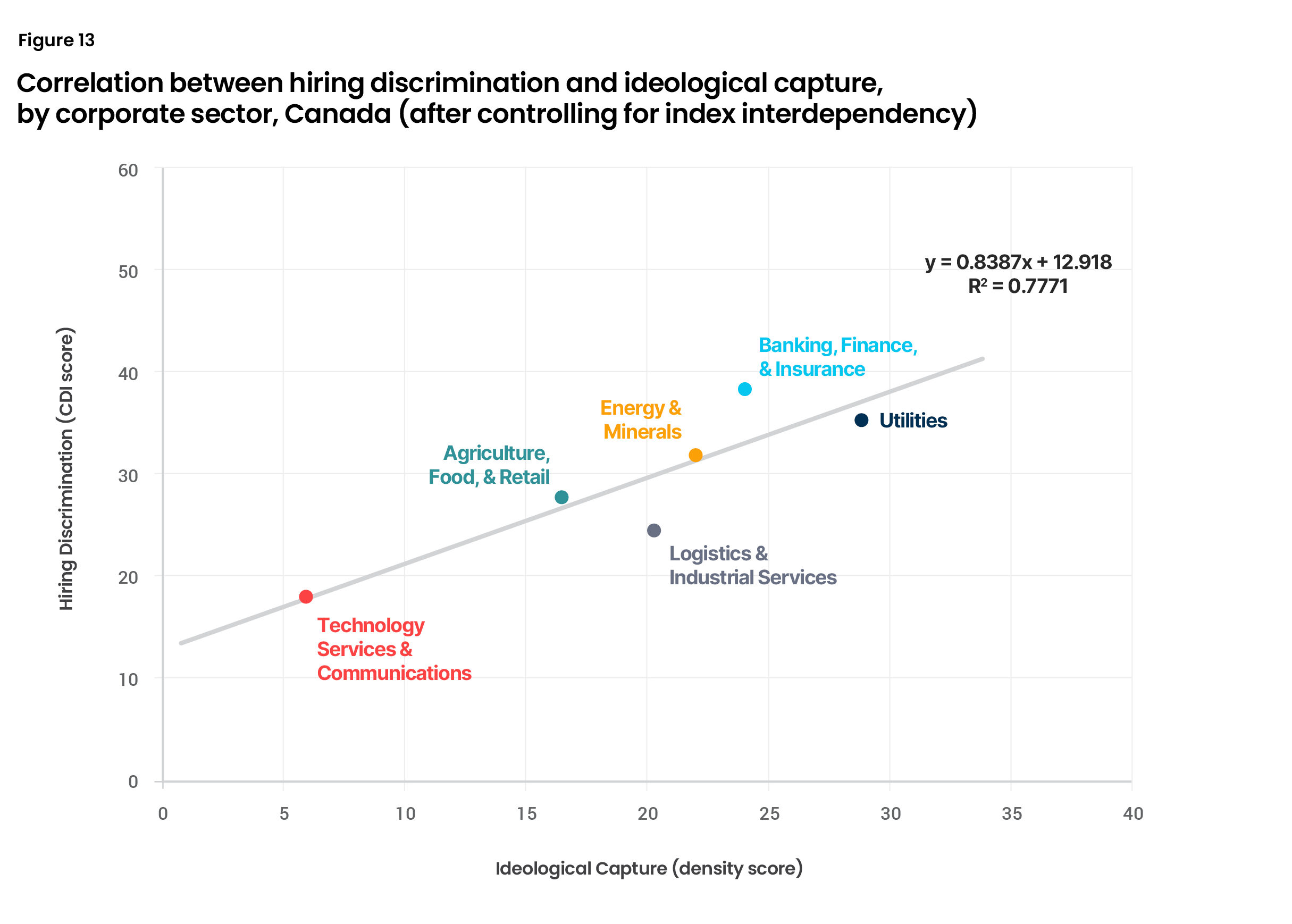
Taken together, the results point to a corporate landscape in which discriminatory risk is not randomly distributed, but appears to cluster by firm and, to a meaningful extent, by sector. Although the relationship between hiring discrimination and ideological capture at the firm level is only modest and partly shaped by the limited built-in overlap between the two measures, the much stronger sector-level association suggests that broader industry cultures may help structure the prevalence of these practices. This conclusion should be treated with caution given the small sample and the influence of particularly low-scoring firms in one sector, but the overall pattern is consistent with the view that some institutional environments are materially more prone than others to embedding ideological commitments in hiring-related processes.
Our research revealed that individual firms distinguished themselves in a wide variety of ways, and some behaviours—veering either towards or away from DEI and forms of corporate political advocacy—were worthy of special mention.
Shopify, a company that has fallen silent on DEI matters in recent times posted a clean bill of health when it came to discriminatory hiring practices, with a CDI score of zero. This communicates the positive message that Canada’s e-commerce giant is focused on hiring only the best and brightest to drive shareholder value. It is noteworthy that, in 2021, CEO Tobi Lütke told staff that Shopify is “a team, not a family” and that the company “cannot solve every societal problem,” discouraging divisive internal Slack debates.65 In early 2025, the firm laid off the team stewarding its social impact initiatives, which included programs supporting black, indigenous, and women entrepreneurs.66
Constellation Software likely would have shared that honour with Shopify but ranked second from bottom, as it found itself the hapless victim to ideological infiltration when legal firm Osler, Hoskin & Harcourt filed a successful racial equity audit shareholder proposal backed by BMO.67 The resolution demanded Constellation’s board of directors take steps to “identify, address, mitigate, and dismantle racial disparities within its workforce.” This action raised the firm’s CDI score.
At the other end of the spectrum from Shopify and Constellation, ideological activism was embodied by several companies keen to emphasize their ongoing commitment (in spirit) to DEI initiatives and social justice causes.
BMO proudly champions its virtue-signalling credentials, as showcased not only by the bank providing e-learning modules on truth and reconciliation free to the public, but also in its offering indigenous employees training on “imposter syndrome” among other topics.68 This is in stark counterpoint to the growing Canadian problem of indigenous identity misrepresentation, colloquially termed “pretendianism.”69
Waste Connections made hay over the firm’s award of various accolades by workplace ratings platform Comparably. These included plaudits that explicitly recognize DEI behaviours,70 for example “Best CEO for Diversity.” It is a wry irony that this prize, awarded to Waste Connection’s Ron Mittlestaed in 2023,71 is confined to surveying employees of colour and is hence inherently discriminatory.
Manulife Financial was similarly breezy, racking up a trio of “progressive” gongs including “2024 Corporation of the Year” awarded by Canada’s 2SLGBTQI+ Chamber of Commerce, an organization that counts Manulife among its platinum sponsors.72
Intact Financial, meanwhile, included declarations in all of its job postings reminding applicants that company employees “work, meet and travel across the land currently called Canada, originally inhabited by First Nations, Métis and Inuit people.” This unpatriotic sentiment finds a leading Canadian insurance company seeding guilt among its future employees and suggesting that the durability of Canada as a nation is necessarily finite.
WSP Global, CN Rail, and TC Energy, among others, all exhibited an arguably more camouflaged approach to discrimination by emphasizing their commitment to supply-chain diversity.73 This equates to their favouring businesses that are minority-owned, women-owned, and indigenous-owned, among others. Such a strategy constitutes a form of company-wide discriminatory practice that militates against the purely meritocratic process that is driven by the bottom line.
When it came to DEI hiring targets, Royal Bank was amongst the most vocal, declaring that almost two-thirds of their new hires (64%) in 2024 self-identified as black, indigenous, or people of colour.74 Rather less effective was Hydro One, who, despite targeting 3.5 percent black representation among directors and executives, posted precisely zero such appointees over the three-year period to 2024.75
Our findings support the all-too-familiar notion that major corporations tend to onboard popular trends often primarily for reputational reasons.76 Other pertinent examples include “greenwashing” and “pinkwashing,” where companies have been accused, respectively, of their performativity when supporting environmental or LGBTQ issues, whilst failing to apply those values in practice.
However, bearing in mind the inherently irrational underpinnings of DEI,77 such a disconnect is inevitable, because discriminatory practices aimed at achieving morally aspirational quotas are unavoidably anti-meritocratic, placing irrelevant immutable characteristics in contention alongside talent and aptitude, and ultimately harming business performance.
The behaviours we identify in this report have been described as “wokewashing”—namely transparent attempts by companies to enhance their public reputation by masquerading as allies of social justice causes whilst simultaneously failing to take substantive action to effect institutional change.78 This has unintended adverse consequences, however, as spelled out in a recent publication from the University of Buckingham.79
From a global perspective, the uncritical adoption by Canadian companies of virtue posturing—or entertaining “corporate luxury beliefs”—singles Canada out as an increasingly isolated refuge for the social agenda of the progressive left, one that will be interpreted worldwide as a failure to prioritize the fundamentals of capitalist principles in a post-ESG era.80 This threatens share prices, as investors will lose patience with unworkable, politicized, and off-mission time wasting.
Setting aside these particularities, the take-home message from the CDI was that discriminatory and/or potentially discriminatory hiring practices were broadly evident in all of the Canadian industry sectors we examined, with white-collar sectors the most entrenched. At the sector level, only tech companies have a tendency to abstain from DEI practices—in favour of purely meritocratic career advancement, presumably.
The overall findings reveal that corporate Canada has been broadly captured by DEI ideology across all of the sectors we studied but has not yet implemented widespread discriminatory hiring and promotional practices to the same extent as other institutions, such as universities.81
Rather, these corporations embody the “DEI Paradox”—they laud DEI in their hiring materials and public documents, while largely preserving merit-based hiring. In other words, top firms promote DEI, and widespread usage of DEI and social justice terminology is common to most companies’ public literature, permeating many aspects of both internal and external policy very extensively. However, it is almost entirely performative—a conclusion that was supported by our question-level findings.
For instance, we observed that corporate declarations of DEI intent are, in large part, no more than rhetorical exercises. Job postings may reference inclusion, but they do not operationalize DEI as a prerequisite for hiring or advancement. This sharply distinguishes corporate hiring practices from academia, where DEI statements of allegiance serve as de facto filters during recruitment.82
The data are consistent with a profound disconnect between firms’ promotion of DEI and the explicit use of preferential language in job postings. When it does occur, it is typically limited to statements encouraging applications from underrepresented groups, rather than outright preferences or requirements. These practices appear sector-specific, arising predominantly in white-collar industries, and are not systemic across all of the sectors we examined.
We also found that most Canadian companies among our top 25 display a pronounced tendency to support charities and non-profit organizations engaged in advocacy on controversial issues, raising broader questions about the role purely commercial enterprises should play in influencing opinion on divisive sociopolitical matters, especially ones that continue to be the subject of fierce public debate. Additionally, such advocacy reveals information about a company’s values and alignment, and thus has the potential, whether consciously or unconsciously, to influence hiring practices.
The tendency to declare demographic hiring targets and report on progress towards their fulfilment was also widespread. Again, we saw that Canadian corporations typically refrain from extending DEI rhetoric into explicit preferences for the purpose of recruiting—high visibility board positions notwithstanding. The limited exceptions show that, while some white-collar sectors such as insurance and banking have experimented with such language, it has yet to become a mainstream practice.
When it comes to demographic data collection, our findings showed that Canadian companies were essentially split over whether to implement this practice during hiring. While common across all sectors, not all employers use these tools, but we still found that most job postings we reviewed required applicants to provide this information.
We also found that Canadian firms were heavily engaged in social engineering in the workplace through the widespread use of DEI training modules, which were often presented not as optional professional-development resources but as expected or strongly encouraged forms of ideological onboarding. In many cases, such training appeared to function less as a neutral means of promoting workplace civility and more as an instrument for inculcating a preferred moral vocabulary and set of social assumptions, thereby signalling to employees which attitudes and beliefs were institutionally approved.
This report presents compelling evidence supporting the claim that Canada’s leading corporations are currently, at face value, held hostage to the ideology of DEI—a discourse that became prevalent throughout higher education in recent decades. Taken together, we conclude that Canadian corporations are in the unenviable position of fielding criticism from both sides of the political and cultural divide. Trend-following commentators are liable to criticize the failure of firms to implement tangible actions that advance DEI goals, whilst those focused on merit are more likely to be angered by the ideological rhetoric they perceive to be ineffectual, counter-productive, and self-indulgent.
Corporations should not be vilified for their nature, per se, which is to protect and advance the financial interests of their shareholders by any legitimate means. Nevertheless, the conspicuous and perfunctory assimilation of voguish trends—a widespread practice that is unlikely to change—can be accompanied by unintended adverse consequences.
In conclusion, DEI is widespread in corporate Canada, but discriminatory hiring practices appear rare on the surface. However, given the results of this study, we now have evidence that there is a statistical basis to conclude that to the degree that a sector embraces ideological language, we can predict a greater likelihood to discriminate in corporate hiring.
Leigh Revers, MA, DPhil, is a senior fellow with the Aristotle Foundation for Public Policy. Dr. Revers is an Oxford-trained organic chemist and an emeritus professor with the Institute for Management of Innovation and the Department of Chemical & Physical Sciences at the University of Toronto. He is a prolific Substack author and writes for the National Post and Ayaan Hirsi Ali’s Courage Media.
Ismail Demir, BArch, is a visiting fellow with the Aristotle Foundation for Public Policy and is currently studying towards a professional career in the Canadian healthcare sector. Ismail holds a Bachelor of Architecture from Trakya University.
Ven Venkatachalam, PhD, CPA, is a senior economist at the Aristotle Foundation for Public Policy. With expertise in economic and fiscal policy, education, international relations, trade, energy, governance, immigration, tourism, and NGO matters, Venkatachalam has consulted for governments, NGOs, and private sector organizations across Asia, Europe, Canada, and the United States.
Danny Randell, MPP, BA, is a visiting fellow with the Aristotle Foundation for Public Policy and a PhD student at the University of Buckingham. Randell holds a Master of Public Policy from the University of Calgary and a Bachelor of Arts in History from Ambrose University.
The Aristotle Foundation for Public Policy is a new education and public policy think tank that aims to renew a civil, common-sense approach to public discourse and public policy in Canada.
A Canada where the sacrifices and successes of past generations are cherished and built upon; where citizens value each other for their character and merit; and where open inquiry and free expression are prized as the best path to a flourishing future for all.
We champion reason, democracy, and civilization so that all can participate in a free, flourishing Canada.
Ideas—what people believe—come first in any change for ill or good. We will challenge ideas and policies where in error and buttress ideas anchored in reality and excellence.
The Aristotle Foundation for Public Policy is a registered Canadian charity and all donations will receive a tax receipt. To maintain our independence, we do not seek nor will we accept government funding. Donations can be made at www.aristotlefoundation.org.
The Aristotle Foundation for Public Policy has internal policies to ensure research is empirical, scholarly, ethical, rigorous, honest, and contributes to the advancement of knowledge and the creation, application, and refinement of knowledge about public policy. Our staff, research fellows, and scholars develop their research in collaboration with the Aristotle Foundation’s staff and research director. Fact sheets, studies, and indices are all peer-reviewed. Subject to critical peer review, authors are responsible for their work and conclusions. The conclusions and views of scholars do not necessarily reflect those of the Board of Directors, donors, or staff.