




If there’s a buzzword that’s captured corporate Canada, government and academia over the past decade, it’s “diversity.” When patched together with “equity” and “inclusion,” or DEI for short, it’s assumed to be excellent policy that’s anchored in fairness and equality. For its proponents, it is seen as an extension of civil rights movements that began in the 1950s in Canada and the United States.
But nice-sounding words are not enough when it comes to treating people as equal in law and policy, or building a flourishing country with equal opportunity for all.
In reality, DEI is illiberal, anti-merit and anti-individual because it is the opposite of mid-20th century changes in ideas, policy and legislation aimed at ending the mistreatment of individuals based on their identities.
The historical list of wrongs done to people the world over from focusing on such group identities is legion: Jews subject to quotas or outright bans from multiple professions; black-Canadians and other minorities discriminated against in housing and employment; Indigenous adults long denied the right to vote unless they gave up their Indian status. The list goes on.
At the heart of reforms over the last century that made such discrimination unacceptable was the belief that individuals were morally equal and should be treated as such. That development had been underway for at least two millennia before it bloomed in the 20th century, but has now been put in reverse. Instead, identity politics and the assumption that people succeed or fail because of their identity is back.
DEI’s origins
At the start of the ’60s, affirmative action was meant be neutral with regards to hiring and other matters. By the later ’60s and into the ’70s, though, affirmative action morphed into active discrimination. This was the result of sincere attempts by American civil rights activists to “make up” for past wrongs, but had the effect of becoming anti-individual.
It is one thing for former slave owners to compensate ex-slaves for the egregious evil done to them, as Quakers did in the late 18th century. In that instance, a direct cause-and-effect link existed between an action (slavery) and an economic outcome (ex-slaves had little opportunity to earn wealth). Similarly, Canada was correct to compensate Canadians of Japanese ancestry in the ’80s for the egregious wrong done to them in the Second World War — the internment camps and stealing their property. In fact, compensation for this state-sponsored theft was minimal and should have been higher.
But those two examples of compensation for direct harms caused to specific people by specific people or institutions (the Quakers and Canada’s federal government) are unlike ’70s affirmative action in the United States, its ’80s version in Canada (employment equity) or the DEI assumptions among a wide variety of people today.
Blaming racism
One reason why DEI is so popular, and why some people think racism explains social inequality, is the conflation of personal bigotry with “institutional” or “systemic” racism.
Fact: Canada began to dismantle actual institutional racism in law and policies in the ’40s and ’50s, far ahead of the American civil rights era. For example, in 1953, the federal government passed the Fair Employment Practices Act, which banned discrimination based on race, nationality, skin colour or religion. Many provinces, including Ontario, banned such discrimination around the same time.
In other words, while personal prejudice can and does exist today (bigots can be found online and in person), it’s not the same as discrimination on the part of institutions — government, corporations, schools, universities — which was outlawed over seven decades ago. (DEI discrimination is the modern-day exception.)
Despite the history of actual civil rights victories against actual systemic discrimination, American authors such as Ibram X. Kendi, Ta Nehisi Coates and Peggy Mcintosh offer up a mono-causal theory: racism explains all, or most, economic outcomes, including disparities between cohorts.
For example, in his 2016 book, “Stamped from the Beginning: The Definitive History of Racist Ideas in America,” Kendi argues that any disparities between African-Americans and others have one cause only: racism. “We have a hard time recognizing that racial discrimination is the sole cause of racial disparities,” writes Kendi.
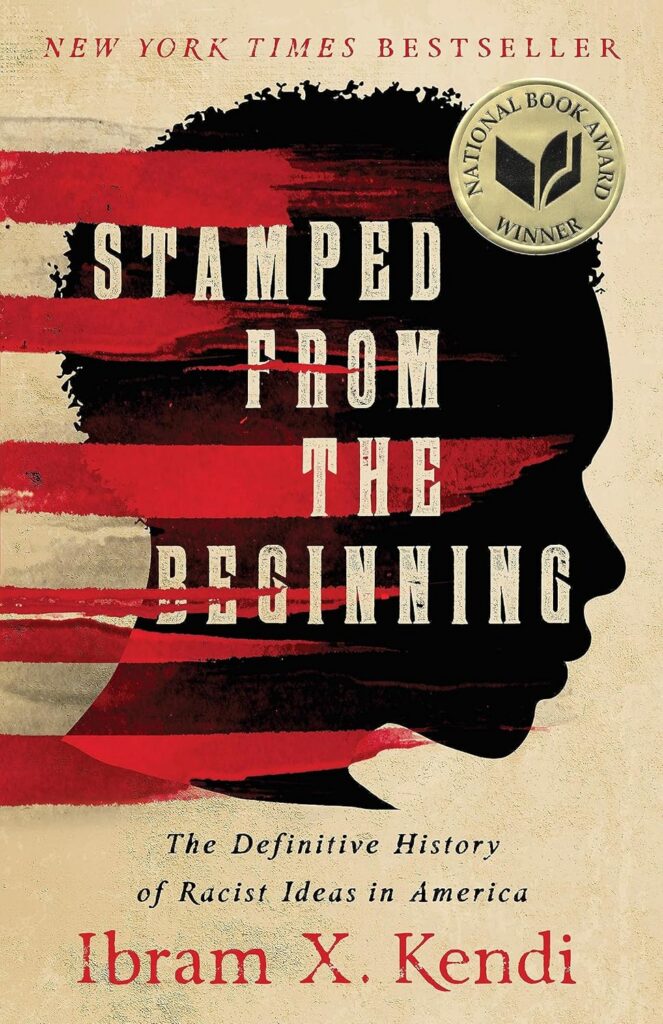
In this view, racism is redefined as unequal statistical outcomes for groups and not (just) the unequal treatment of individuals by the state or other powerful entities. Also, other statistical differences between cohorts — higher crime rates in predominantly black neighbourhoods, lower average incomes vis-à-vis others and so forth — are seen as prima facie evidence of racism. And in a nice exercise in circular logic, anyone who disagrees with Kendi on this, or offers alternative analyses as proof, is a racist.
Canadian versions
Canadian thinkers have imitated Americans on this for decades. “Employment equity” was the Canadian version of affirmative action, pushed by Justice Rosalie Abella’s 1984 Royal Commission on Equality in Employment report. But as Martin Loney chronicled in his 1998 book, “The Pursuit of Division,” “The disadvantages of visible minorities in the labour market were never documented, though a casual reader could have been excused for assuming the learned judge had seen overwhelming evidence.”
Loney spent much of his book detailing how even Abella’s data pointed to the opposite of what she assumed: outcomes for visible minorities were all over the economic map with no proof of racism as the cause. Abella cited 1981 statistics showing that Canadian-born black men earned 79 and 77 per cent of the average male income in Ontario and Nova Scotia, respectively. In distinct contrast, Canadian-born black women earned more than the average female income in both provinces. To buy Abella’s underlying assumption that racism explained most economic outcomes, one had to assume such racism was only directed at black men and not black women.
There was also this statistic from Abella’s report: “More than half of Indo-Pakistani males are in white-collar or professional occupations.” That was a reference to 1981 labour market data and with most in that cohort having arrived in the ’60s and ’70s. The point, noted by Loney but missed by Abella, was that Indo-Pakistani male immigrants were succeeding because their education and degrees matched labour-market needs. That didn’t mean racism didn’t exist; it meant it wasn’t showing up in the data on professions.
Those and multiple other examples contradicted the narrative that racism explained most economic outcomes.
Modern DEI
Abella’s report was the basis for enacting anti-individual, anti-merit policies in Canada and justified preferential hiring as “part of a strategy to achieve social justice,” wrote Loney. As with “affirmative” action and employment “equity,” in 2026, many still assume that racism explains all (or mostly all) economic outcomes. That includes the incomes and wealth of individuals — the “privilege” claim.
To be sure, if one was a slave on a plantation in the southern United States in 1850, slaveholders indeed gained their wealth based on black slavery and were privileged as a result. But that’s not Canada in 2026. It wasn’t even Canada in 1850 given that slavery began to be fought by British colonialists in the late 1700s and was abolished in law in the British Empire in 1834. The rare exceptions after that were slave-holding First Nations in British Columbia. If anyone had privilege based on slavery by the latter 19th century, it was the slave-holding Indigenous tribes in B.C. that profited from it.
Despite the reality that the “privileged” are not always who you think and the 1850s American south is not relevant in 2026 Canada, those who are enthralled with DEI assume systemic racism is a real thing. Thus, DEI policies discriminate against students in admissions at universities and in hiring across multiple employers on this basis.
A clear example of preferential hiring: in the Aristotle Foundation’s 2024 review of hiring practices at 10 Canadian universities (the largest in each province) and DEI discrimination, 477 of the 489 job advertisements reviewed (98 per cent) listed some form of DEI requirement or strategy in filling academic vacancies. And some universities were open about who they would not hire: at the University of British Columbia, for example, as my colleagues noted, “nearly one out of every five academic job postings explicitly restricted the job to a particular race, ethnicity, group identity or other inherent trait.”
The facts
Modern-day Statistics Canada data about incomes also show the opposite of claimed impacts on incomes from racism, yet some still use data to show assumed racism. The federal government’s anti-racism strategy, for example, argues that black men and women earn less than “their non-racialized counterparts.… The earnings gap is most pronounced among Canadian-origin Black men, at -$16,300, and least among African-origin black men, at -$8,500. Similarly, Canadian-origin black women earn -$9,500 less, and Caribbean-origin black women -$1,300 less compared to their non-racialized counterparts of the same generation.”
As with the flawed 1984 Abella assumptions, though, the federal government ignores how a plethora of factors explain economic outcomes in modern, mostly open economies:
The Sowell antidote
As an antidote to pro-DEI American authors and their Canadian imitators, more people should read economist Thomas Sowell’s landmark work on race and culture. Sowell has always been data-based, empirical and historically informed in a manner that Kendi, Coates and McIntosh are not.
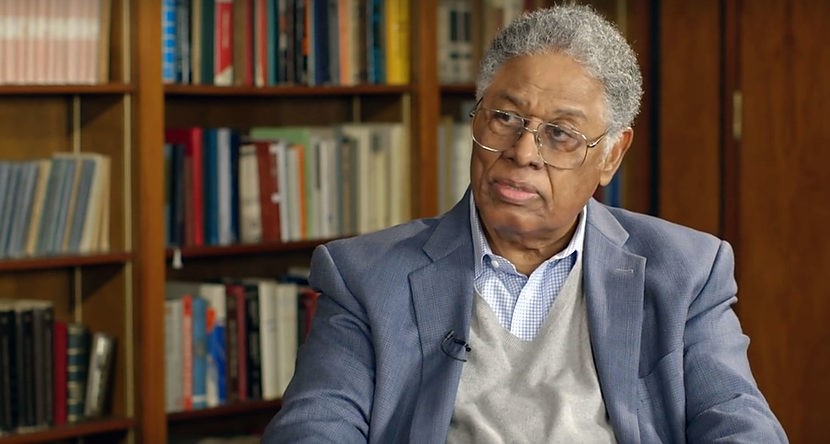
Thomas Sowell, American economist, economic historian, and social theorist
Sowell argues that “huge disparities in income and wealth” have been common “for centuries,” yet everyone thinks their situation is unique. Except it’s not. Sowell points out that in the 19th century, “real per capita income in the Balkans was about one-third that in Britain.” And by the late 20th century, Singapore had “a median per capita income that is literally hundreds of times greater than that in Burma.”
Sowell rightly asks why anyone would ever have expected equality in the first place, especially because the “inputs” are so diverse. In the ’60s, for example, engineering degrees among the Chinese minority in Malaysia were 100 times more plentiful than the Malay majority, which also explains higher Chinese incomes. And in the Austrian Empire in 1900, Sowell points out that, “The illiteracy rate among Polish adults was 40 per cent and among Serbo-Croatians 75 per cent — but only six per cent among the Germans,” which also explains the different outcomes for all three groups. And remember, cautions Sowell, “Educational differences are just one source of economic disparities.”
The good news
Once the erroneous claim that racism explains most economic outcomes is unpacked, one is actually left with a positive outcome in the statistics: when apple-to-apple comparisons are made, incomes are often more similar than simple average comparisons would show. Here’s how Matthew Lau put it in our Aristotle Foundation research paper on race and incomes:
“After controlling for level of education and work status, indigenous-Canadians earn close to the same incomes as non-Indigenous Canadians. The median income for indigenous-Canadians who worked full-time for the full 2020 year was only slightly below the national average among people with a bachelor degree or lower, and slightly above the national average for those with a higher level of education.”
The bad news
The twin beliefs — that racism explains much and that we must make up for past discrimination — is what drives the modern DEI movement. It is also why DEI is so anti-merit, illiberal and anti-individual. The “diversity” and “inclusion” movement today is in fact dismissive of intercultural borrowing. It also excludes people in hiring and university admissions if they are the “wrong” skin colour, ethnicity and so forth. DEI is thus anti-diversity and exclusive.
Strip out the social engineering, identity politics and flawed economic analyses from the concept and there’s much that’s right about diversity and acceptance. To ponder an example of how a monoculture can harm itself, consider the example of Japan. The country shut itself off from the world between 1603 and 1867 due to a self-enforced “sakoku” policy of isolationism. That did not help Japan develop. By the time it was forced to open up at the point of a gunship in 1853 and 1854, and when the existing Japanese regime collapsed in 1867, Japan had much catching up to do vis-à-vis the rest of the world.
In other words, openness to other cultures — or “cultural appropriation,” to use modern “progressive” nomenclature — is generally a good thing. Imagine if Europeans kept Roman numerals instead of adopting Arabic numbers — they would still be stuck in the Middle Ages technology-wise given the difficulty of calculating complex formulas that are necessary for actuarial tables and engineering, among other fields.
Diversity and inclusion properly understood is, in fact, the history of western liberalism (the classic kind, not the modern “progressive” version). This proved to be incredibly helpful to those individuals in marginalized groups: the point was to protect the individual in law and policy instead of finding reasons not to do so based on irrelevant characteristics such as one’s collective identity (religion) or unchangeable identity (skin colour, ethnicity).
Actual diversity should presume that we all have differing priorities, unique goals, diverse skill sets and the like. That is why any reasonable person should focus on equal opportunity instead of equalizing outcomes.
Mark Milke is the president and founder of the Aristotle Foundation for Public Policy and author of six books, and over 70 studies. His newest book is “The Victim Cult: How the Grievance Culture is Wrecking Civilization.” Photo iStock.