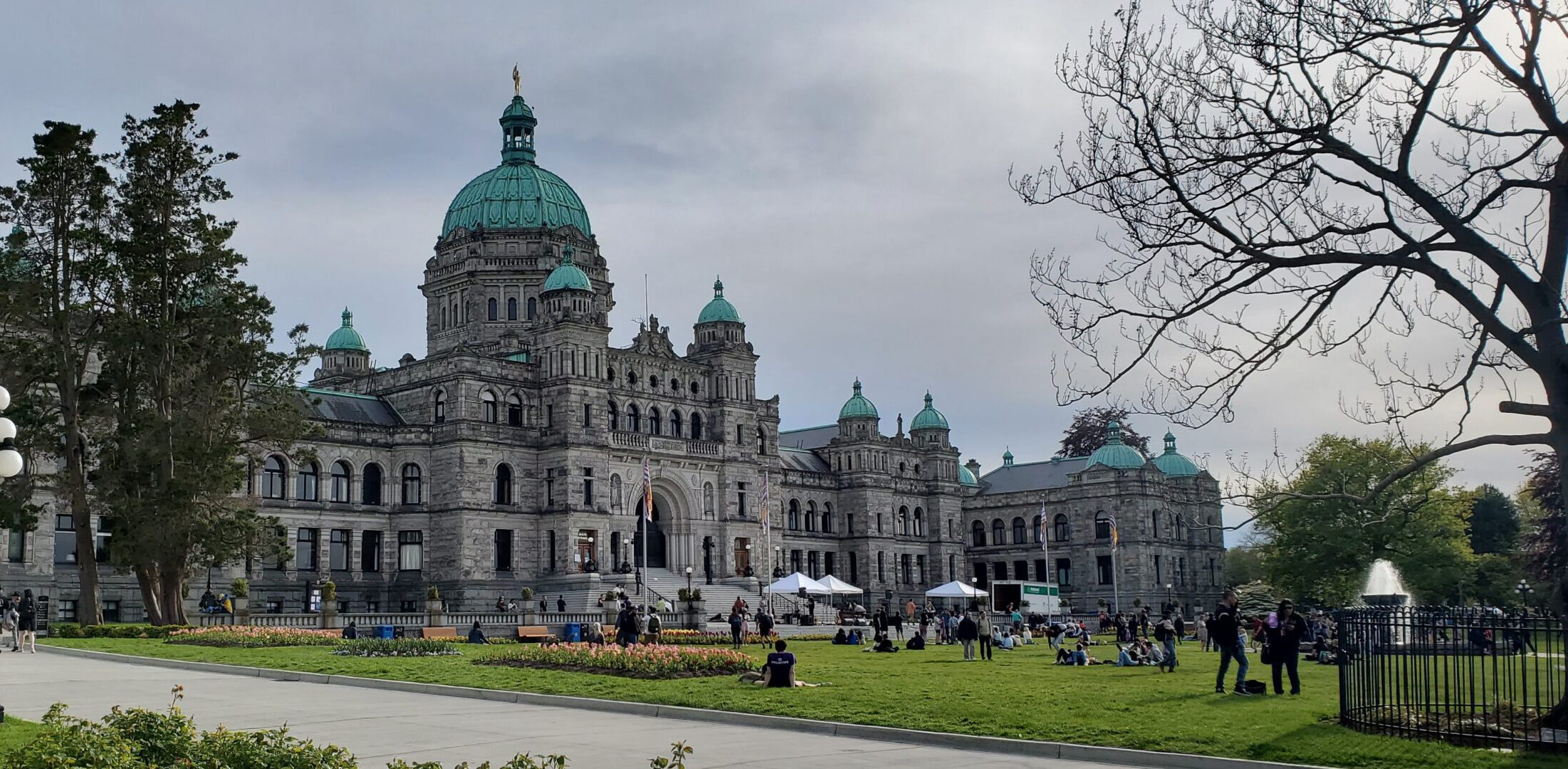

Repealing DRIPA and unshackling government lawyers would go a long way toward restoring public confidence
Politicians run into trouble when they enact anti-reality policies or treat citizens as barriers to overcome in pursuit of pet political and ideological projects.
Consider an example of anti-reality thinking from U.S. President Donald Trump: his multi-year effort to impose tariffs on other countries did what tariffs always do — increased prices for consumers, including in the United States itself.
American consumers noticed the tariff-induced inflation, and with their voting caps on, punished Trump and his protectionist party at the polls in congressional elections in early November. They did so in part because of higher prices, though corruption and the war in Iran were also issues.
British Columbia also provides a recent case study of politicians who engaged in anti-reality thinking, but with the added insult of treating voters as a nuisance.
A glaring example: the chronic attempts by former B.C. premier David Eby and his colleagues to hand over ever-larger portions of the province to First Nations, without much disclosure or debate.
One problem with that approach was the fact that each First Nation represents a few hundred, or a few thousand, people, and not the broad public interest of all 5.7-million British Columbians.
That approach was anti-reality because the belief that the B.C. government could add what amounts to a plethora of “co-governments” and not put private property rights into question and chase away investment was fanciful.
That led to a second problem: while successive court decisions since the 1990s have created a thicket of problems for Crown land and, more recently, private property, that does not mean politicians should make the situation worse with ill-advised legislation and without any finality in deals with First Nations.
Nor should politicians ignore the significant taxpayer dollars transferred to B.C. First Nations that never signed a treaty with the Crown.
A recent study from the Aristotle Foundation for Public Policy, where I serve as president, found that over $27 billion was transferred from the federal government to B.C. First Nations over the last 23 years. Many of the recipients have no treaty.
In a separate study, we also found that the Cowichan First Nation alone received $1.3 billion over the past few decades from both the federal and provincial governments.
Existing cash transfers that, in many instances governments were not obligated to provide, should be accounted for in ostensible tallies of what is “owed” as part of reconciliation efforts.
With a new government in power in Victoria, it’s time for two modest reforms that would treat British Columbians with respect and move the government back to representing the broad public interest.
First, as promised by the new government of Premier Lorne Doerkson, it makes sense to repeal the Declaration on the Rights of Indigenous Peoples Act, which requires provincial law to comply with the United Nations declaration of the same name.
It was never a good idea to base B.C. laws and policies on a document created by international civil servants.
(For the record, the original United Nations, as envisioned by wartime leaders like Winston Churchill, was sensible in its conception: have an international body to potentially work through and avoid disputes tipping into war. That original, modest vision has since been eclipsed by a bureaucratic body with a belief in its own need to pronounce on every domestic issue in liberal democracies such as Canada.)
Second, the government should eliminate guidelines and directives that ban its lawyers from offering legitimate arguments against the supremacy of Aboriginal title.
As Geoffrey Moyse, a lawyer who specializes in Indigenous and constitutional law, has pointed out, the federal and B.C. governments both tied their own legal hands in 2018 by directing their lawyers not to argue against the supremacy of Aboriginal title in British Columbia.
It should thus be no surprise that the public interest has not been properly represented in court, and that judicial decisions have reflected this. As Moyse wrote, “The B.C. government’s litigation directives are designed to ‘uphold Aboriginal rights, treaty rights and Indigenous human rights.’
“The directive states that ‘counsel must ensure that their submissions and positions are not directed at undermining those rights, including Indigenous peoples’ right to self-determination.’ ”
Of course, the problem with language that asserts “rights” is that it presupposes a “rights” claim is valid. But it’s exactly that rights claim that is being litigated in court. That’s why governments should offer their strongest argument against expansive claims in the first place.
Yet the previous government restricted lawyers from arguing their best case in court. The B.C. government cannot change Ottawa’s policy, but it can change its own.
There are other useful reforms the provincial government might wish to enact to be more in touch with reality and the public. But these two reforms would be a useful nod in the direction of respect for all British Columbians and in representing the broad public interest.
Mark Milke is president and founder of the Aristotle Foundation for Public Policy. Photo: iStock.
Like our work? Think more Canadians should see the facts? Please consider making a donation to the Aristotle Foundation.
SUBSCRIBE TO OUR NEWSLETTER