


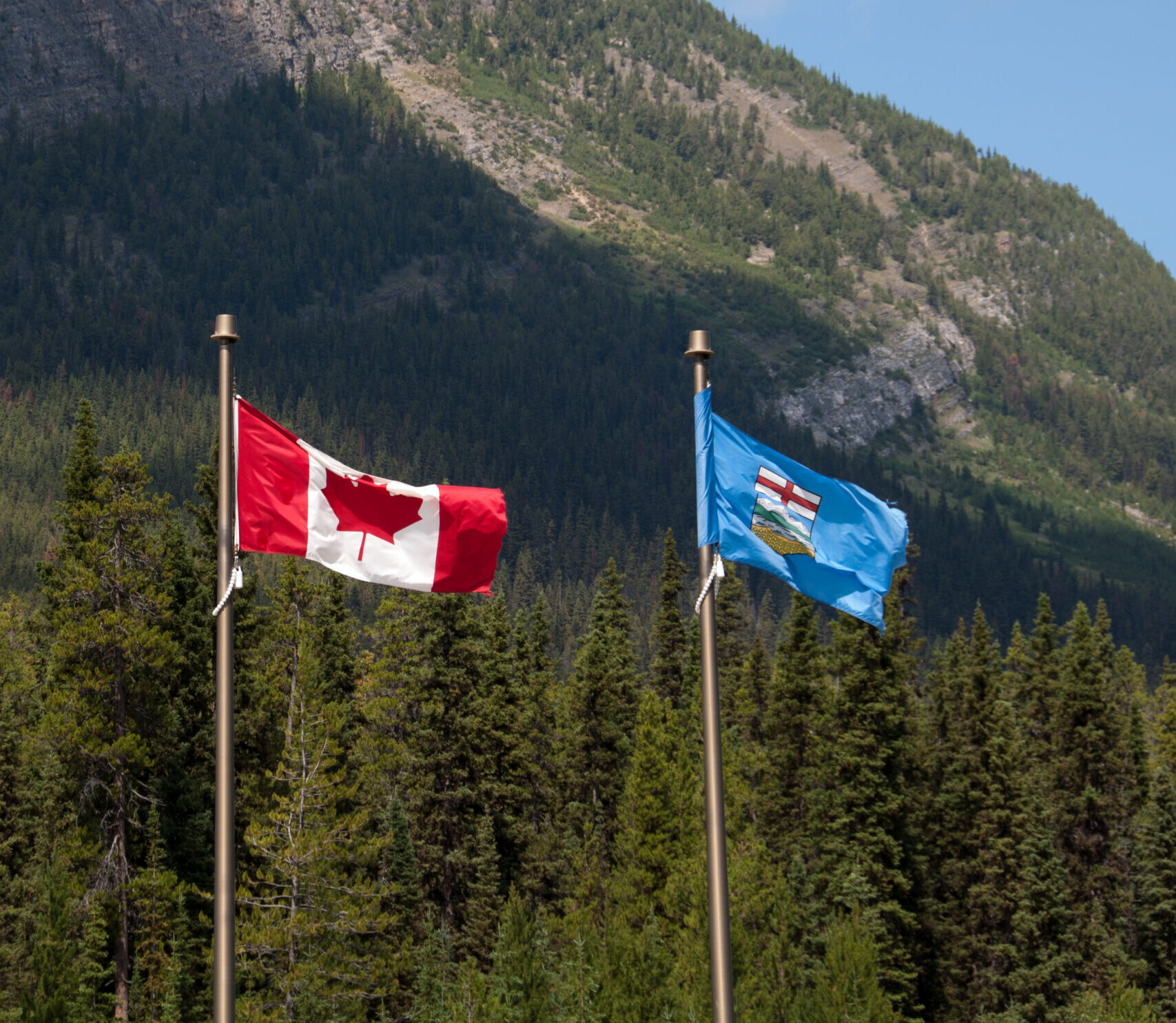

Imitation of Alberta policies would return Canada to its classic roots
Originally published in the National Post newsletter on October 13, 2026; revised October 20, 2026.
With the Alberta separation referendum now over, it’s time to move on with this goal in mind: Renew Canada by making the rest of the country more like Alberta. The reason for that is simple: The ostensible majority values and policies in Alberta are classically Canadian, not distinct to Alberta, and I say that as a born-and-raised British Columbian, not someone who cut his teeth in Alberta,
The background: Alberta is viewed as a sort of libertarian bastion of free enterprise and free thinking, low taxes and modest government spending, combined with more traditional cultural values.
This is only partly true. When compared to other provinces, Alberta is still much more of a high-tax, high-spend jurisdiction than many people care to admit.
As for social issues, consider gender reassignment drugs and surgery for children and teenagers, a 2024 Leger poll found that 45 per cent of all Canadians supported a blanket ban on gender reassignment surgery for minors with only 11 per cent in favour. Another 30 per cent supported some form of treatment if paired with parental consent. The numbers were similar on hormone-blocking drugs. As Leger’s Andrew Enns put it, “On the policies, Alberta Premier Danielle Smith’s not wildly off the mark with respect to where public opinion generally is starting from.”
That noted, in broad strokes, free enterprise, free thinking, and individual rights have always been part of the core Canadian identity (thought that awareness has atrophied since the 1960s). That ought to be renewed along with a focus on tacking away from indefensible social engineering.
Classic Canada renewed
On freedom, Canada’s earliest founders and politicians were heavily influenced by the writings of Adam Smith and John Stuart Mill, among others. Additionally, what might be best described as cultural conservatism, and a preference for a strong military, were both once as Canadian as maple syrup.
A few examples of the foregoing: Sir Richard Cartwright, the first post-Confederation Liberal finance minister, likened any instance of government over-taxation to “legalized robbery” in an 1878 budget speech. In an 1894 campaign stop in Winnipeg, then Liberal opposition leader Wilfrid Laurier opposed prime minister John A. Macdonald’s proposed tariffs on the grounds that they interfered with free enterprise, calling instead for policies that supported “freedom in every sense of the term.”
Even Pierre Trudeau, a collectivist in economic matters, made the case that individual liberty was not a gift from the state but a fundamental right that preceded the state. In his 1992 book opposing the Charlottetown Accord, Trudeau made clear that he did so because Quebec nationalists as a collective were oppressing the English minority.
On culture, Canada was once more traditional than the U.S. despite what many people might think today. An example: In the 1920s, Canadian magazine publishers complained of “smut-filled” American magazines flowing into the Canadian market (perhaps motivated in part by protectionist economic interests). The Toronto Globe was positively Presbyterian about the American press when it declared U.S. pulp fiction as “off-scourings of the moral sewers of human life” and a veritable flood of “undisguised filth.”
America first—On social engineering
Also, many of the well-intentioned but discriminatory policies like diversity, equity and inclusion (DEI) hiring first originated in the U.S. Affirmative-action policies started in America in the 1960s and were only adopted in Canada years later under the “employment equity” policies of the 1980s. “Ironically, the United States, whose racially divided history inspired the birth of affirmative action programs, has increasingly turned against such measures,” wrote Canadian author Martin Loney in his 1997 book The Pursuit of Division.
Cautious approaches to what might best be called top-down social engineering exist in all parts of Canada. That includes immigrant communities, as well as native-born be they in Atlantic Canada, Quebec, Ontario, and everywhere in Western Canada. The exception to that caution exists in a narrow band of chattering classes in isolated neighbourhoods in Toronto, Vancouver, a few other urban centres, and also among selected justices.
But careless crime and social policy do not have deep support.
As one example, consider the skepticism about lax crime and drug policy across Canada. As Leger found in 2023, “Canadians are more supportive of aggressive enforcement and treatment actions to address the substance use issue in the country. This includes more aggressive prosecution of these bringing illicit drugs into communities; involuntary treatment policies and tougher laws and policing actions. Decriminalization and safer supply approaches are less supported.”
On military matters, the notion that Canada is some sort of non-interventionist power is also a fiction, and a reversal of earlier Canadian sentiment — which was deeply militaristic. As historian Jack Granatstein noted in his 1996 book, “Yankee Go Home?” many Canadians, including “poets and novelists alike,” were enraged by the U.S. refusal to enter the First World War until 1917.
It is this foundation of fundamental restraint in imposing top-down social engineering— be it on taxation, culture, the military, and other issues — that can lay a solid groundwork for Canada to return to its roots, and to renew the country that also, not coincidentally, will take some of the steam out of the separatist movement.
Make Alberta a magnet
But regardless of whether other provinces or the federal government renew Canada in the direction of Canada’s classic virtues and policies, Alberta should refocus into building Alberta into a province that attracts people and capital. With the referendum over, Alberta Premier Danielle Smith and her colleagues must send a clear signal that the way to defeat separatism and renew Canada is to make Alberta an unmistakable magnet and lead by ideas. Leaders must work to make a province that attracts like-minded immigrants, secures capital investment, lower spending and taxes, and establishes the parameters for healthy competition.
It is obvious why a magnet model is what Alberta should aspire to. Greater population growth would give Alberta more sway in the House of Commons (where Ontario, B.C., and Alberta are all underrepresented) while greater economic vitality inherently will increase the attractiveness of Alberta as a place to live and work.
Alberta has the potential to be the magnet for the rest of the country. The positive thing about becoming a much more entrepreneurial and inexpensive province — be it in taxes or housing or other areas — is that it would force the other provinces to reform their practices to be more like Alberta.
That would be positive for Canada, as it would restore some of Canada’s former historic attachment to sensible ideas and policies.
Mark Milke is the president of the Aristotle Foundation for Public Policy
Like our work? Think more Canadians should see the facts? Please consider making a donation to the Aristotle Foundation.
SUBSCRIBE TO OUR NEWSLETTER